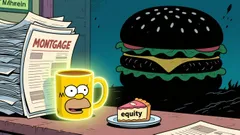
A Truist Securities analyst likes Ryman Hospitality PropertiesRHP-- (NYSE: RHP) enough to keep a Buy rating and a $132 target on it, and Citi recently pushed its target to $135. The stock has rewarded that enthusiasm, climbing about 29% this year to roughly $122. The headline-friendly story — "analyst bullish, big deal closed, guidance raised, dividend paid" — makes the easy conclusion sound unavoidable.
It isn't. Buried in Ryman's own updated numbers is the one sentence a buyer should sit with: after the company bought the $1.38 billion Grande Lakes Orlando resort, its total profit forecast went up while its per-share profit forecast went down. Understanding why that can happen is worth more than the rating itself.
What Ryman actually is
Quick Backtesting Tool
Ryman isn't a hotel-operator stock like Marriott, which collects fees for running other people's properties. It's a real estate investment trust (a REIT), which means it owns the buildings. The backbone is a set of large, group-oriented convention resorts — Gaylord Opryland in Nashville, Gaylord Palms, Gaylord Texan, and others — plus an entertainment business tied to Nashville country-music icons (think the Grand Ole Opry). In the most recent quarter, roughly four-fifths of revenue came from the hospitality side.
The feature that matters most: convention resorts make their money from group customers — companies and associations that reserve big blocks of rooms and meeting space months or years in advance. That booking book is a form of visibility most hotel stocks don't have. It shows up in the numbers: Ryman booked over 768,000 group room nights at an average rate near $310, up about 9% from a year earlier, and just reported a record quarter with revenue up ~14%.
The deal that changed the math
On September 1, Ryman closed the biggest acquisition in its history: Grande Lakes Orlando, about 1,600 rooms across a JW Marriott and a Ritz-Carlton, on more than 400 acres with roughly 320,000 square feet of meeting space — the exact "big convention resort" niche the company dominates. The tag was $1.38 billion, or about 12.5 times the property's trailing earnings. Sound reasonable? The catch is how it was paid for, because that determines who keeps the profit.
Think of the company as a pie — a stream of distributable earnings. A bigger resort adds more filling. But RymanRHP-- financed it with two things that cost existing owners:
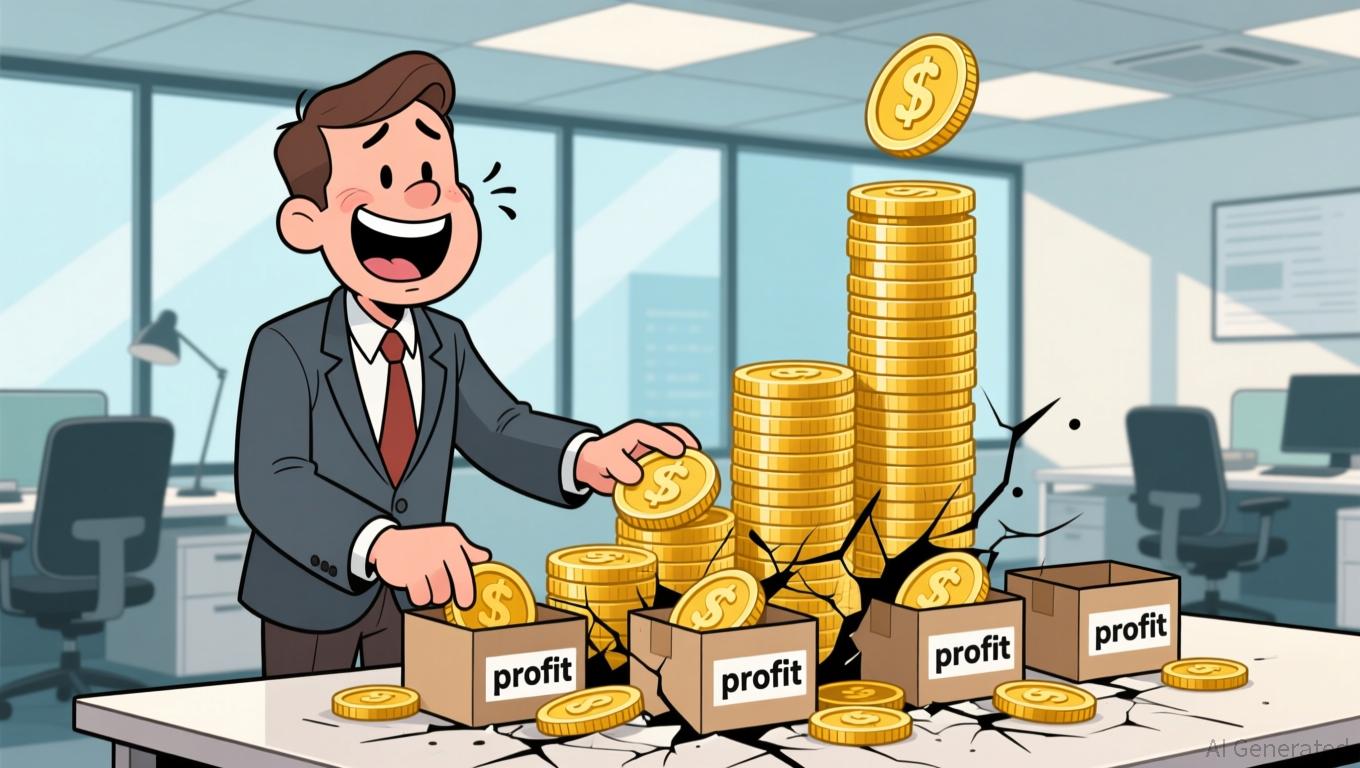
- A mortgage.Ryman issued $700 million of senior notes at 6.25%. That's roughly $44 million a year in interest that must be paid to lenders before shareholders see anything.
- New partners. Ryman also issued about 5.9 million new shares to help pay for the deal. More shares means the pie is cut into more slices, each a little smaller.
Run the toy on your fingers. Say the pool of profit is 100 slices and the company adds a resort that contributes 5 slices of profit, but borrows money whose interest costs 4 slices and mints 3 new slices to raise cash. Total profit: 100 + 5 − 4 = 101. But slices: 103. Profit per slice: 101 ÷ 103 ≈ 0.98 — worse for each owner, even though the company is bigger and earned more in total.
That is precisely the shape in Ryman's updated guidance. The midpoint of full-year adjusted FFO — the cash flow REIT investors actually grade — rose from about $604.5 million to $621.5 million (more pie). But because the share count grew and the 6.25% interest and depreciation consumed the resort's early contribution, the per-share figure ticked down, from about $9.13 to $9.08. Net income available to common stockholders slipped a few million too. The new resort is expected to turn accretive — meaning it starts adding to per-share numbers — only in 2027.
The boundary where the story breaks
None of this means the deal is a mistake. Buying a scarce, recently renovated 1,600-room convention resort at a reasonable multiple, financed while group bookings are at record levels, is a plausible growth bet. But three things should cool the "just buy it" reflex:
- "Accretive in 2027" is a forecast, not a fact. Accretion is what the pivot should look like under the company's assumptions. If group demand turns down — and convention demand is cyclical, tied to corporate and association budgets — the timeline stretches and the swelling interest bill keeps running.
- The enthusiasm may already be priced. Even before the deal, Ryman traded at roughly 14 times EV/EBITDA and more than 30 times earnings, and the stock is up ~29% this year. A Buy rating with a target a step above the current price is an opinion; the market has already paid for a good chunk of the 2027 upgrade.
- Growth costs money a REIT doesn't get to hoard. Because Ryman must distribute most of its earnings as dividends (yield here is roughly 3.5%), it can't fund its next expansion from retained cash the way an ordinary company can. Big moves like Orlando inevitably mean more debt, more shares, or both — which is exactly how this "bigger pie, thinner slice" pattern repeats.
What to watch now
The next checkpoints aren't the analyst ratings — they're the numbers that will tell you whether the per-share story really turns. Does per-share adjusted FFO actually grow through next year as the Orlando property is absorbed (the promised 2027 accretion)? Does the roughly $310 average rate on that huge block of already-booked group rooms hold up? How much more debt and how many more shares arrive with the next acquisition? And whether the dividend keeps getting covered.
A Buy rating from a bank is guidance someone else formed from the same public numbers you can read. The reason per-share profit can fall while total profit rises — a new mortgage and a few more slices of the pie — is arithmetic you can check yourself. Check it, then decide how much of the 2027 promise you're willing to pay for today.