Nonfarm payrolls fell by 23,000 in July, and the market threw a party. The market looked at the headline, saw cooling demand, and priced the Fed out.
It read the wrong survey.
The payroll count comes from the establishment survey, a poll of employers. The household survey measures people, and it is telling a different story. The household survey showed the labor force shrank by 264,000, pushing participation down to 61.4%, the lowest since early 2021. June was the same movie, one month earlier: more than 700,000 people left the labor force and participation dropped three-tenths of a point to 61.5%.
Quick Backtesting Tool
Here is the mechanism the floor chose not to think about. The unemployment rate is the number of unemployed people divided by the labor force. In a genuine demand collapse, that rate rises, because people who want work cannot find it. In a supply-side exit, the unemployment rate can fall without hiring, because the labor-force denominator shrinks — people stop being counted as looking. A shrinking pool of available workers is not slack. It's scarcity. And scarcity in the labor market is an inflation problem, not a disinflation gift.
The wage check is the supply story's weak point.
Average hourly earnings rose 3.2% year over year in July, decelerating from a downwardly revised 3.4% in June and missing the roughly 3.4% the Street expected. Wage growth ran above 4% a year ago; it is now south of 3.5%. If employers were truly fighting over a shrinking pool of workers, wages would be accelerating. They aren't. The cooling camp gets to point at that, and at ADP's July print of just 44,000 private jobs, down from 95,000, and argue the demand read is right.
So both readings are live. Demand-cooling: payrolls negative, wages rolling over, private hiring stalling. Supply-collapse: labor-force exit, participation at multi-year lows, well over 700,000 workers gone from the pool in June and another 264,000 in July. Bonds, the dollar, and the futures market just bet on the first reading. The household survey says the second is at least as real. The tiebreaker is CPI.
The base effect flips in July.
June CPI printed a monthly decline of 0.4% — headline inflation down to 3.5% from 4.2%, a bigger downside surprise than the -0.2% consensus. But the gift came from energy, which fell 5.7% in the month. Core inflation is still tracking near 2.8%. Energy cannot fall 5.7% again, and the July base flips the other way. That means the cooling read now needs a second straight downside surprise in a month when the easy disinflation is mathematically exhausted. That's the burden the market just accepted by rallying.
The conditional chain is simple. If July CPI prints at or below consensus, the cooling read holds, September hike odds stay depressed, and this rally extends. If CPI surprises to the upside, the supply story is confirmed, and the entire trade built this morning unwinds.
Trace the re-pricing.
Today's move was a repositioning of that same wager — into a market sitting about 0.9% below its highs after a 12.9% year-to-date run. That entire trade is a bet that the hawkish wing of the Federal Reserve is wrong.
The hawkish wing is not a fringe. The July 29 FOMC held rates at 3.50%–3.75% by a 9-3 vote, with three dissenters on record for a hike. The committee's own projections show one hike in 2026, and half the committee projects rates above the current range by year-end. Chair Kevin Warsh has already said the jobs data were "moving in a good direction" — the market is betting against a chair whose credibility is built on inflation. If CPI comes in hot, the depressed hike odds snap back, the 2-year and the dollar reverse their moves, and the highest-multiple names — the ones that led today's rally, because they carry the most rate-hike duration — give the most back.
A positioning rally has thin plumbing.
And the rally is running on borrowed liquidity.
The options market is pricing this event for free. SPY implied volatility sits near 13% — cheap five days before a CPI print that can swing hike odds 20 points. Put open interest runs more than two contracts for every call, a wall of protection below the market. The dealers who sold that protection hedge by selling as the index falls. A hot CPI doesn't need to push the S&P far before that mechanism takes over: volatility reprices first, then the hedging turns a drift into a slide. That's the trap. Today's rally is a positioning event, and positioning events unwind faster than they build. Note the concentration, too: the equal-weight S&P 500 ETF saw net redemptions in the past month even as the cap-weighted index kept climbing — the gains are built on a narrowing base.
Could this rally extend? Yes — I'll grant the bull case in full. If July CPI prints at or below consensus, if participation rebounds in August, if wages stay subdued, the cooling read is right, the Fed stays on hold, and this market grinds into the highs. Those are real conditions, and the market has every reason to want them.
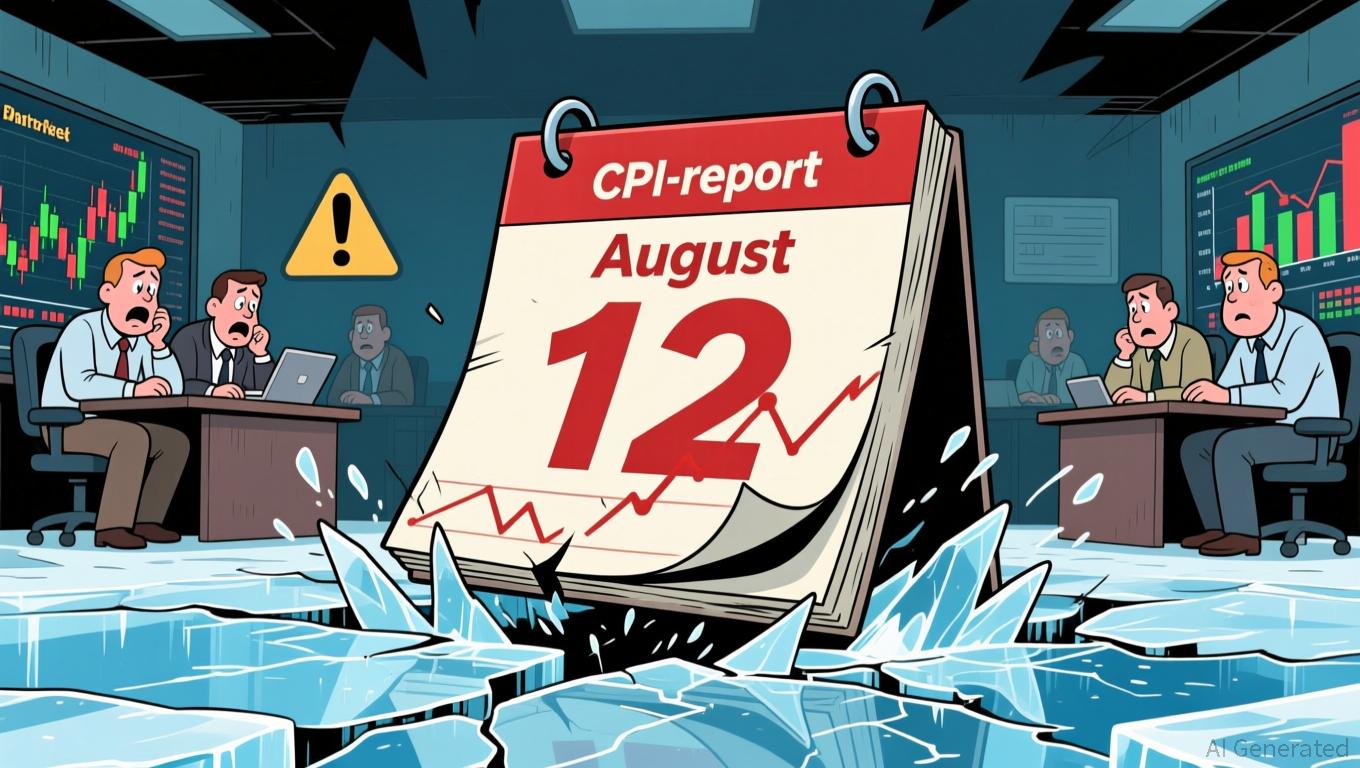
But understanding what I understand about the household survey, the energy base effects, and the state of the plumbing, I wouldn't call today's move durable. The market looked at a report in which 264,000 people left the labor force and found a reason to price out a hike. The labor force shrank because people left, not because they got hired. That's the supply story wearing a demand costume — and the costume comes off on August 12 at 8:30 a.m. If CPI surprises hot, the 2-year, the dollar, and the S&P 500 reverse the way they came: fast.
The views and opinions expressed above are those of the author and are for informational purposes only — not investment advice.