XORTX Therapeutics, a Calgary micro-cap with a $4 million market cap, is preparing both clinical and commercial supplies of XORLO, a reformulated version of oxypurinol meant for gout patients who can't tolerate the standard treatment. The company says it has completed the chemistry, pharmacology, toxicology, and manufacturing studies that provide a data foundation for advancing toward a New Drug Application.
That sounds like progress. It is. But the real question for anyone looking at XORTXXRTX-- right now isn't whether the manufacturing milestone matters — it's whether the company has enough money to reach the milestones that actually generate revenue, or whether it has to dilute shareholders so heavily along the way that even a successful drug won't leave much value.
The molecule has a body count
XORLO isn't a new chemical. Oxypurinol is the active metabolite of allopurinol — the most prescribed gout drug in North America. About 3 to 5 percent of patients can't tolerate allopurinol, usually because of hypersensitivity reactions. For those patients, the alternative has been febuxostat, which achieved peak annual sales above $450 million before the FDA slapped it with a black box warning in 2019 over cardiovascular death risk.
Quick Backtesting Tool
Oxypurinol was supposed to fill this gap. A previous company developed it for allopurinol-intolerant hyperuricemia and actually received what's called an "approvable letter" from the FDA — meaning the agency found the data sufficient but had one or more outstanding issues. Those issues became a Complete Response Letter, and the drug never launched.
XORTX is now trying again, using a proprietary formulation they call XORLO, filed under the 505(b)(2) pathway. This regulatory shortcut lets companies rely on existing safety and efficacy data for an already-approved ingredient, rather than running the full clinical trial program from scratch. The FDA held a Type B meeting with XORTX in April 2025 and "substantially confirmed" the remaining steps to an NDA.
The path looks clean on paper: file an Investigational New Drug application, run a pharmacokinetics study comparing absorption in fed and fasted states, manufacture validated commercial drug supply with stability data, compile everything, and file the NDA.
But "clean path" doesn't mean "no work." And every step costs money XORTX doesn't have.
The cash reality
Here's what XORTX told investors about what still needs to happen:
- IND filing, clinical trial, and NDA preparation: $9 million to $18 million
- Chemistry and manufacturing work for clinical and commercial supply: $5 million to $10 million
- Commercial launch preparation: $2 million to $8 million
- European registration: $1 million to $8 million
That's $17 million at the absolute minimum. At the upper end, it's $44 million. And these are just for the gout program. The company has a second pipeline for kidney disease that needs another $5 million to $30 million.
XORTX had roughly $1 million in cash as of June 30, 2026. It raised $5 million in a May 2026 public offering at $1.88 per share — but the disclosed use of proceeds shows $2.5 million going to an investor relations and marketing firm, leaving perhaps $2.3 million for actual operations after agent fees. The company's Q2 2026 filing flagged a going concern risk, which is the formal way auditors say: we're not sure this company can survive the next year.
For context, a going concern qualification appears when a company's ability to continue operating is in doubt. It's common in micro-cap biotechs, but it's a signal worth reading, not a formality to brush past.
What the manufacturing milestone actually means
Preparing clinical and commercial drug supply is real work. It requires Good Manufacturing Practice facilities, stability testing, batch validation, and the kind of chemistry data the FDA wants to see before approving a drug. You can't fake it. And it's the kind of milestone that shows a company is moving from "we have a molecule" toward "we have a product."
But manufacturing readiness doesn't prove the drug will work in the specific patient population. The PK study in fed and fasted states — still ahead — could reveal bioavailability issues that force reformulation. The NDA could encounter the same regulatory friction that tripped up the previous oxypurinol developer. And even approval doesn't guarantee commercial success in a niche market of roughly 280,000 allopurinol-intolerant patients.
XORTX's own market analysis puts the peak annual sales opportunity at $700 million. That number comes from inflating febuxostat's historical peak. Whether a $700 million outcome is realistic for a drug targeting a single intolerant subpopulation is a separate question the company's math doesn't fully answer.
The dilution math
This is where most investors should slow down. At a $4 million market cap, XORTX needs at minimum 4x its current value in new capital to reach NDA filing — likely much more. Every funding round dilutes existing shareholders. The May 2026 offering alone added 2.7 million shares, the vast majority as pre-funded warrants designed to bypass certain investor restrictions. That's the financial engineering of a company that knows traditional investors won't buy enough shares.
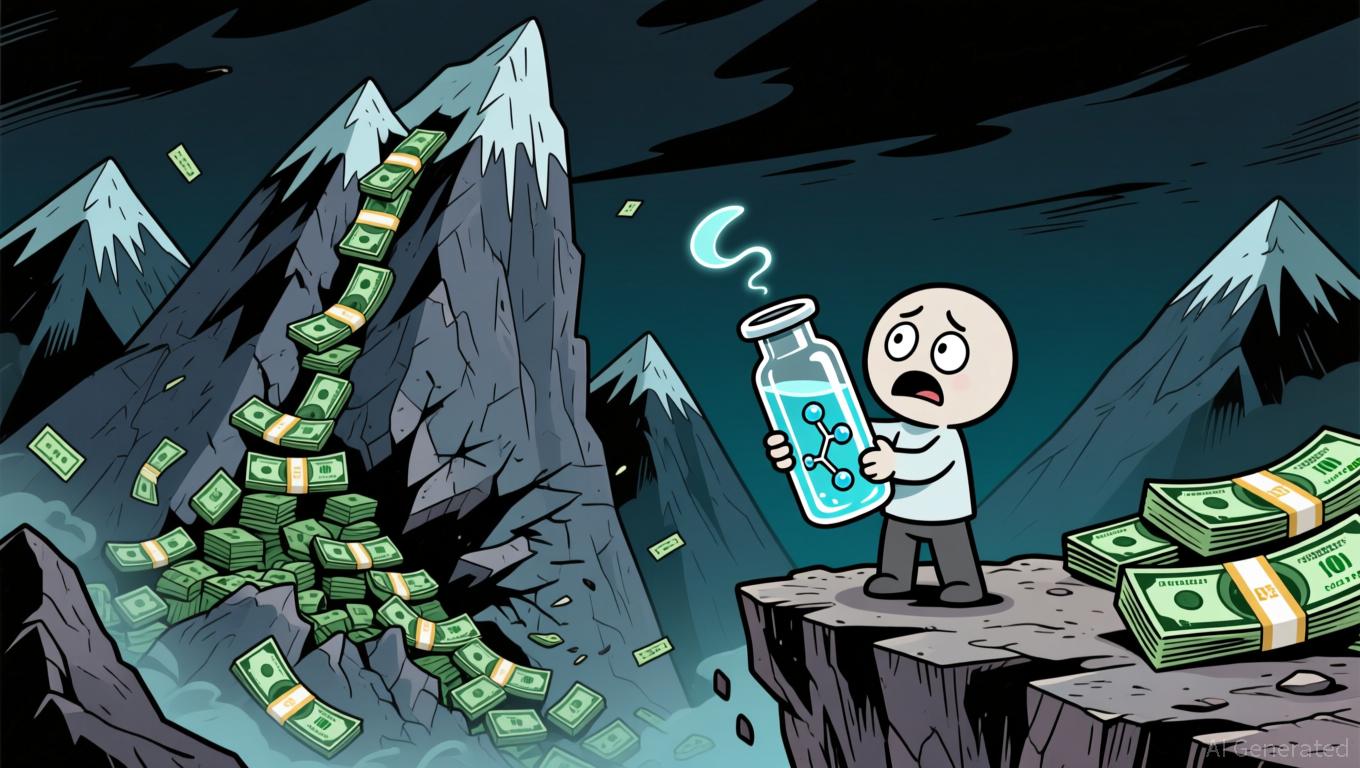
If you need to raise $20 million and each round raises $5 million at steadily lower prices because the stock hasn't hit a binary catalyst, existing shareholders could end up owning a fraction of what they hold today. The drug could succeed and the economics could still be hollowed out by the dilution needed to get there.
What to make of it
XORTX is a binary, capital-constrained bet on a molecule that has reached FDA review before and failed to launch. The manufacturing work is genuine progress along a known regulatory path. But the company's financial condition — $1 million in cash, a going concern qualification, and a pipeline that needs tens of millions to advance — means every future milestone is contingent on raising more money.
For an investor, the question isn't whether XORLO could be a good drug for a real medical need. The question is whether the company can survive long enough to prove it, and whether the repeated dilution required to fund the journey leaves anything for the people who hold the stock today.
The $2.11 share price prices in a lot of failure. But it also prices in the chance that failure is the most likely outcome — not just clinical failure, but financial failure. That distinction matters. A drug can work and the stock can still go nowhere if the capital structure doesn't survive the journey.