Midland States Bancorp, an Illinois regional bank, quietly stopped writing new commercial equipment-finance deals this past year, and in its third-quarter report it blamed trucking for $5 million in charge-offs — nearly half of the bank's total write-offs for the quarter. It wasn't alone. Banc of CaliforniaBANC--, First Citizens and others have scaled back commercial truck lending, and the flow of retreat makes a plain sort of sense for anyone who read the news: trucking had a brutal downturn, so of course the banks are running. I'd argue the exits mean something more specific and more useful than "trucking is dying." They are the point in a freight cycle where the problem stops being low rates and starts being the balance sheet — a credit-cycle tell, and one that says the downturn is closer to its turn than to a new leg down.
The collateral is what broke
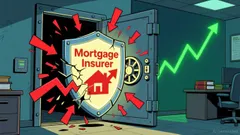
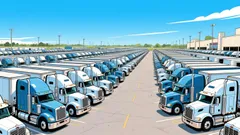
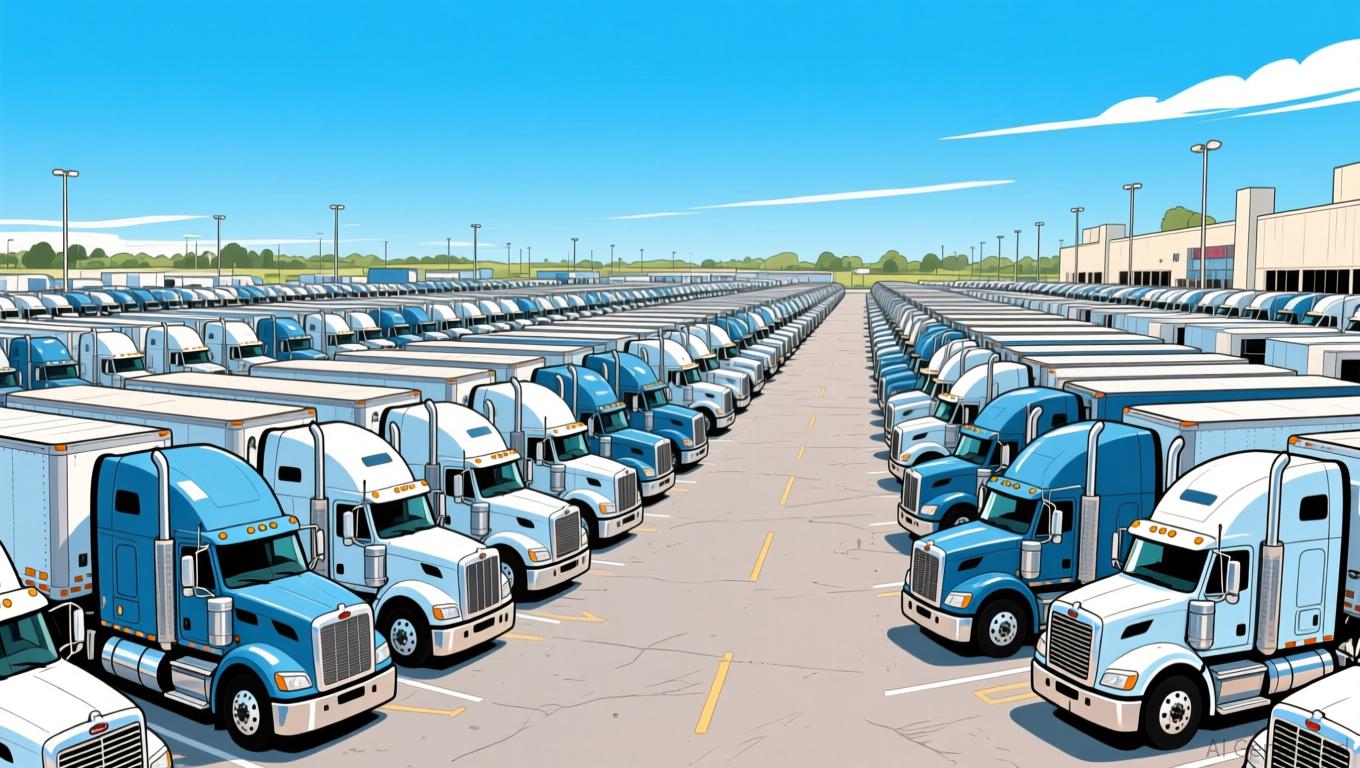
What made the banks run wasn't that freight demand vanished. It was the security underneath their loans. A truck loan is asset-backed: the truck itself is the collateral, and a lender's recovery depends on being able to sell that truck if the borrower stops paying. As carriers began missing payments and the resale value of used trucks slipped, the collateral under those loans quietly eroded. A lender that once counted on a repossessed truck to recover its money found the truck worth less than the loan against it. Midland's chief executive called the retreat a "credit clean-up" — the kind of phrase that tells you the bank didn't leave because its customers disappeared, but because the asset underneath had stopped protecting the loan.
If you track this sort of breakdown for a living, that language is the tell. The freight recession moved from a carrier problem to a lender problem. That is typically a late-cycle marker, not an early one: the weak operators who couldn't carry cash through the downturn are the ones defaulting, and every default that leaves a lender holding a depreciating truck pushes that lender one step closer to the exit.
Quick Backtesting Tool
Who gets squeezed in the middle
The retreat lands hardest on mid-size fleets, because they are caught between two kinds of lenders. Traditional banks have the cheapest money but now demand the strongest credentials — credit scores above 700, newer trucks, years of operating history. Small-balance lenders can't write the tickets a mid-size fleet needs. So the financing migrates to specialty truck lenders and online finance companies, which charge more and ask for 25% to 30% down plus a personal guarantee. The gap the banks left gets filled by whoever can price and hold the residual-value risk on a depreciating asset.
The biggest of those willing to hold the risk is the truck maker itself. PACCAR's captive lender, PACCAR Financial, finances about a quarter of the new PACCAR trucks sold, and its finance revenue has kept growing even through the industry's down-cycle — a reminder that when the traditional banks exit a cyclical lending market, the balance-sheet-strong OEM captive quietly gains share and takes on the risk the banks no longer want.
The data has already turned
Now look at where the cycle actually sits, because the headline of the squeeze and the underlying data now point in opposite directions. The banking exodus was the story of the downturn's bottom. Since then the freight market has tightened up: truckload contract rates were up 17% year over year by July, new Class 8 truck orders jumped 71% in the same month (tractor orders more than doubled), and used-truck supply has thinned enough that dealers sold 45% more used Class 8 trucks than a year earlier. Werner Enterprises, which had been losing money in its one-way truckload unit and restructured it, swung back toward profit as its dedicated and FirstFleet businesses carried it through.
What the bank flight was actually marking was marginal capacity leaving the market — the supply clearing that, combined with tighter enforcement and driver rules, has pushed rates and replacement demand back up. That is the mechanism a lender exodus usually precedes, and it is why a financing squeeze reads as a contrarian crack rather than a confirmation of doom.
Survival first, then margin of safety
The value reading has to stay separate from the recovery message, because the two cut against each other. The cheapest names in this cycle are cheap for a reason. Werner trades near 10 times EV/EBITDA, but the market is pricing real doubt about whether its core one-way truckload business can return to durable profitability — cheapness before survival is a trap, not value. The obvious positioned winner, PACCAR, has the balance sheet and the captive finance arm to own the residual-value risk as banks retreat, but at roughly 20 times EV/EBITDA the market has already paid for the recovery. That leaves a thin margin of safety — a name to re-evaluate rather than chase. And the banks that kept truck paper on their books face exactly the collateral losses the fleeing lenders were trying to avoid.
A financing squeeze is not a verdict on demand. It is a map of where credit sits in the cycle and of who can afford to hold the collateral through the bottom. The fleets and lenders that clear this test are the ones with the balance sheets to own a depreciating asset while the weak exit. Read the exit as the tell it is — but run the margin-of-safety test on the price, because this cycle's survivors were already being bid up before the banks finished leaving.