The most common piece of money advice you'll hear heading into 2027 is easy to state and nearly impossible to argue with: shift more of your money into ETFs, and especially into broad-market index funds. The data backs the trend. In the first half of 2026, U.S.-listed ETFs absorbed more than $1 trillion of new money — the first time a half-year has crossed that line — and total ETF assets climbed to $16.4 trillion. Index funds now hold 53.9% of all long-term mutual fund and ETF assets, a majority of the category that many would have found hard to imagine a generation ago. This is not a fad. It is a structural drift, and it's where a lot of your peers are already moving.
But the reason the advice gets repeated — that an S&P 500 ETF hands you a diversified basket of five hundred companies — is doing quiet, unexamined work inside the argument. It's the part of the story that quietly misleads, because it describes a product that no longer matches its name.
The part that's right: it's about cost, not magic
Strip away the marketing and the ETF-versus-mutual-fund debate comes down to a single line on your statement: the expense ratio, the slice of your money a fund keeps each year just to run itself. In 2025, the average index equity ETF charged 0.14%, while the average equity mutual fund charged 0.40%. That 26 basis-point gap looks trivial in a single year. It is not, over twenty or thirty years, because it compounds against a return you never get to use.
Quick Backtesting Tool
This is where the famous "active funds can't beat the market" stat enters — and where I'd push you to hold it loosely. The standard version is real: roughly 79% of large-cap funds underperform their benchmark over long periods, and no equity category has a majority of active managers winning after fifteen years. But a 2026 re-examination of that scorecard by Cremers, Fulkerson, and Riley, published through Morningstar, shows the number is softer than it sounds once you account for fund costs and the way money is actually allocated. Over twenty years, the headline "92% of funds fail" figure becomes closer to a coin flip for the dollars you would actually put in. The honest lesson is not that stock-pickers are incompetent. It's that, net of fees, you very rarely beat the index you're trying to beat. The index's edge is that it's cheap and you have no one to outsmart — not that it's diversified in the way most people imagine.
Worth flagging, because it punctures the cleanest version of the story: "putting money into ETFs" does not automatically mean "going passive." In the first half of 2026, actively managed ETFs captured 39% of all ETF inflows. A meaningful slice of the trend is people repackaging stock-picking in an ETF shell, not abandoning it.
The "500" that isn't doing the math it's doing
Now to the part the label hides. An S&P 500 index fund holds roughly five hundred companies — 503 tickers, since a few names trade in more than one share class. That number is true. It is also not the number that determines what your money is actually exposed to.
As of mid-2026, the ten largest positions in the index — Nvidia, Apple, Microsoft, Amazon, Alphabet (which trades in two share classes), Broadcom, Meta, Tesla, and Micron — account for roughly 39% of its total value. The information technology sector alone is 35%. So when you "buy the whole market" through an S&P 500 ETF, you are, in practice, putting nearly two-fifths of the position into ten names and more than a third into a single sector. The other roughly 490 companies are real, but they are the rounding error on the swings you'll actually feel in your account.
Who's driving it — and what they have to do
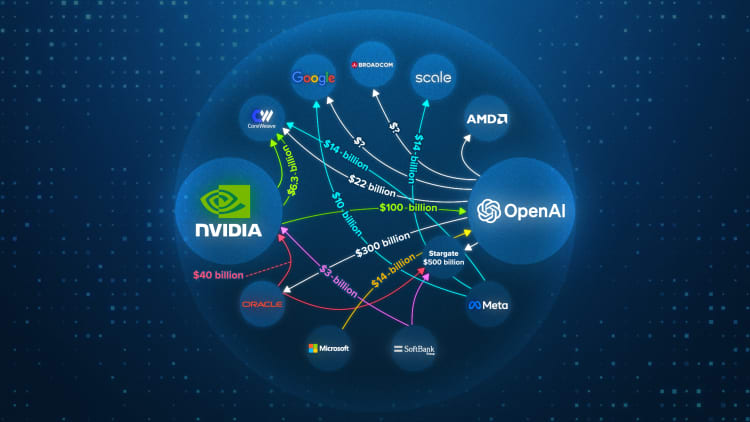
The concentration isn't just a weight. It's a mechanism. The S&P 500 was up about 5.7% through early May 2026, and roughly fifteen stocks accounted for more than a fifth of that entire return. Even more telling: three companies — Alphabet, Amazon, and Meta — represent about 70% of the dollar increase in the index's expected 2026 earnings. Those three have collectively guided capital spending of roughly half a trillion dollars in 2026 alone.
That's the piece of the puzzle the "diversified" label doesn't show you. The index's forward growth is leaning on three firms converting an enormous AI buildout into revenue. If they do, the ETF rides up with them — you're exposed, but you're riding a real, structural trend. If the spending outruns the revenue the consensus is pricing, the cushion you thought came from five hundred companies turns out to be thinner than the label implied, because your portfolio's center of gravity is already sitting in those three hands.
What to actually decide
None of this is an argument to avoid ETFs. For most people, a low-cost broad-market index fund is the right default — it's cheap, it's broad, and the money flowing into it is structural, not speculative. But the wrapper was never the interesting decision, and the "diversified" name is doing more of the thinking than it should.
The question worth asking before you add another index position is a specific one: what is my top-ten exposure right now, does it match the risk I'm actually willing to carry, and do I understand that a broad-market index is currently a concentrated bet on a handful of AI firms monetizing a buildout? If leadership broadens or the capex converts, that concentration eases on its own. If it stays narrow and the spending outruns the revenue, "owning five hundred companies" becomes a polite description for owning a few.