LEISURE travellers have long been treated as cargo that pays. The business model of the "vacation airline" - carriers such as Condor in Europe or AllegiantALGT-- in America - is built on a simple arithmetic: fly cheap, fill every seat, sell extras, and avoid the expensive baggage of lounges, alliances and premium cabins. Business class was the enemy, not the product.
That bargain is breaking.
Condor now operates Airbus A330-900neo aircraft with a 1-2-1 lie-flat business class cabin. Passengers get mattress pads, German wine and access to Lufthansa's Frankfurt lounge - for a product the company once would have considered an expensive distraction. The Lufthansa Group's leisure carrier, Discover Airlines, has announced the largest investment in its history: the "Ocean Blue" cabin, featuring lie-flat beds, privacy dividers, 32-inch screens in front-row suites and free Starlink internet across all 16 of its A330-300s, rolling out from spring 2027. Discover Airlines called it a clear signal for the future. The company is right, but not in the way holidaymakers might think.
Quick Backtesting Tool
The deeper question is not whether these cabins are comfortable. Reviews suggest they are. The question is why leisure airlines, whose customers by definition are on holiday rather than closing deals, are spending millions to build business class products. The answer reveals how airline economics, competitive pressure and the credit-card points economy are reshaping an industry that used to be neatly divided between premium and budget.
The margin trap
The reason is not hard to see. Business class seats earn disproportionately more revenue per seat than economy. On a long-haul Airbus A330, a typical business cabin might hold 30 seats while economy holds well over 200. Those 30 seats can account for a large share of total passenger revenue. For a leisure carrier with thin margins on economy tickets, premium yield is a margin multiplier.
To be sure, the obvious objection is that vacationers do not buy business class in anything like the volume that corporate travellers do. Leisure demand is highly price-sensitive. Holidaymakers care about the sun at the other end, not the lie-flat angle of their seat. So who fills those expensive front-row seats?
Two forces are at work. The first is competition. Europe's long-haul leisure market is no longer the uncompetitive fringe it once was. Full-service flag carriers - Lufthansa, Air France, British Airways - have upgraded their own premium products relentlessly. A leisure carrier that shows up on the Frankfurt-New York route with only an old economy cabin is bidding against lie-flat suites. The choice is not whether to invest in a premium product; it is whether to surrender the route altogether.
The second force is more subtle. Credit-card reward programmes have created a parallel class of premium traveller: the points redeemer. These are not corporate travellers with company cards. They are affluent consumers accumulating points from spending, who then redeem them for business-class seats on routes where full-service carriers are too expensive at cash prices or too slow to fill with award inventory. Condor business class can be booked with points, as the cited reviewer did. This demand does not come from vacationers paying cash. It comes from the financialisation of air travel, where airlines sell seat inventory at wholesale prices to banks and card networks and collect the revenue anyway.
Consolidation and the leisure bet
The same structural logic is playing out in the United States, albeit in reverse. In May 2026 Allegiant completed its $1.5 billion acquisition of Sun Country Airlines, creating what the combined company calls the leading leisure-focused carrier in America. The deal brings together 195 aircraft, nearly 175 cities and a promise of $140m in annual synergies by year three. Allegiant's chief executive, Gregory Anderson, spoke of an "even more resilient and agile airline".
Unlike their European counterparts, Allegiant and Sun Country have no premium cabin ambitions. Allegiant's model is deliberately austere: no seatbacks that recline, no free drinks. The point is to strip the product down to the cost of moving a body from A to B and selling everything else. The merger makes sense for a different reason: scale in underserved markets, fleet ownership (which avoids leasing costs) and a diversified revenue base that includes cargo operations for Amazon Prime Air and charter contracts with casinos, Major League Soccer, collegiate sports teams, and the Department of Defense.
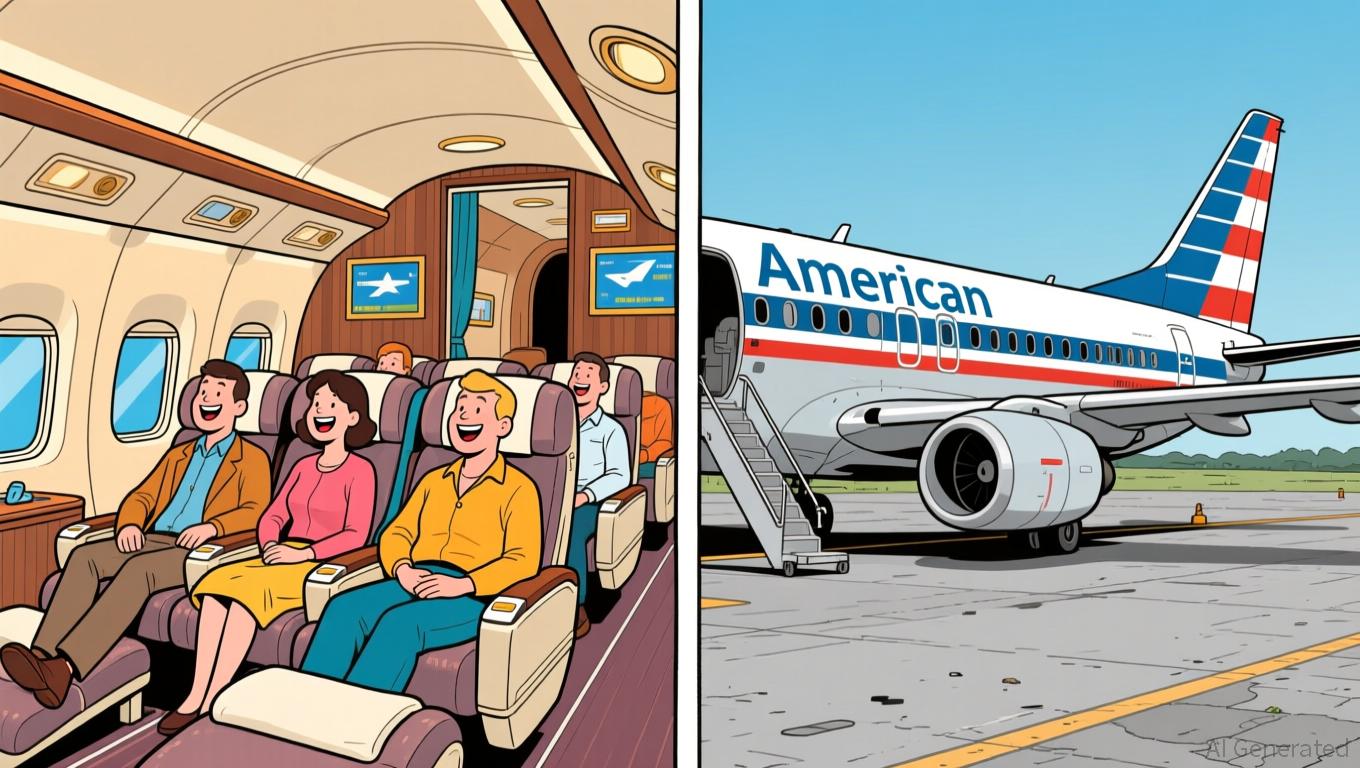
The contrast between the two approaches is instructive. European vacation airlines are racing upmarket because competitive pressure and margin economics leave them no choice. American leisure carriers are consolidating downmarket because scale and cost discipline are their comparative advantage. Both are responding to the same underlying fact: the easy era of airline growth - characterised by rising demand, cheap fuel and loose competition - is over. In that environment, every remaining lever of revenue and cost matters.
The trade-off
Here is where the system begins to creak. Adding business class to a leisure carrier is not merely a product decision. It is a structural bet on whether premium demand on leisure routes is large and stable enough to justify the investment. Lie-flat seats are heavy, which reduces fuel efficiency. Retrofitting a fleet of 16 aircraft is a multi-year programme that ties up capital and disrupts operations. And there is a brand risk: a carrier that starts offering premium cabins must maintain premium service standards, which requires better-trained staff, more consistent catering and tighter quality control. These are the very things that low-cost leisure models are designed to avoid.
The incentive for management is to sell the premium story. A new cabin makes good press, justifies higher share prices and signals strategic ambition. The constraint is the economics. If business class load factors on leisure routes fall short of expectations - and they often do, because demand is lumpy and seasonal - the extra weight, cost and complexity eats into the margin gains the cabins were supposed to create.
A worse outcome is possible. Discover Airlines is promising the "largest investment in its history" five years after its founding. That is a lot of capital commitment for a company that has not yet proved it can sustainably fill the premium seats it currently offers, let alone the better ones coming in 2027.
What should follow
Vacation airlines are not wrong to pursue premium yield. The arithmetic is compelling, and the competitive threat is real. But the better approach is to treat premium cabins as an option, not an obligation. A smaller business section, with fewer seats and higher prices, may earn more per seat than a large one that sits half-empty in the off-season. The lesson from the full-service carriers is that premium yield depends on consistency of product and reliability of service - qualities that are harder to build than a new seat.
Regulators should watch the Allegiant-Sun Country merger with care. A combined entity serving 22 million customers across 175 cities has considerable power in the markets it touches, many of them small communities with limited alternative air service. The promise of "affordable travel" is a fine slogan. The test will be whether fares fall in routes where competition disappears.
The broader lesson concerns the industry's shifting centre of gravity. The clean division between premium and leisure is dissolving. Vacation carriers are climbing the value chain; premium carriers are cutting costs and competing for leisure traffic. Points programmes are redistributing demand in ways that neither group fully controls. The winners will be the airlines that understand their own model clearly enough to pursue it, and flexible enough to adapt when the market forces them to.
For investors and travellers alike, the lesson is the same. A new lie-flat seat on a holiday airline is not a sign of strategic clarity. It is a sign of competitive anxiety. Whether that anxiety pays off depends on whether demand follows investment, or merely decoration.