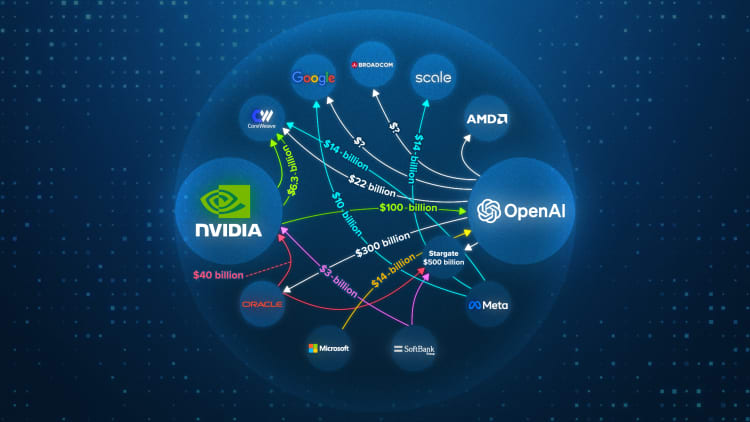
The structural shift is now in the numbers. For years, the cash flow engine of the largest tech companies reliably powered a steady stream of shareholder returns. That dynamic is being rewritten by the AI capital expenditure super-cycle. According to a Goldman SachsGS-- research note published earlier this week, the five largest AI hyperscalers-Amazon, Alphabet, MetaMETA--, MicrosoftMSFT--, and Oracle-are expected to spend a combined $755 billion on capital expenditures in 2026. That figure represents an 83% year-over-year increase, a scale that is directly crowding out the buyback programs that have long supported valuations.
The immediate impact is stark. Buybacks among this group fell 64% year-over-year during the first quarter. More telling is the structural change in allocation: the average share of total cash spending directed to buybacks has dropped from 27% between 2017 and 2022 to just 15% now. Goldman Sachs notes that hyperscaler capex is projected to amount to roughly 100% of their cash flows from operations this year, leaving almost no room for shareholder returns without significant leverage or a cut in investment plans.
This creates a clear bifurcation in the sector. The spending surge is a direct structural tailwind for infrastructure builders-chipmakers, data center operators, and network equipment suppliers-whose revenue streams are now inextricably linked to this capex super-cycle. For pure-play software and high-multiple growth names, however, the near-term headwind is material. The rotation from buybacks to capex and R&D is weakening a key source of demand for equities, and with policy uncertainty elevated, that pressure could intensify. The bottom line is a new cash flow equation where growth investment now takes precedence over returning capital, reshaping the risk premium for different parts of the tech landscape.
Quick Backtesting Tool

Sector Rotation and the Infrastructure Conviction Buy
The capital allocation shift is not just a sector headwind; it is a powerful catalyst for a new kind of sector rotation. As the largest tech firms redirect cash from buybacks to capex, the market is re-pricing the entire value chain. The beneficiaries are clear: semiconductor firms and infrastructure builders whose revenue streams are now directly tied to this build-out. Analysts point to double-digit growth in wafer fab as a key beneficiary, with total AI capital expenditures projected to climb above $1 trillion by 2027. This isn't speculative demand; it's a multi-year, capital-intensive build-out that is already flowing through to the supply chain.
This creates a stark divergence in the "quality factor." Companies with tangible, capital-intensive assets-chips, data centers, network equipment-are now more aligned with the new cash flow reality. Their business models are built for this cycle. By contrast, pure-play software and high-multiple growth names face a structural headwind as their cash flows are less directly linked to the physical infrastructure boom. The rotation is already underway, as the market re-rates "old-economy" capital-heavy companies alongside the rising importance of physical infrastructure. This is the core of the "technology value opportunity" Goldman Sachs identified, where the sector's underperformance has set up a potential re-rating for quality infrastructure assets.
The setup is a classic conviction buy for institutional flows. The AI super-cycle is a structural tailwind for the physical layer of the economy, and the market is beginning to price that in. For portfolio construction, this means overweighting the capital allocators that are best positioned to capture the cash flow from this build-out. The risk premium is shifting: the quality factor now favors companies with durable, asset-backed growth, not just high-growth narratives.
Portfolio Implications: Adjusting for the New Risk Premium
The structural shift from buybacks to capex introduces a new, persistent source of earnings volatility for large tech firms. This is no longer a discretionary policy choice but a non-discretionary, multi-year investment cycle. As Goldman Sachs notes, $755 billion in capex is projected for 2026, consuming roughly 100% of cash flows from operations. This leaves little room for maneuver, meaning earnings will now be more directly tied to the success and timing of these massive infrastructure projects. The risk premium for these companies has effectively widened, as their profitability is now more exposed to execution risk and the long payback periods of physical assets.
This necessitates a fundamental re-evaluation of the sector's historical liquidity profile and credit quality. For years, the sector's strength was its balance sheet flexibility-its ability to generate massive cash and return it to shareholders. Now, that cash is being permanently absorbed into capital investment. While sector debt ratios remain relatively low, the shift from a net-cash position to one of heavy reinvestment changes the risk calculus. The quality factor has tilted decisively toward companies with tangible, capital-intensive assets that are directly benefiting from this build-out.
For institutional investors, the portfolio construction implication is clear. This setup supports a tactical overweight to the infrastructure supply chain-chips, data centers, and network equipment-where the cash flow visibility is improving. The rotation from buybacks to capex is a structural tailwind for these names, and the market is beginning to price that in. Conversely, it calls for a more cautious stance on high-multiple, low-cash-flow tech names that are not direct beneficiaries of the physical build-out. Their earnings volatility may rise as they face pressure to justify their own spending while their own cash flows are less directly linked to the new capex super-cycle. The bottom line is a sector that is becoming more cyclical and asset-heavy, demanding a portfolio that reflects this new, more complex reality.
Catalysts and Guardrails: What to Watch in the AI Build-Out
The thesis of a sustained AI capex-driven re-rating now hinges on a few forward-looking metrics and scenarios. The primary signal will be the quarterly guidance from the hyperscalers themselves. Any material acceleration or deceleration in their reported capex plans will directly confirm or challenge the health of the infrastructure tailwind. Recent earnings calls have shown robust increases, with Microsoft up a whopping 24% to $190 billion and AmazonAMZN-- projecting $200 billion in buildout for the year. Continued adherence to or exceeding these elevated targets is the baseline validation. A deviation, however, would signal a reassessment of monetization timelines or a shift in capital allocation priorities.
A more subtle but critical guardrail is the pace of AI-driven labor market disruption. The scale of the build-out is not just a financial question but a social one. Evidence points to a growing impact: AI-driven automation eliminated about 25,000 jobs each month over the past year, while new roles added back were far fewer. This dynamic introduces a macroeconomic and social risk premium. The displacement of workers, particularly younger and entry-level employees, leads to occupational downgrading and prolonged unemployment, which can dampen consumer spending and create political headwinds. A sudden, sharp acceleration in layoffs could force a re-rating of the social cost of the AI transition, potentially pressuring valuations beyond pure financial metrics.
The ultimate validation, however, will be whether the projected $1 trillion+ in AI spend translates into sustained, high-margin earnings growth across the entire ecosystem. This is where the current estimates become a key assumption. As one analysis notes, the total scale of the build-out is highly sensitive to assumptions about infrastructure economics, from the useful life of chips to data center costs. If the build-out proves more capital-intensive and longer-lived than modeled, the return on that investment could be compressed, challenging the re-rating thesis. Conversely, if adoption drives faster monetization than anticipated, the earnings power of the infrastructure layer could exceed expectations.
For institutional investors, the watchlist is clear. Monitor the quarterly cadence of capex guidance as the primary health check. Track the labor market data for signs of escalating social friction. And remain vigilant on the underlying assumptions driving the trillion-dollar projections, as any shift in the economic model of the build-out would fundamentally alter the risk-return profile of the entire AI infrastructure story.