Schmid's Message Matters Because It Challenges the Easy-Money Trade
This is not, by itself, a Fed policy shift. Jeff Schmid is currently nonvoting on the interest-rate committee, so one speech should not be treated as a new Fed course. But his remarks still matter for investors because they challenge the assumption that the easing cycle is easy to repeat. After two 25-basis-point cuts that he dissented against, Schmid says the 3.5% to 3.75% range is only modestly restrictive. His point is not necessarily that the Fed must hike tomorrow; it is that policy may still be too loose if inflation remains hot.
What Schmid is actually saying
Schmid's argument is straightforward: the labor market is largely in balance, the economy shows continued momentum, and inflation remains too high. That reading matters because it weakens the market hope that the Fed can keep cutting without risking another inflation pickup. In plain English, another stretch of rate-relief optimism now has to fight a stiffer macro setup.
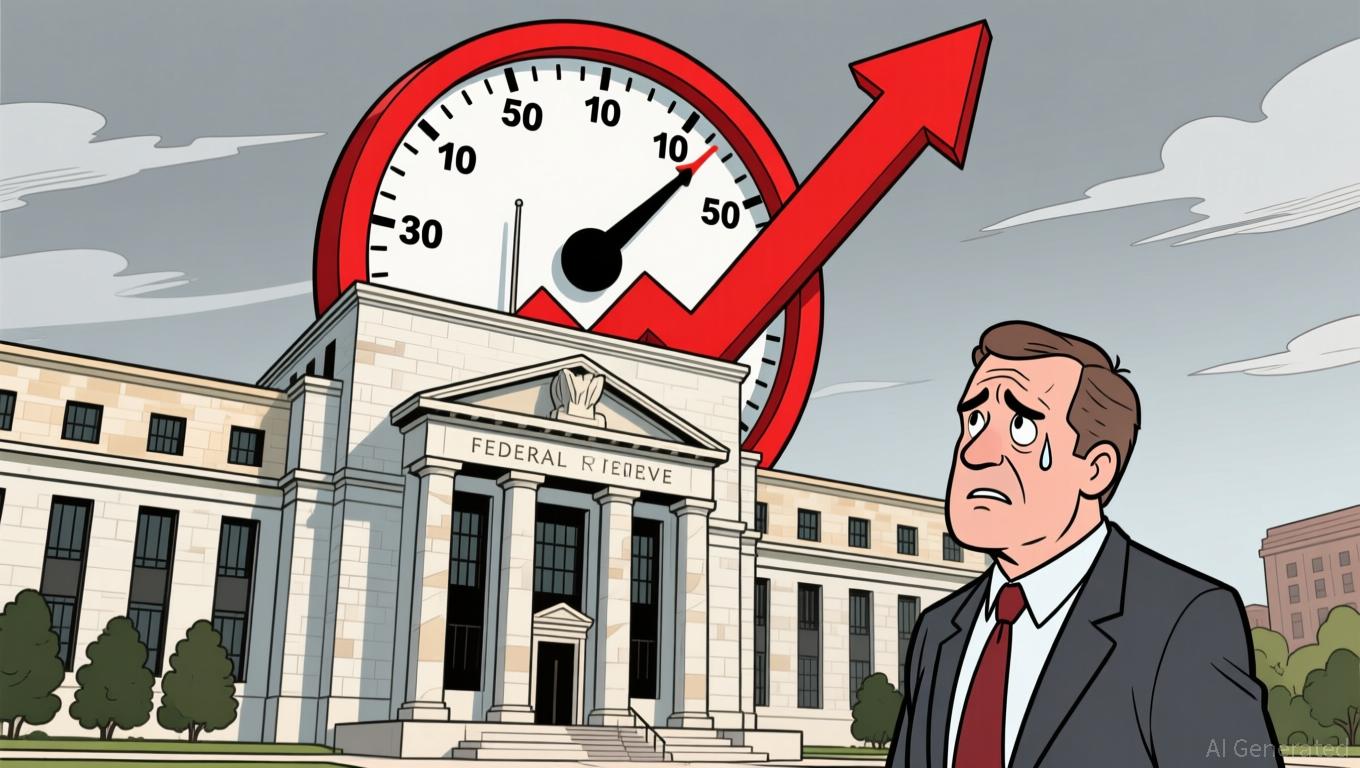
Demand Still Looks Strong Enough to Keep Inflation Pressures Alive
The core question is whether the economy looks cooled off yet. Schmid's answer is no. He says demand is outpacing supply across much of the economy, which is the kind of environment where additional rate cuts can reignite price pressures rather than deliver much help to jobs. He also says it is still too early to count on productivity gains or AI solving the inflation problem.
Ground-level pressure is still showing up in prices
Start with what households and businesses are feeling. Schmid says his contacts are focused on rising healthcare costs and insurance premiums. That is a useful reminder that inflation pressure is not only about volatile gasoline or one warm month in the data.
The data story points the same way. Schmid notes that inflation measures exclude energy are still running solidly above 2%, and the latest information is consistent with an inflation rate that remains close to 3%. That leaves little room for the Fed to act casual about price pressures.
Why the AI productivity argument is not enough yet
The bullish counterargument is that AI and faster productivity could expand supply enough to support growth without inflation. Schmid does not say that outcome is impossible. He says it is not the story yet, so investors should not assume the strong-demand problem has simply disappeared.
Yes, housing costs and rents are moderating. But Schmid's broader message is that shelter is only one part of the basket, and broader price pressures still deserve attention.
Is Schmid a Warning Signal or Just One Hawk Making a Case?
Why investors should not dismiss him
Schmid is not advancing a one-off view. He is a staunch hawk who dissented against the last two cuts, and he has been consistent in arguing that inflation is too high. He also says the current 3.5% to 3.75% range is no longer very restrictive, and that inflation measures excluding energy are still running solidly above 2%. That consistency makes his remarks more than a random hawkish outlier.
Why the bear case still matters
The main limitation is institutional, not rhetorical: Schmid is currently nonvoting on the rate committee. That means his speech is a signal, not a policy verdict. It also means investors should avoid reading too much into the idea that the entire Fed has suddenly shifted from easing to tightening. His remarks are best understood as a warning that the current stance may still be too accommodative.
The real test is whether other Fed officials start echoing him
For markets, that is the key split. If more Fed speakers begin using similar language, Schmid's message becomes more important. If not, this may look more like an overreaction to one voice than the start of a broader hawkish turn.
What to Watch Next if Schmid's Hawkish Read Keeps Coming Into Focus
This is still a rates-first story. Schmid is currently nonvoting, and his influence should be tracked through future data and Fed commentary rather than treated as a final call on policy.
The signposts that actually matter
- Inflation data, read straightforwardly. Schmid has said he wants more convincing evidence that overall inflation is moving in the right direction before he feels comfortable backing further easing.
- Labor-market strength or softness. His caution rests on an economy showing continued momentum. If employment weakens meaningfully, the case for more patience strengthens.
- More regional Fed presidents echoing the same caution. One official can flag a risk; repeated messaging is harder to dismiss.
- Broader Fed language on patience versus tightening. If the Committee stays patient without sounding more uneasy about inflation, this episode may fade quickly.
The cleanest invalidation signals are simpler: better inflation behavior, softer demand, or a more patient Fed tone. If none of those show up, the risk for markets is not missing a rally. It is underestimating how long inflation may keep policy from easing freely.