Revenue trends still set these consumer staples stories apart
Costco is growing, General MillsGIS-- is not
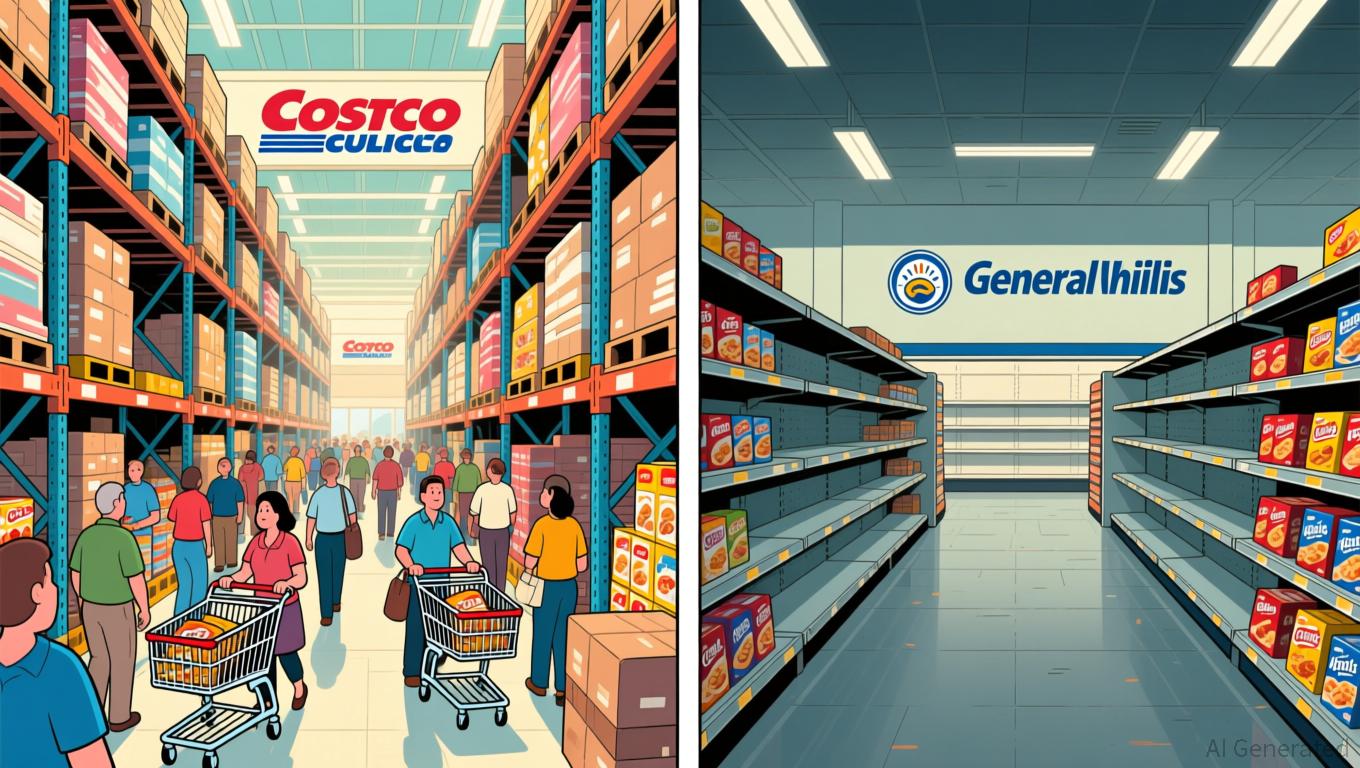
Costco just posted 11.6% quarter net sales growth to $69.15 billion, with year-to-date sales up 9.6%. General Mills, by contrast, reported net sales down 8% and organic net sales down 3%. That is a wide gap in operating momentum.
General Mills also disclosed a 6-point headwind from the net impact of divestitures and acquisitions and an unfavorable trade expense timing comparison. Those items matter, but they do not change the basic picture: CostcoCOST-- is still expanding cleanly, while General Mills is still working through a difficult quarter.
Why the difference matters now
Investors usually pay more for businesses that can keep compounding without asking them to wait for a reset. Costco is still doing that. General Mills is asking investors to look through a planned difficult stretch and wait for a better quarter.
Quick Backtesting Tool
Costco's growth looks broad, not accidental
The comp report strengthens the story
The headline sales growth matters, but the broader comp report matters more. Costco said adjusted U.S. comp rose 9.4% and Canada comp rose 10.7%. That points to wide-based demand rather than a result driven by one market or one temporary factor.
The business model still fits the results
Costco's operating model is simple: low prices on a limited selection, high volume, rapid inventory turnover, and profits that come from scale and membership behavior. Strong quarter-over-quarter sales growth and broad comps fit that model well.
What to watch in Costco's numbers
The main watchpoint is whether this momentum holds. If comps and sales growth stay broad across markets, the current setup remains intact. If growth narrows materially, the simplicity of the thesis becomes less compelling.
General Mills is still in cleanup mode
The numbers still show real pressure
General Mills said net sales down 8% in the quarter. Management also said the first three quarters were expected to be pressured by investments, divestitures, and unfavorable timing comparisons. That explains part of the weakness, but it does not erase it.
The cited release does not, on its own, confirm the broader claim that the brands are not yet converting consumer demand into sales and profits or that General Mills posted nine-month net sales down 7% with diluted EPS down 50%. Investors should be careful not to read more into the quarter than the cited evidence actually supports.
Why the rebound story still needs proof
Management says it expects a step up in organic sales trends and return to earnings growth in the fourth quarter. That may happen, but it is still a forward expectation, not verified recovery. Until cleaner results show up in reported sales and profit, General Mills looks more like a watchlist turnaround than a clear winner.
What the comparison means for investors
The practical split
This is less about heroes and villains than about timing. Costco still has 11.6% quarter net sales growth and broad comp strength. General Mills is still in a planned difficult stretch shaped by investments, divestitures, and timing noise.
What would change the call
The Costco case weakens if comp growth softens across its major markets. The General Mills case improves only if stronger trends show up in reported numbers, not just in guidance language. For now, the cited evidence still supports a cleaner near-term reading for Costco than for General Mills.