- AMD is expected to report Q2 2026 earnings of $1.61 per share and revenue of $11.30 billion, reflecting strong momentum in its data center segment.
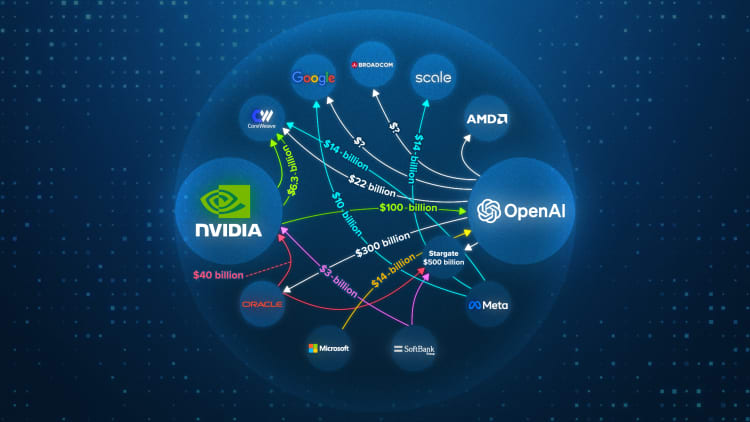
- The semiconductor giant has secured significant AI infrastructure deals with major tech players, including a $5 billion investment in Anthropic and a massive GPU deployment agreement with OpenAI.
- Analyst price targets for the stock span a wide range, from $500 to $685, driven by bullish long-term AI projections tempered by near-term valuation concerns.
- Institutional investors show mixed sentiment, with major funds like Vanguard increasing their stakes while others, such as Vestor Capital, drastically reduced their positions.
Advanced Micro Devices is currently navigating a critical juncture in its evolution from a traditional chipmaker to a dominant force in the artificial intelligence infrastructure space. As the company prepares to report its second-quarter earnings for 2026, investors are closely monitoring whether the firm can sustain its impressive growth trajectory amid an increasingly competitive landscape. The market is looking for concrete evidence that strategic partnerships with industry titans are translating into sustained revenue and long-term market share gains.
What Are Analyst Expectations for AMDAMD-- Stock Price?
Wall Street analysts have outlined a highly optimistic outlook for AMD's upcoming earnings report. When the company releases its second-quarter results after the market closes on August 4, 2026, investors anticipate revenue to jump 47% year-over-year to $11.31 billion. Earnings per share are expected to rise significantly from $0.48 to $1.61, building on a strong first quarter where the company beat consensus estimates with $1.37 in EPS and $10.25 billion in revenue.
The consensus analyst rating leans heavily toward a "Moderate Buy," with an average price target of $529.46, implying an upside of roughly 11% from recent trading levels. However, the range of expectations is quite broad, reflecting differing views on the company's near-term growth sustainability. Mizuho Securities recently raised its price target to $625, citing strong demand signals from major tech firms for the Helios AI platform and the commercialization of its 6th-Generation EPYC CPUs. Other firms, such as Benchmark and Stifel, have set even higher targets of $685 and $635 respectively, driven by an upward revision of the total addressable market for AI accelerators to $2 trillion by the end of the decade.
Conversely, some analysts remain cautious. Citigroup recently adjusted its price target to $575, while others like Zacks Research and Barclays have downgraded the stock to "hold" or "underweight," primarily due to the stock's elevated valuation multiples. Despite these cautionary notes, the prevailing sentiment is that AMD's deepening integration with the AI ecosystem provides a robust foundation for future growth.
Why Is AMD Stock Valuation Considered Expensive?
Despite beating earnings estimates and reporting strong revenue growth, AMD's stock trades at a demanding price-to-earnings (P/E) ratio of approximately 156 to 173, depending on the exact earnings figure used for the calculation. This premium is significantly higher than the broader market average of roughly 40 and the Technology sector average of around 80. This valuation gap highlights the market's expectation for sustained, high-double-digit growth in the company's data center segment over the coming years.
The high multiple is largely justified by the company's strategic positioning in the AI boom. AMD has transitioned from a niche player to a credible second-source supplier for hyperscalers, securing major commitments from Microsoft, Meta, and OpenAI. For instance, Meta has committed to purchasing 6 gigawatts of AMD Instinct GPUs, and OpenAI has secured a deal to deploy a similar capacity, which also includes an option for the AI firm to take a 10% equity stake in AMD. These deals are designed to secure long-term demand for AMD's AI accelerators and server CPUs.
However, the elevated valuation exposes the stock to significant downside risk if growth slows or competition from NVIDIA intensifies. NVIDIA maintains a dominant position in the AI chip market with an 80% share and significantly higher gross margins of around 75%, compared to AMD's 55%. While AMD is gaining traction, it must execute flawlessly to justify its current market pricing. Any miss in future earnings or a slowdown in capital expenditure by hyperscalers could lead to a sharp correction in the stock price.
How Are Institutional Investors Reacting to AMD Stock Price Movements?
Institutional ownership dynamics for AMD present a mixed picture, reflecting the divergent views on the company's growth potential versus its valuation. Major long-term holders continue to increase their exposure to the semiconductor giant. Vanguard Group Inc. boosted its stake by 1.6%, now holding over 158 million shares worth approximately $33.9 billion. State Street Corp and Geode Capital Management also raised their positions, while Norges Bank initiated a new stake worth nearly $5 billion.
In stark contrast, some institutional investors have moved aggressively to reduce their exposure. Vestor Capital LLC drastically cut its position in the first quarter of 2026, selling 99.3% of its AMD shares and retaining only a nominal holding worth about $269,000. This divestment occurred despite the company reporting strong quarterly results, suggesting that some institutional players view the current stock price as fully valued or overvalued relative to near-term risks.
Insider selling has also been notable in recent months, with executives and directors selling approximately $141 million worth of shares over the last 90 days. While much of this selling is often routine and tied to pre-arranged 10b5-1 trading plans for compensation diversification, it nonetheless adds a layer of complexity to the investment case. For retail investors, these institutional moves serve as a reminder that while the long-term AI thesis for AMD remains strong, short-term price fluctuations can be driven by profit-taking and valuation adjustments from major market participants.
What Is the Future Outlook for AMD in the AI Market?
Looking ahead, AMD is well-positioned to capitalize on the expanding AI infrastructure market. The company recently announced a partnership with Core Scientific to secure up to 2.5 gigawatts of data-center capacity, focusing on its Instinct GPUs and EPYC CPUs. Additionally, a strategic alliance with Cerebras aims to merge AMD's Helios rack-scale architecture with Cerebras' wafer-scale processing technology, creating a specialized AI inference platform.
The commercialization of AMD's next-generation products is also a key catalyst. Full-scale production has commenced for its 6th-Generation EPYC CPUs, with cloud service providers expected to begin deployments in the fourth quarter of 2026. Furthermore, the volume ramp for the MI450 accelerator is scheduled to begin in the third quarter, directly competing against NVIDIA's Vera Rubin roadmap.
As the CPU-to-GPU ratio in AI servers shifts toward 1:1 configurations, AMD's opportunities in the server CPU market are expected to grow significantly. The total addressable market for AI accelerators is projected to exceed $200 billion in 2026, and AMD's ability to capture a larger slice of this pie will be critical to sustaining its stock price appreciation. While the road ahead involves navigating intense competition and managing high investor expectations, AMD's strategic moves suggest it is building a durable moat in the rapidly evolving AI hardware landscape.