
Nifty 50 Index Slides as Oil Prices Hit $108: What Is Happening Now?
 Aime Summary
Indian benchmark indices have extended their losing streak to five consecutive weeks, with the Nifty 50 falling to its lowest level since June 11.
Escalating geopolitical tensions in the Middle East have driven Brent crude oil prices above $108 per barrel, creating severe inflationary headwinds for the Indian economy.
The National Stock Exchange (NSE) has set its IPO price band at ₹1,700 to ₹1,785 per share, marking a major milestone for India's capital markets after nearly a decade of regulatory delays.
Synchronized global monetary tightening and heavy Foreign Institutional Investor (FII) selling have compounded the market's downward pressure, particularly in large-cap sectors.
Investors are closely monitoring the US Federal Reserve's upcoming policy decision and the ongoing risks to the Strait of Hormuz for further market direction.
Indian equity markets are navigating a perfect storm of geopolitical risk, inflationary pressures, and liquidity tightening. The Nifty 50 index has now endured its longest weekly decline in five months, driven by a confluence of factors that have tested investor sentiment to its limits. As the global economy grapples with the fallout of the US-Iran conflict, India—a massive net importer of energy—finds itself particularly vulnerable to the surging cost of crude oil. This environment has forced a broad-based sell-off, pushing major indices down and reshaping the near-term outlook for retail and institutional investors alike.
What Is Driving the Nifty 50 to Five-Week Losing Streak?
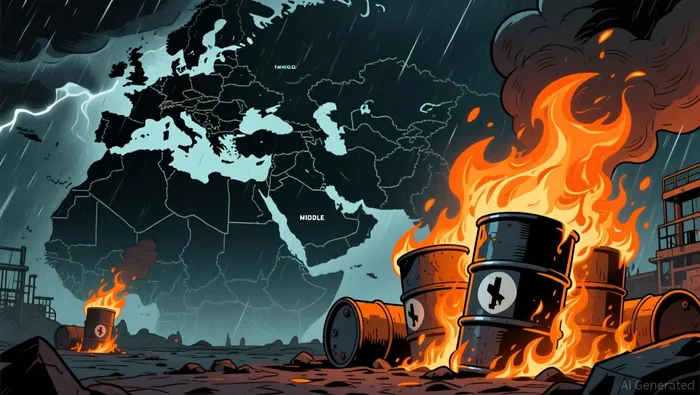
The primary catalyst behind the Nifty 50's recent decline is an energy-led inflation narrative that has gripped global markets. Brent crude oil prices have surged past the psychologically critical $108 per barrel mark, fueled by escalating hostilities in West Asia. Reports indicate that Iran-aligned Houthis have seized control of Yemen's port city of Mocha, threatening shipping through the Red Sea, while tanker attacks have intensified around the strategically vital Strait of Hormuz. This geopolitical friction has created a substantial risk premium in oil prices, with the International Energy Agency (IEA) warning that the global refining system is currently "stretched to the limit".
For India, which imports the bulk of its energy requirements, these price hikes are a direct hit to the current account and corporate profitability. Higher crude prices increase the import bill, exacerbate inflationary pressures, and squeeze margins in oil-sensitive sectors such as aviation, paints, tyres, and chemicals. The market reaction has been swift and severe, with 15 of the 16 major sectors on the Nifty recording weekly declines. Nifty Realty and Nifty IT were among the hardest hit, falling 6.5% and 5.8% respectively, highlighting the market's sensitivity to rising costs and global growth fears.
Compounding the energy crisis is the resumed selling by Foreign Institutional Investors (FIIs). After a brief period of net buying in July and August, foreign funds have returned to the sidelines, withdrawing over $1.36 billion in September alone. This capital outflow has removed a critical source of liquidity, leaving domestic institutional investors to absorb the selling pressure. The combination of FII outflows and a busy initial public offering (IPO) season has created a supply-demand imbalance that has weighed heavily on index levels.
How Is the NSE IPO Structured and What Does It Mean for Retail Investors?
Amidst the market volatility, the National Stock Exchange (NSE) has taken a monumental step toward listing on its own platform. The exchange has fixed its IPO price band at ₹1,700 to ₹1,785 per equity share, finalizing a public issue valued at up to ₹22,569 crore. This offering, which opens for subscription on September 17 and is expected to list on September 24, represents India's second-largest IPO in history, trailing only the 2022 LIC listing.
Crucially, this IPO is structured entirely as an Offer for Sale (OFS). This means that the NSE will not receive any proceeds from the listing; all funds raised will accrue to the existing shareholders. Key sellers include State Bank of India, which is reducing its stake to 1.60 crore shares, as well as MS Strategic (Mauritius) Ltd and Bank of Baroda. The issue is reserved 50% for Qualified Institutional Buyers (QIBs), 15% for Non-Institutional Investors (NIIs), and 35% for retail investors. For retail participants, the minimum investment amount is set at ₹14,280, which corresponds to two equity shares.
The listing marks the end of a nearly decade-long regulatory journey for the exchange, which faced significant hurdles following past co-location controversies. With regulatory approvals finally cleared by SEBI, the NSE IPO is expected to bring substantial liquidity to the market, although the OFS structure means the exchange itself remains debt-free and financially independent of the listing proceeds. Investors should note that the valuation at the upper band reflects the premium placed on India's financial infrastructure, but the lack of fresh capital raises questions about immediate growth funding for the exchange itself.
Will US Fed Rate Hikes and Oil Prices Cap the Market Recovery?
The outlook for the Nifty 50 remains clouded by external monetary policy shifts and persistent energy risks. Stronger-than-expected US inflation data has reinforced expectations that the Federal Reserve will adopt a hawkish stance at its upcoming policy decision on September 16. Federal funds futures currently indicate greater than 70% probability of a rate hike, which would strengthen the US dollar and potentially trigger further capital outflows from emerging markets like India.
Simultaneously, the geopolitical risk premium in oil prices shows little sign of dissipating. Chevron CEO Mike Wirth has warned that strategic crude oil buffers, which previously limited price spikes, have been depleted. This suggests that any further disruptions to supply—whether through attacks on tankers or refineries—could push prices even higher, keeping inflationary pressures firmly in play.
In this environment, broader markets have shown relative resilience compared to large-caps. The Nifty Midcap 100 and Nifty Smallcap 100 declined only 1.4% and 0.9% respectively for the week, outperforming their large-cap counterparts. This divergence suggests that investors are rotating into smaller, domestically focused companies that are less exposed to global energy shocks. However, with the Nifty 50 at its lowest levels since June, the path to recovery will depend heavily on diplomatic developments in the Middle East and a potential pause in the Federal Reserve's tightening cycle.
What to Watch Next
Investors should monitor the US Federal Reserve's interest rate decision on September 16 and any diplomatic breakthroughs that could ease tensions in the Strait of Hormuz. Additionally, the subscription details of the NSE IPO will provide a barometer for domestic institutional confidence in India's financial infrastructure amidst global uncertainty.

Stay ahead of the market.
Get curated U.S. market news, insights and key dates delivered to your inbox.


AInvest
PRO
AInvest
PRO




Comments
No comments yet