Why the 37-market rollout matters
This is not just another stablecoin launch. It is a broad test of whether Western UnionWU-- can keep money moving through its own rails after a remittance lands.
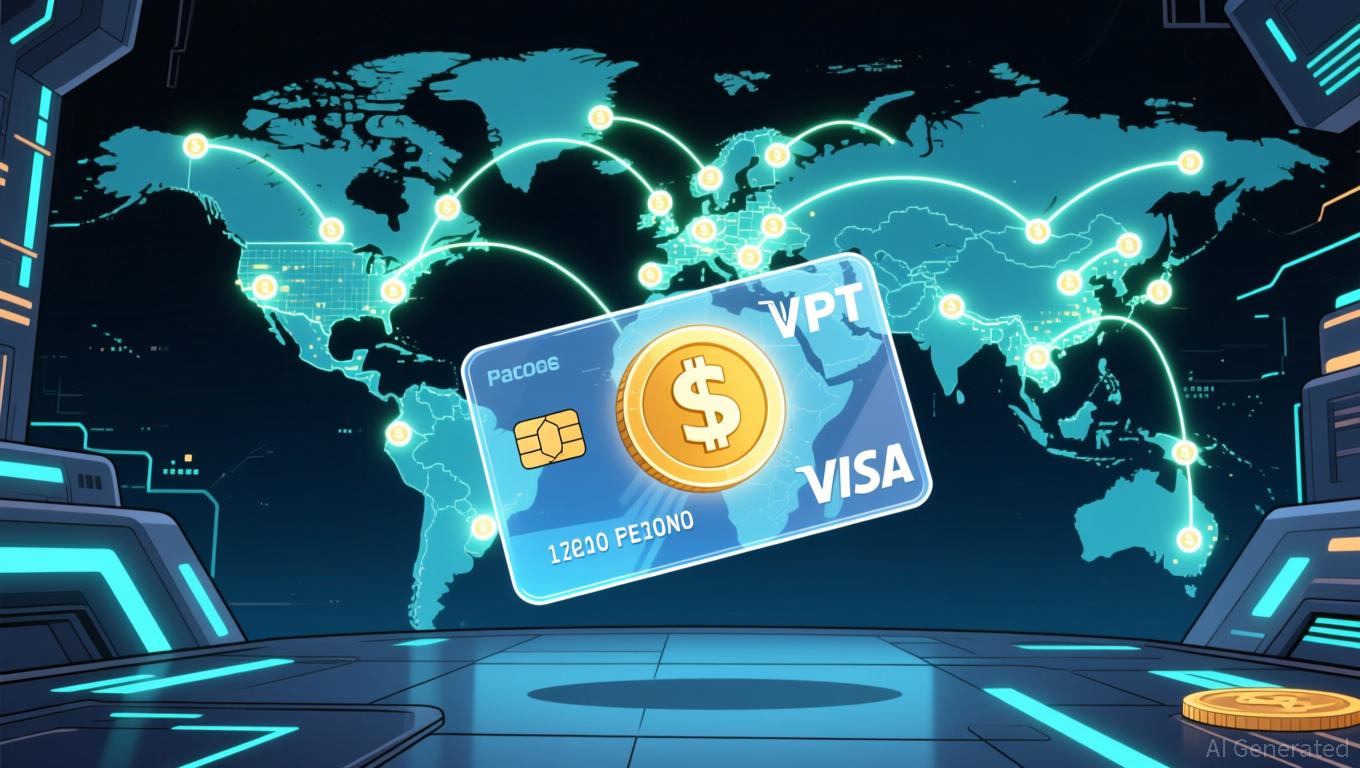
Stablecard is a Rain-powered Visa card that lets recipients hold dollar-backed stablecoins and spend them wherever VisaV-- is accepted. The card is funded in USDPT, which is pegged 1:1 to the U.S. dollar, issued by Anchorage Digital Bank, and built on SolanaSOL--. In practice, Western Union is trying to change what happens after receipt: instead of an immediate cash-out, users can hold value and then spend it at 175M merchant locations, with automatic fiat conversion at the point of sale handling the rest.
The bigger question is user behavior. If funds stay in USDPT and circulate through payments rather than leaving immediately, Western Union extends the post-transfer relationship and creates additional monetization opportunities. That is why the rollout footprint matters. The product is launching in 37 markets, with Western Union targeting 60+ markets by year-end, which makes this a rapid rollout test rather than a narrow pilot.
Quick Backtesting Tool
The bear case is simpler: in many remittance corridors, users still want cash fast, especially where local currency is not stable. If recipients load USDPT and immediately convert it out, the card works as a better off-ramp but not necessarily as a true daily-spend wallet.
What Western Union is actually trying to change
The key point is not the token alone, but where Western Union placed that token in the payment chain.
Settlement may matter more than consumer-facing hype
The economic lever starts with settlement. Western Union has paired USDPT with a Digital Asset Network on Solana and tied it to its own payment infrastructure, not just to a consumer card product. The company has said USDPT could support treasury functions and give partners, agents, and customers more ways to send, receive, spend, and hold the token through its network.
That matters because the stablecoin is meant to sit inside Western Union's plumbing, not merely wrap the consumer experience. If it reduces settlement lag and simplifies agent funding, the economic payoff can show up before recurring card spend does.
Liquidity and reserves keep the thesis grounded
The more durable upside is balance-sheet efficiency. Western Union has described USDPT as a more efficient settlement layer that can work inside its payment system rather than sitting around as idle float. That is the kind of operational gain that could improve economics without needing a dramatic spike in headline volume.
There is a constraint, though: USDPT is issued by Anchorage Digital Bank, and its reserves include bank deposits, US Treasury bills, and similar cash equivalents. That keeps the product closely tied to traditional liquidity management and regulation, rather than leaving it as a purely crypto-native experiment.
Where the bull and bear cases diverge
The bull case is straightforward: Western Union gets three linked opportunities in one flow-inbound settlement, on-network liquidity management, and automatic fiat conversion at the point of sale through the Rain-powered Visa card.
The bear case is also straightforward: if recipients quickly convert into local cash or bank accounts, the consumer outcome is still convenient, but the longer-term 'daily dollar wallet' payoff becomes smaller.
Solana is secondary in this debate. Some outside observers have already raised questions whether payment-driven chain demand is durable. For this rollout, though, the chain is mainly the transport layer. The more important test is whether USDPT meaningfully improves settlement and fund utilization across Western Union's network.
What would confirm the thesis now?
The launch footprint is already broad enough to matter, with the card live in 37 markets at launch and usable at millions of Visa merchant locations. But availability alone does not prove a new spend loop.
Signals worth watching
- Hold behavior: Do recipients keep value in USDPT after receipt instead of draining it immediately?
- Repeat merchant spend: Does the card generate recurring transactions through automatic fiat conversion at the point of sale?
- Settlement utility: Does USDPT function as a more efficient settlement layer inside Western Union's system rather than simply speeding up a one-way transfer?
Why the moat is still contested
Bulls argue the edge is not the token by itself, but Western Union's ability to combine its global compliance and risk capacities with its distribution network and digital-asset infrastructure. Bears argue the harder moat may be external: if partner terms, chain economics, or platform access change, critics will say the infrastructure layer is easier to copy than the underlying remittance network, and some observers have already raised questions whether payment-driven chain demand is durable.
What would confirm, or weaken, the setup
The next real catalyst is not another launch headline. It is whether a broad rollout produces three things together: higher post-receipt balances, repeat merchant spend, and measurable settlement utility. If those signals show up together, Western Union starts to look less like a faster off-ramp and more like a platform with a new spend flow. If money keeps passing through without sticking, the product is still an improvement to the pipe rather than a fundamentally new moat.