VTEB's tax-free yield is real, but the after-tax comparison is what matters
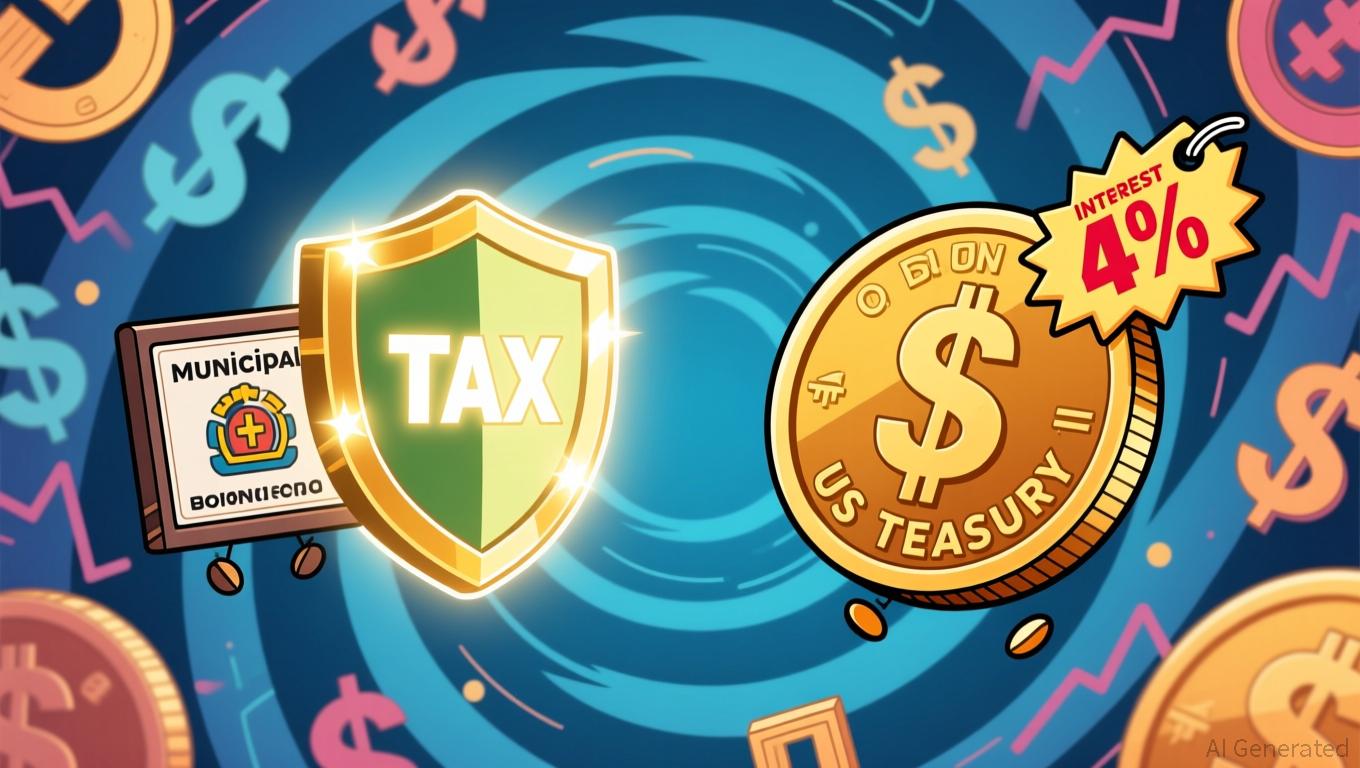
VTEB's 3.4% tax-free yield is real, but whether it is the right choice depends on your tax bracket and what you mean by "tax free." With the 10-year Treasury yielding 4.71%, the comparison is straightforward: a 3.4% municipal yield only beats a Treasury yield if your ordinary-income tax rate is high enough to close the gap.
The break-even math
At a 3.4% federal-tax-free yield, VTEB's taxable-equivalent yield works out to about 4.36% at 22%, 4.47% at 24%, 5.00% at 32%, and 5.74% at 37% plus the 3.8% NIIT. Against a 4.71% 10-year Treasury, that leaves:
- 22% and 24% brackets: Treasuries likely win after tax.
- 32% bracket: VTEBVTEB-- starts to make sense.
- 37% plus NIIT: The municipal advantage widens quickly.
So the headline is true, but the decision is not "munis always beat Treasuries." It is at what marginal bracket the IRS savings matter enough.
What is actually tax-free
VTEB tracks an Standard & Poor's National AMT-Free Municipal Bond Index, so alternative minimum tax is not part of the picture. But the "tax-free" label should not do all the work. The fund provides federal interest exemption; it does not automatically erase state tax on municipal interest, and capital gains realized on the shares remain taxable. That is why the real question is not just the sticker yield, but your bracket, your state situation, and whether the extra tax shelter is worth the fund's rate sensitivity today.
Why VTEB still works as a low-cost core municipal holding
That yield math only matters if the vehicle underneath is durable enough to serve as a core holding. On that test, VTEB has real credibility. It offers income from a portfolio of roughly 4,200 investment-grade municipal bonds, with $45.75 billion in assets and a 0.03% expense ratio. For investors who want broad municipal exposure without much fee drag, that is a strong base setup.
Quick Backtesting Tool
Why it earns respect
VTEB is not a clever bet. It is a broad slice of the investment-grade municipal market, designed to track the Standard & Poor's National AMT-Free Municipal Bond Index. In plain English, you are buying a small piece of the business of local-government credit at very low cost, rather than betting that one manager will outsmart the market.
What "core" means here
A core holding should do the heavy lifting quietly. VTEB fits that role because it spreads risk across thousands of issuers and charges almost nothing to do it. It is built for investors who want tax-exempt income with limited drama.
But "core" is not the same as "safe." VTEB still carries intermediate duration, and that matters in a shifting rate environment. The fund's own analysis notes that moderate drawdowns during sudden interest rate spikes are the tradeoff for owning this middle of the curve. Respect the structure, but do not confuse diversification and low fees with immunity.
The real trade-off is tax-free income versus rate risk
The real debate is not "tax free or not." It is whether the tax shelter is worth the price volatility that comes with average duration near 6.9 years. Think of VTEB as carrying roughly a seven-year rate sensitivity: if rates fall, that setup can help; if rates rise, market value can drop before the coupons do their work.
The bull case
Supporters are not ignoring history. VTEB still carried an 8.18% drop during 2022, but that was the expected reaction when the rate environment changed fast, not proof of a broken credit story. The bullish case is simple: you get broad, diversified investment-grade exposure through a fund with a 0.03% expense ratio, plus federal tax exemption on the income. If you expect rates to stabilize or fall, that volatility is the price of admission for a better tax-adjusted payout.
The bear case
Skeptics are making a different trade-off calculation. They argue that today's rate backdrop makes intermediate duration less attractive, especially when Treasuries already offer a strong taxable benchmark. That view does not require a crash thesis. It only says you may be accepting visible drawdown risk without enough extra compensation. If rates stay sticky or move higher, the paper loss can feel large enough to outweigh the appeal of "tax free."
Where the decision splits
That is the fork in the road now. Investors in roughly the 32% bracket or higher, holding VTEB in a taxable account, may still prefer the tax-free income despite the ride. Everyone else should compare alternatives more carefully, whether that is shorter-duration municipal exposure or simpler Treasury exposure for a cleaner after-tax comparison. That is the real opportunity cost today: not missing a muni yield, but locking into the wrong duration for your bracket and your rate outlook.
Who should buy VTEB now, and who should wait
The decision now is less about whether VTEB works and more about who should own it in this rate snapshot. VTEB still gives investors a broad piece of the municipal market through roughly 4,200 investment-grade municipal bonds, while the fund's fee drag is essentially nonexistent at a 0.03% expense ratio. But with the 10-year Treasury yielding 4.71%, the case for respecting duration is harder to dismiss.
Best-fit buyer
VTEB makes the most sense if you are roughly in the 32% federal bracket or higher, holding it in a taxable account, and you want a low-drama core municipal position rather than maximum stability. In that setup, the earlier break-even math works in your favor, and you are buying a diversified slice of the investment-grade segment of the U.S. municipal bond market without much cost friction.
Better default for others
If you are below that bracket, or you care more about preserving value than squeezing out the highest tax-free yield, shorter duration deserves a closer look. The more sensible comparison set includes funds such as VGIT, VGSH, or VTIP. You may give up some coupon, but you reduce the rate sensitivity that comes with average duration near 6.9 years.