VGT Can Keep Rising on AI Spending Alone
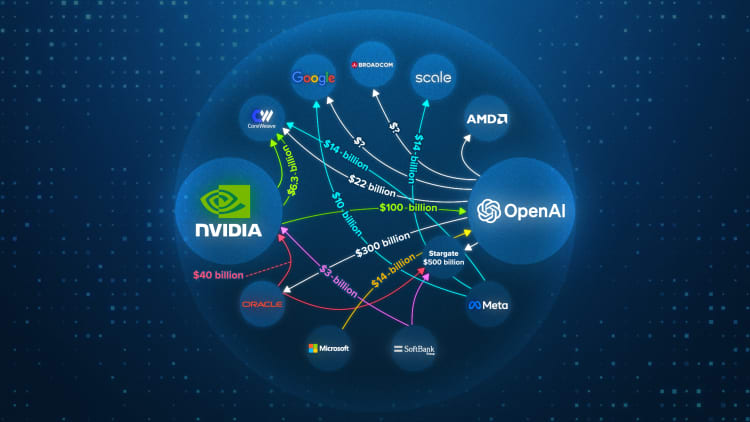
VGT does not need clear AI profitability to keep gaining ground over the next few quarters. It already owns much of the market's exposure to the spending wave itself. Four hyperscalers alone have pointed to about $650 billion in 2026 capital expenditures. Goldman Sachs projects megacap AI spending at roughly $765 billion this year, rising to nearly $1.2 trillion in 2027. That money is moving now, flowing toward servers, networking, power equipment, memory, and the suppliers that support them.
What matters in this phase is investor behavior as much as fundamentals. Fear of missing the dominant AI winners can keep markets loyal to the trade long before returns are obvious. Recency bias reinforces that stance: each capex increase or guidance raise is read as evidence that the buildout is still accelerating, even if the economics remain contested. If that pattern continues, demand names tied to infrastructure can stay supported before software-level monetization is fully visible.
VGT is a direct vehicle for that stage of the cycle. It holds $147.3 billion in net assets, charges a 0.09% expense ratio, and its top 10 holdings account for 60.59% of assets. If the next few quarters bring another round of heavy capex guidance, the fund is already positioned to capture the market's reaction. Waiting for proof of AI profitability could mean waiting until the easier rerating is over.
Quick Backtesting Tool
The Real Debate Is Timing, Not Whether AI Matters
The central question is not whether AI matters. It is whether investors can tolerate the gap between spending and earnings longer than consensus expects.
Bears focus on cash outflows before returns
The skeptical case is straightforward. Reuters reported that five to six major tech firms could outspend cash flow by 2027. The same analysis showed capex rising by roughly $534 billion while operating cash flow grew by about $340 billion between 2025 and 2027. Add reports that some megacaps are already burning through their cash, and the concern is easy to understand. Investors naturally get uneasy when huge capital outlays arrive before clean, scaled returns show up.
But "not yet" is being treated as "not enough." That is the behavioral trap. When investors focus mainly on cash-flow strain, they can underweight the fact that demand is still accelerating today. The market wants the income statement to catch up before it gives the capex wave credit. In a quiet market, that is rational. In a buildout phase, it can mean waiting until the first part of the move is already gone.
Why the spending still reaches VGT
The key point is that the money does not disappear. It moves downstream. Reuters recently flagged that AI rollout spending could reach about $1.1 trillion next year, fueling demand for memory chips and broader semiconductor stocks. That matters because VGTVGT-- is not only a bet on clean AI software margins. It already includes equipment, interconnect, memory, and other infrastructure names that can benefit as spending moves through the supply chain.
If that transmission path keeps widening, VGT can still rise even if enterprise AI profitability remains messy. The fund does not need every hyperscaler to prove ROI this quarter. It needs the supply chain to keep converting spending into revenue.
The bull case depends on the spending cycle, not final proof
The strongest support for the bull case is that monetization is no longer purely theoretical, even if it is still incomplete. Companies are still investing at scale, and that keeps revenue flowing to parts of the ecosystem VGT owns. That does not settle the long-run return question, but it does weaken the argument that this buildout is happening without any near-term economic follow-through.
The practical takeaway is timing. Skeptics are right that cash flow is coming under pressure. But if spending keeps rising before ROI becomes obvious, the market may keep rewarding the sellers before the buyers. Waiting for full accounting clarity could mean missing the hardest psychological part of the cycle.
VGT's Concentration Helps and Hurts
VGT can still work, but investors should be clear about what they own. This is not a balanced tech basket. It is a low-cost way to express the megacap AI buildout, with $147 billion in net assets already tilted toward the platforms spending heavily and the suppliers getting paid along the way. That structure can amplify gains, but it can also amplify a backlash.
More holdings do not mean much diversification
VGT may list 327 total holdings, but that breadth does not fully dilute concentration risk. The top 10 holdings account for 60.59% of assets, and the top three alone make up 41.91%. In practice, returns are still tied closely to a small group of megacaps and their supply chain.
That matters more when the market shifts from story-tolerance to cash-flow discipline. Bulls have had room to argue that spending is still rising and returns are still future-looking. But once investors decide the bill is coming due sooner rather than later, concentration becomes a multiplier. The risk is not just that a few names drag the fund lower. It is that those same names could face multiple compression if the market no longer accepts heavy capex as sufficient justification on its own.
What keeps the trade alive, and what breaks it
Treat VGT as an infrastructure-led tech trade, not a set-it-and-forget-it diversifier. If belief in the spending cycle holds, concentration helps. If belief cracks, concentration can work against you quickly.