Sun Tekstil, a Turkish textile manufacturer that makes clothes for European brands, had its trading suspended on Borsa Istanbul because the stock's price moved enough to trip a circuit breaker.
That is not exactly a scandal. It is a plumbing event. But the plumbing, in this case, tells you something about who has the advantage when a market freezes for a minute.
The circuit breaker on Borsa Istanbul works as follows. When a stock's price change - measured against a reference value - reaches a threshold the exchange has set, continuous trading stops. The stock then enters a call auction period, where orders are collected and a single clearing price is determined. After that, continuous trading resumes. The announcement language is boilerplate: "Continuous trading is suspended and order collection of the call auction period has started in the related instrument. Circuit Break Application."
Quick Backtesting Tool
The KAP (Turkey's public disclosure system) filing for Sun Tekstil bears that exact text. It was dated January 3, 2023. The competitor headline you might be seeing about this event sounds like breaking news but is actually more than three years old. That's the first weird thing about this story: the headline treats a routine exchange mechanism like a dramatic corporate event, when the mechanism fires all the time and the corporate drama is whatever caused the price to move in the first place.
But let's put the staleness aside and look at the machine, because the machine is interesting regardless of when Sun Tekstil happened to hit it.
A call auction during a circuit breaker is basically a speed bump for price discovery. When continuous trading stops, you can't execute at the market price anymore. Everyone has to submit limit orders into a collection window. After the window closes - standardized at 10 minutes for equities under rules revised in September 2025 - the exchange finds the single price that maximizes the number of shares traded and executes everything at that price.
That mechanism sounds neutral. It's not. Or at least, it doesn't treat all participants the same way.
Institutions, with better information and deeper order books, are better positioned to absorb a pause and then submit orders that clear at a favorable single price. Retail traders, who tend to react to headlines and chase momentum, end up on the wrong side of the auction more often.
Here's how the dialogue plays out:
Retail investor: My stock just dropped hard enough to trigger a halt. I'm worried it'll keep falling. Institutional desk: The halt gives us ten minutes to reassess. We'll submit a bid that's below the last trade but above where we think panic selling will stabilize. Exchange: All orders collected. Single clearing price set. Everyone executes at this number. Retail investor: Oh, I sold into the auction at basically the bottom of the pause.
The September 2025 rule changes tightened and streamlined the system. The post-circuit-breaker order collection period was standardized at 10 minutes for all continuously traded shares. For the broader market, the index-based circuit breaker shifted from a two-stage system (5% then 7%) to a single stage at 6%. The uptick rule for short selling - which requires shorts to execute at a price higher than the last trade - now triggers when the BIST 100 index falls by 2%, down from 3%. A temporary short-selling ban that had been in place since March 2025 also expired.
The exchange wanted pauses to be shorter and clearer. More trading time, less disruption. The goal is liquidity. But even with shorter pauses, the fundamental asymmetry doesn't change: a frozen market favors whoever can think faster than the clock.
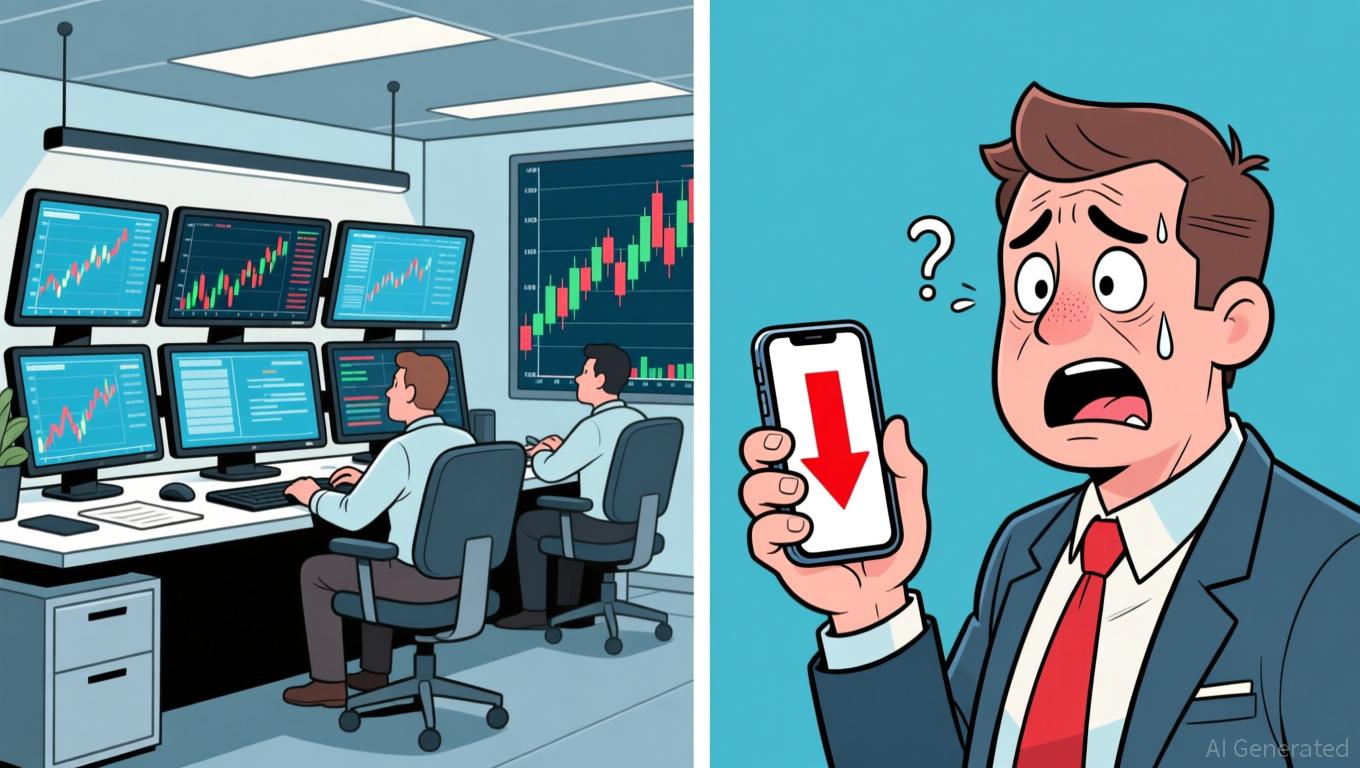
Sun Tekstil itself is a mid-cap textile exporter with trailing 12-month revenue around $309 million, selling capsule collections to brands in the UK and Spain. It's not a market-maker or a systemically important name. A circuit breaker on a stock like this usually means a sharp, relatively narrow selloff - maybe bad earnings, maybe a block trade at a discount, maybe just low liquidity amplifying a normal move. The halt doesn't tell you why the stock fell. It tells you that it fell enough to interrupt the exchange's normal trading method.
The simplest model here is that circuit breakers are designed to protect the market from itself, but they also create a brief window where the quality of your information matters more than usual. The exchange pauses continuous trading to give people time to breathe. The people who benefit most from time to breathe are the ones who already know more than the average submitter.
That's not a bug. It's just the shape of the incentive. When you stop a market, you don't stop information flow. You stop execution. And execution is where the less-informed participant gets hurt the most.
If you're seeing a headline about Sun Tekstil and a circuit breaker and wondering whether the stock is in trouble, the headline is probably recycling a 2023 filing. But if you're watching Turkish equities more broadly, the structural point is worth keeping in mind: the circuit breaker mechanism on Borsa Istanbul is a pause button that advantages the prepared. It's not dramatic. It's not a crisis. It's just a reminder that when an exchange says "take a breath," everyone doesn't breathe the same way.