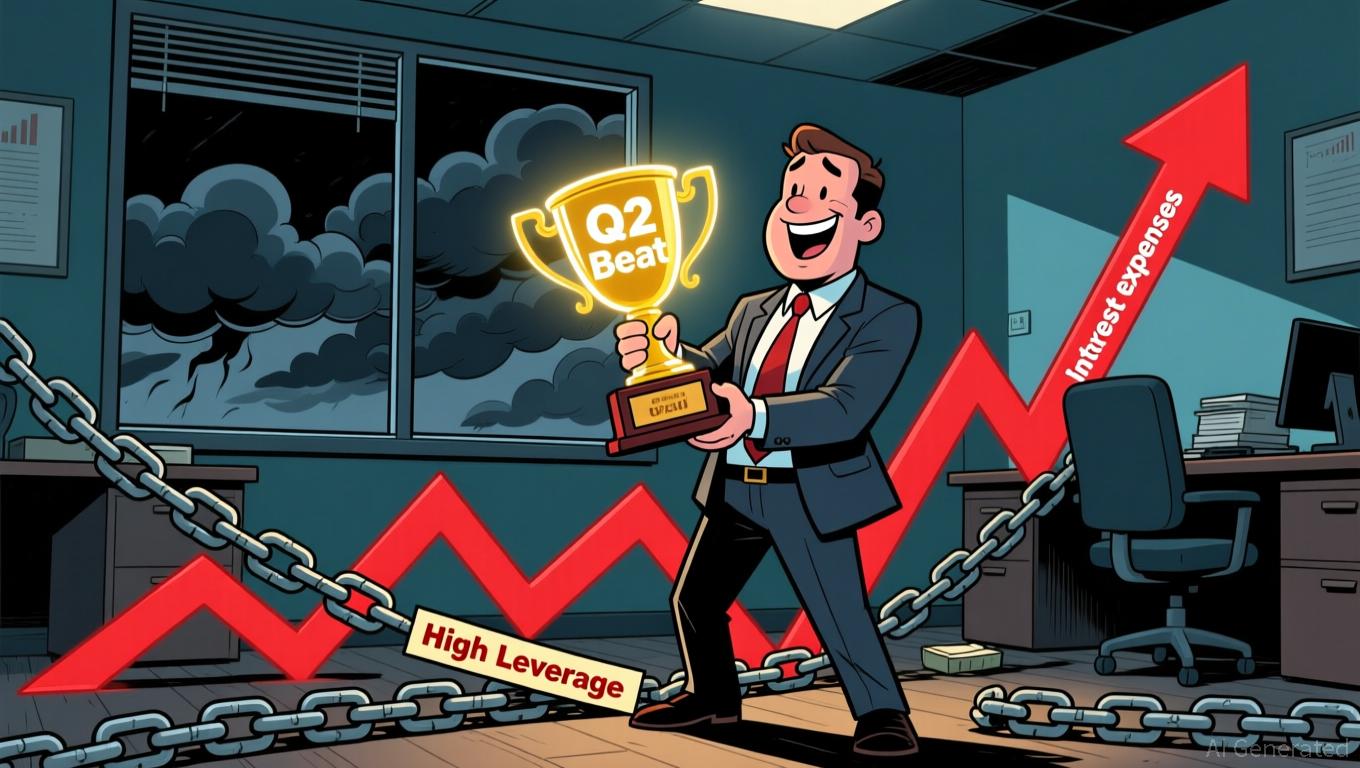
Q2 beat is real, but leverage is still the main risk
The headline numbers look solid: $97.84 million of Q2 revenue versus $94.7 million in estimates and $0.43 of net investment income per share, above the $0.42 consensus. That gives bulls a credible argument: TSLXTSLX-- is still generating enough current income to cover its $0.42 base quarterly dividend, which is the core requirement for a sponsored BDC in a tough credit cycle.
But the bigger issue is the balance sheet. Sixth Street enters the quarter with $3.3 billion of total investments funded by $2 billion of total principal debt outstanding, and the leverage multiple moved higher. For a leveraged BDC, that matters more than a modest earnings beat because leverage amplifies what happens if credit conditions worsen or funding costs stay elevated.
Income coverage still works, but the margin is thin
The operating story is still intact. TSLX posted $0.43 of Q2 net investment income per share against a $0.42 base quarterly dividend, with annualized ROE of 10.6% on net investment income and 10.5% on net income. That does not make the stock a clear buy, but it does show the income engine is still functioning well enough to support the dividend from current earnings.
Fee activity and asset yields are helping
Total investment income rose to $97.8 million in Q2 from $93.4 million in Q1. Interest and dividend income accounted for $88.5 million, while other fees increased to $5.4 million from $3.4 million, mainly due to higher prepayment fees. That gives the income stream a useful lift.
The portfolio is still earning at a strong level, with an 11.2% weighted-average yield on debt and income-producing securities at amortized cost. That helps explain why the company can absorb higher funding costs without an immediate break in the model.
Expense pressure and leverage are the watchpoints
One good quarter is helpful, but it does not change the underlying capital structure. Net expenses rose to $55.7 million from $52.4 million in Q1, primarily because interest expense increased. In other words, the company earned well, but part of that income was offset by higher financing costs.
What would keep the bull case intact
- Dividend coverage remains intact from current earnings.
- Fee activity continues to supplement base investment income.
- Asset yields stay high enough to cushion funding-cost pressure.
What could break the setup
- Higher leverage leaves less room for error if credit stress increases.
- Rising interest expense narrows the buffer below the headline earnings number.
- If prepayment fees start reflecting weaker borrowers refinancing under pressure, the signal becomes less constructive.
The practical read-through is straightforward: if credit quality remains contained and expense growth cools, this quarter can be viewed as solid execution. If credit conditions worsen while leverage stays elevated, the market is more likely to focus on the debt book than on the earnings beat.