Is the market pricing Oruka TherapeuticsORKA-- as the next great psoriasis franchise before it has actually proven it can be one?
That's the question the recent chatter is circling - and the numbers suggest the answer is yes. At a market cap of roughly $5.6 billion, with zero revenue and a lead asset still in Phase 2a, the stock has arguably baked in a near-flawless execution path from today's data to blockbuster status. The run-up from roughly $60 at the time of its $700 million public offering in April to nearly $100 now means the market has already done the heavy lifting. The risk/reward math at current levels is worth examining before deciding whether to stay in, trim, or move on.
The data that got us here
Oruka's story has been built on ORKA-001, a half-life-extended IL-23p19 monoclonal antibody - meaning it targets the same inflammatory pathway as current market leaders like AbbVie's Skyrizi and J&J's Tremfya, but with the potential for far less frequent dosing. In April, the company reported Week 16 results from its EVERLAST-A Phase 2a trial: 63.5% of participants achieved PASI 100, which is complete skin clearance. Eighty-three percent hit PASI 90 (90% improvement), and the safety profile was comparable to placebo.
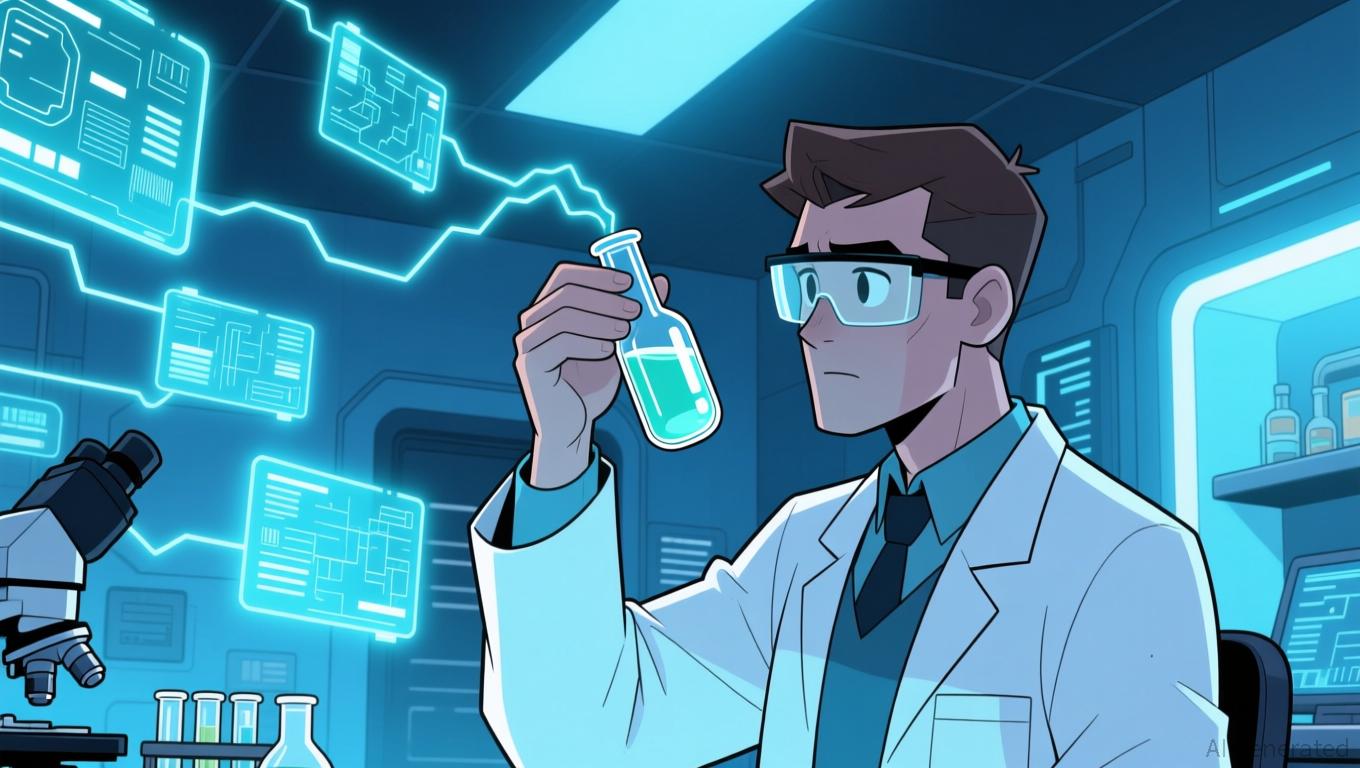
Those numbers are genuinely impressive. A Yale dermatologist serving as the trial's lead investigator called them "highly compelling" and suggested the product could become the preferred option if once- or twice-yearly dosing is confirmed. Phase 1 pharmacokinetic data supported that possibility - drug concentrations stayed above effective trough levels for a full year after a single 600 mg dose.
The market responded with enthusiasm. And then OrukaORKA-- raised $700 million in late April at roughly $60 per share, adding cash to fund operations through a BLA (Biologics License Application - the FDA filing that would lead to approval). The company also announced a collaboration with Halozyme to explore a needle-free delivery version using Hypercon technology, giving ORKA-001 an additional potential convenience edge.
Quick Backtesting Tool
The valuation disconnect
Here's where the "priced for perfection" label starts to carry weight. Oruka is a clinical-stage biotech with no approved products, no revenue, and a quarterly burn rate approaching $30 million in R&D alone. Its cash position was $496 million as of March 31, before the $700 million raise - putting total liquidity somewhere around $1.2 billion. That runway is real and it's why the company says it can fund through BLA filing. But a $5.6 billion market cap for a company whose lead asset hasn't even completed Phase 2b is pricing in a very specific outcome: that ORKA-001 becomes one of the top three psoriasis drugs.
Let's put that in context. The global psoriasis drug market was roughly $22 billion in 2026 and is growing at about 8-10% annually. Skyrizi alone generated approximately $17 billion in total annualized sales, and it's been on the market since 2019. Cosentyx (Novartis) sits around $6 billion. Tremfya (J&J) at $4 billion. Bimzelx (UCB) at roughly $2.6 billion. These are approved products from companies with sales forces, formularies, and years of real-world data behind them.
Oruka needs ORKA-001 to capture a meaningful slice of this - and do so against incumbents that have the advantage of being already prescribed, already reimbursed, and already trusted by dermatologists. The 63.5% PASI 100 rate from Phase 2a is competitive with the best IL-23p19 numbers out there. But Phase 2a with 63 patients is not Phase 3 with 1,000. And it's certainly not a launched product competing for formulary preference.
The competitive moat is thinner than the data suggests
Oruka's differentiation is dosing frequency. Once- or twice-yearly injection would be a step ahead of Skyrizi and Tremfya, which require shots every 8 to 12 weeks once maintenance is reached. That matters for patient convenience and adherence.
But the competitive landscape is shifting in ways that pressure even that advantage. J&J received FDA approval in March 2026 for icotrokinra - the first oral IL-23 receptor blocker. A daily pill that delivers biologic-level efficacy removes the injection barrier entirely. Takeda's oral TYK2 inhibitor zasocitinib filed for NDA in 2026 as well. If the psoriasis market migrates toward oral therapies, Oruka's dosing-frequency edge shrinks considerably.
Oruka's own pipeline diversification through ORKA-002, an IL-17A/F antibody, adds optionality. The Phase 1 data showed a 75-80 day half-life supporting potentially twice-yearly dosing, which is longer than existing IL-17 inhibitors. But ORKA-002 is years from any revenue contribution. It's a real asset, but it doesn't change the valuation picture for 2026 or 2027.
What the 65% run-up means
The stock has gained roughly 65% since the $700 million offering priced at about $60 per share. That move is not a sign of irrational exuberance - the April data was strong, and the offering gave Oruka real financial runway. But it does mean the easy money has been made. The investors who bought at the offering price already have a substantial paper gain. The investors buying at $95 to $100 are paying for the next leg of perfection: Phase 2b data in 2027, Phase 3 initiation, eventual BLA, and a successful launch that captures formulary share from established incumbents.
Wall Street consensus is still bullish. Eleven analysts cover the stock; ten rate it a buy, with an average 12-month target around $134. Piper Sandler put a $180 target on it in June. But one firm, Wall Street Zen, cut Oruka to a sell in mid-June - and that lone voice might deserve more attention than the consensus suggests. When a single analyst among eleven sees a "sell" at current levels, it's worth asking what they see that the other ten don't. In this case, the answer is likely the same question I'm asking: is the next step up as probable as the price assumes?
The binary catalyst ahead
Oruka plans to release longer-term data from EVERLAST-A in the second half of 2026, including Week 28 efficacy and 52-week follow-up for a subset of patients. This is the moment that separates the narrative from the business. If the PASI 100 durability holds at longer time points and the once-yearly dosing is confirmed, the stock has room to run toward those higher analyst targets. If durability wanes, if the maintenance dosing interval is longer than the hoped-for annual schedule, or if safety signals emerge in the extended follow-up, the stock could re-rate sharply lower.
That's the nature of binary biotech catalysts. You don't get partial credit.
The verdict
The "priced for perfection" framing is correct - but the implied action depends on your cost basis and risk tolerance. For investors who bought near the $60 offering price or lower, the thesis is intact and the data has justified the initial move. Trimming into strength to lock in gains while keeping a smaller position for the H2 2026 catalyst is a reasonable risk-managed approach.
For investors considering entering at current levels near $100, the risk/reward is less attractive. You'd be paying a $5.6 billion price tag for Phase 2a data in a $22 billion market dominated by entrenched incumbents, with oral therapies about to complicate the injectable dosing story. The setup isn't a falling knife - the fundamentals and data are solid. But it's also not the asymmetric opportunity it was at $30 or $60.
I'd reassess my position if the longer-term data in H2 2026 confirms durability and the annual dosing interval, or if the company demonstrates clear Phase 3 readouts that de-risk the BLA timeline. Until then, the stock's current level is a reflection of where the market has gone, not where the evidence demands it must go next.
Don't let conviction override the math. The data is strong, but the price is stronger.