The Nasdaq 100 reversed quickly after the correction
One month after the Nasdaq 100 fell 11% into a technical correction, the index jumped 9.3% over four sessions, added $3.5 trillion in market value, and posted its strongest rally since April 2025. The move began as a recovery from the tariff-driven selloff, but strong second-quarter results helped turn it into something more momentum-driven. Blowout earnings suggested that some major AI spenders are already seeing returns, reopening the market's appetite for AI leadership just as guidance and capex commentary move back to the center of attention.
Why sentiment reset
The rally repaired sentiment, but it did not settle the underlying debate. Investors appear more willing again to support AI investment, yet that support now seems tied to visible revenue and execution rather than to belief alone. That makes the next phase more about proof than narrative.
The AI trade is becoming more selective
The market still seems willing to reward AI leadership, but investors now appear to want a clearer payback window.
Alphabet shows the old "spend and be praised" rule is fading
Alphabet illustrates the shift. It reported an 82% increase in cloud-computing revenue, but it also raised 2026 capital expenditures to as much as $205 billion and said free cash flow turned negative in the second quarter for the first time since its 2004 IPO. Shares fell more than 7%, underscoring a market that is less willing than before to forgive aggressive AI spending.
That reaction may look harsh, but it fits the recent backdrop. After the selloff, investors appear more focused on the risks of another year of heavy capex, and that caution is shaping how even strong operating results are being judged.
Quick Backtesting Tool
Microsoft was rewarded for different reasons
Microsoft also benefited from the broad rebound: investors rewarded Microsoft Corp. 26% during the snap-back. More importantly, it was Microsoft Corp. rewarded for preserving their cash reserves. That helps explain the market's current distinction: capex is not being rejected outright, but investors are giving more favor to companies that combine AI ambition with tighter cash discipline.
The supply chain still has appeal
That selectivity also helps explain why demand-linked equipment and infrastructure names attracted attention. Lam Research Corp., Schneider Electric SE and Prysmian SpA were among the outperformers tied to strong demand for AI-enabling technology.
In practical terms, the trade looks narrower than the breadth of the rally suggested. The next earnings cycle matters because investors now need to see whether spending is coming with a more visible path to monetization.
What matters after a $3.5 trillion rebound
The snap-back is no longer the edge. After the Nasdaq 100 added $3.5 trillion in just four days and jumped 9.3%, the easiest move is likely behind it. What matters now is whether leaders can hold up in a market that still supports broad gains across semiconductors, software, and big-spending hyperscalers, but is less willing to accept a simple AI story on faith.
The old capex shorthand is gone
The cleanest positioning shift is that the old shortcut is less useful: investors can no longer simply short the spenders and long the suppliers. The rally was broad, and it included the very companies that had been under pressure when capex was the main concern. The market is no longer treating "less capex equals better" as a universal rule.
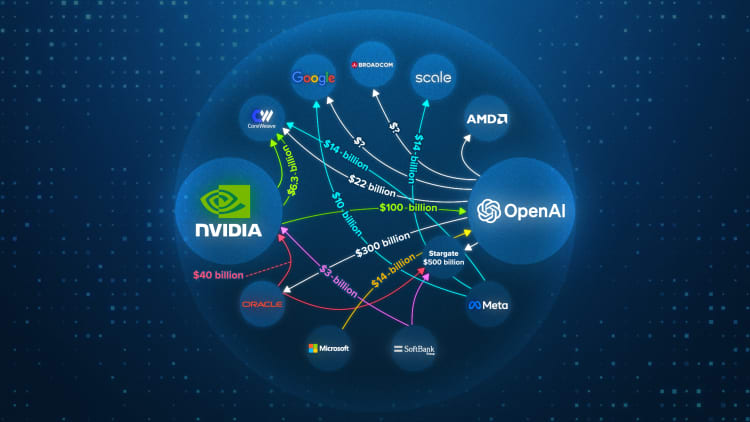
At the same time, this is not blanket approval of higher spending. Investors are still really focused on capex, obsessed with it, and earnings season made clear that Not all artificial intelligence trades are created equal. Bulls can point to evidence that spending is already paying off for some major platforms. Bears can still point to rising capex, weaker cash flow, and debt concerns.
A simpler framework for the next leg
Investors have favored companies showing clear AI-generated revenue while staying cautious where returns look less certain.
That leaves a straightforward framework: - Watch spending alongside proof. Favor companies that pair AI investment with visible monetization. - Respect momentum, but do not overextend it. A four-day melt-up can keep leaders elevated even after a sharp reset. - Treat capex discipline as a live variable. Higher spending is no longer automatically accepted if cash flow and returns look less clear.
What would stabilize or weaken the rally
Alphabet showed that strong revenue growth may not be enough if investors focus on negative free cash flow and larger 2026 capex plans. Microsoft shows the opposite bias: investors gave more credit to a company associated with preserving cash.
If future commentary pairs spending with clearer returns, the rally has a better case to hold. If investors keep demanding proof and companies cannot provide it, the market is likely to reward execution and discipline more than ambition alone.