Insider selling keeps the focus on alignment, not AI excitement
The first read on MARAMARA-- is not "AI breakthrough." It is weak alignment. The stock has rallied more than 40% since March as the AI pivot gained attention, yet insiders have recorded 15 open-market sales and zero purchases over the last six months. That does not prove anything negative by itself, but it does mean buyers outside the company have done most of the work supporting this rerating.
What the trading activity actually signals
Bulls can argue the sales are routine, diversification-related, or tied to compensation. That is possible. But in a stock being lifted by a new narrative, zero insider buying suggests management does not feel the need to add to its position while investors are being asked to underwrite a heavier, capex-intensive AI buildout.
The timing is the real concern. Investors are seeing a price rerating before there is any operating proof that the AI transition has economic teeth. Market discussion is already flagging risks from heavy AI spending and watching whether support levels around $13.60 hold if selling intensifies.
The board change can help credibility, but it does not create cash commitment
Earlier this week, MARA added two new independent directors with power-infrastructure and data-center expertise, while two incumbents stepped down. That matters for credibility because the company says the new directors bring skills relevant to its energy, digital infrastructure, and compute strategy.
But board expertise is not the same as insider commitment. Strong oversight can reduce execution risk; it does not create the same kind of alignment that comes when insiders put fresh capital to work. For now, the rally still looks more like a story trade than proof that insiders are more confident than the market.
The board swap lines up with the new business story
The new board seats look tactical, not cosmetic.
Why the expertise fits the pivot
MARA did not just add "independent voices." It replaced two directors with two new independent directors whose backgrounds match the company's new narrative around power infrastructure, energy investing, and hyperscale data-center development. At the same time, Thiel's own bio explicitly includes AI, semiconductors and enterprise software alongside his broader technology experience.
That matters because MARA is trying to move from a bitcoin-mining story to a power-backed AI, high-performance computing and critical IT workloads story. In that context, the board becomes more than a compliance fixture. It becomes part of the team that has to convince lenders, joint-venture partners, and potential customers that the company understands power procurement, grid-adjacent infrastructure, and data-center development.
What changes and what does not
This shuffle can improve credibility and make conversations with capital partners easier. It does not create customer demand out of thin air, and it does not erase the ownership-alignment issue raised by the insider-selling record.
Three things matter now:
- Whether MARA turns power and data-center expertise into announced customer interest or contracted load
- Whether management pairs its AI and infrastructure messaging with clear operating discipline
- Whether the company keeps strengthening the board with relevant expertise instead of leaning only on narrative
Financial results show why execution matters more than optics
The real test now is economic, not optical.
The income statement shows what investors are underwriting
MARA's Q1 2026 results made clear that this is not a business that can survive on narrative alone. The company posted EPS of -$3.31 versus a forecast of -$1.41, while revenue fell to $174.6 million, down 18.3%. That matters because the AI pivot is capital intensive, and the revenue stream is still less visible than the buildout plans.
That is why Long Ridge is both the opportunity and the pressure point. MARA says the asset could expand from about 200 MW to more than 1 GW and potentially raise owned and operating capacity by roughly 65%. But megawatts are not the same as monetization. Until that power asset is tied to contracted compute demand, investors are still pricing a future scenario rather than a proven cash engine.
Bull case: if customer demand shows up, the asset base can rerate
Bulls have a real argument. If MARA can attach hyperscale or enterprise workloads to the Long Ridge platform, the power footprint becomes scarce infrastructure rather than just mining capacity with a bigger plug. The company is already positioning Long Ridge as an AI campus platform, and that is the path that makes the capex story work.
For that case to hold, three things need to happen together:
- announced customer interest or contracted load
- evidence that new capacity converts into recurring revenue, not just installed megawatts
- financing discipline enough to avoid another dilution event
Bear case: this can become another capex-heavy stretch
Bears focus on the timing mismatch. A business that just reported EPS of -$3.31 versus a forecast of -$1.41 and revenue down 18.3% has less flexibility than the market sometimes assumes when it starts talking about AI campuses. Add in investor frustration with share count increases and leadership decisions, and dilution stops being a theoretical risk.
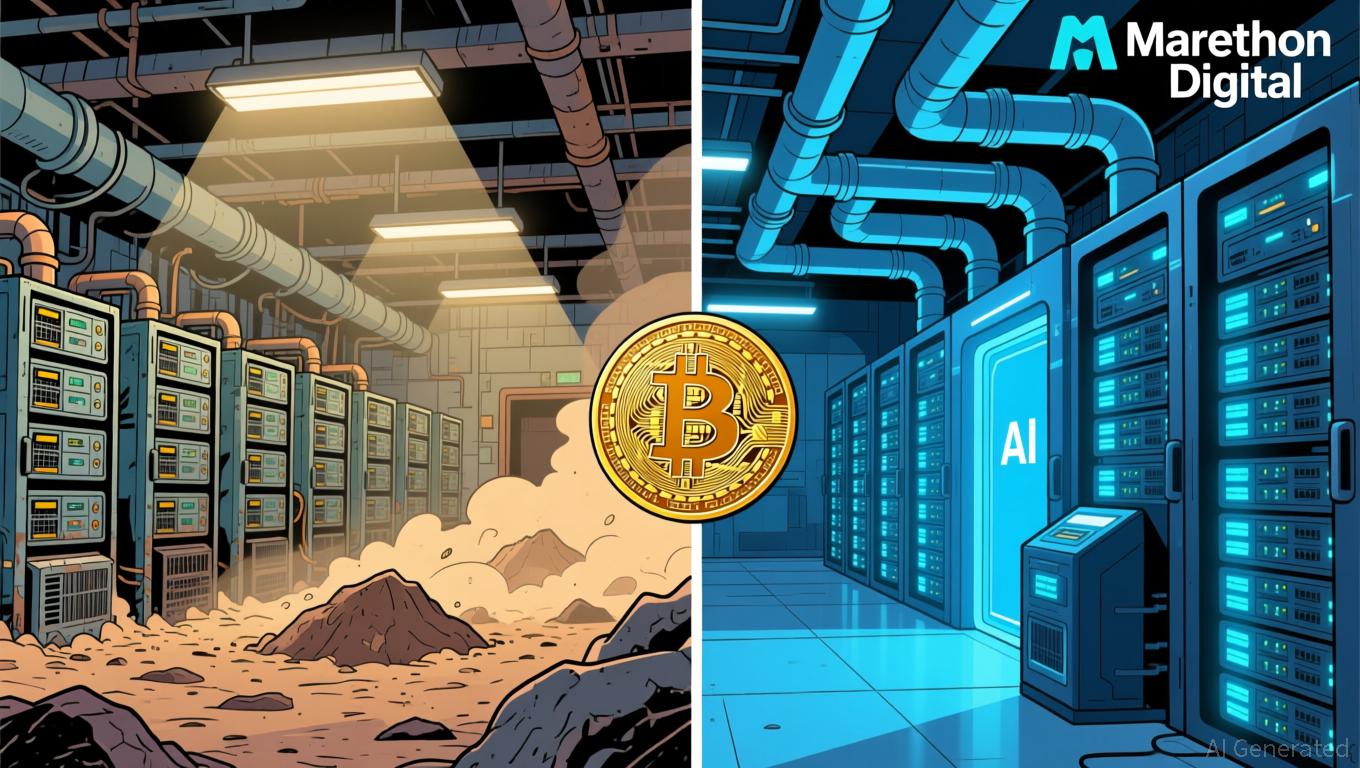
That is the cleanest bear case: MARA has the power story, but not yet the demand story. Without contracted customers, the company may need to raise capital just as patience with repeated buildout promises starts to fade.
What would confirm the pivot, and what would break it
The stock still has to earn the story. Holding support levels around $13.60 while MARA advances its power-backed AI, high-performance computing and critical IT workloads narrative would suggest buyers see a credible rerating path. A clear break below that area would suggest the market still sees a high-risk transition trade.
Signals that would strengthen the thesis
- Evidence that Long Ridge is becoming customer-driven infrastructure, not just a megawatt expansion plan
- Financing discipline after a quarter that included a net loss of $1.3 billion and EPS of -$3.31 versus a forecast of -$1.41
- The first signs of insider buying after six months with 0 have been purchases and 15 have been sales
Signals that would weaken it
- Loss of the $13.60 support area while selling intensifies
- More insider selling after the recent 15 open-market sales, even with two new independent directors now in place
- Another weak quarter that forces investors to fund the pivot again after a quarter that already reported a net loss of $1.3 billion