Seoul's selloff pairs historic losses with an AI debate that is still unresolved
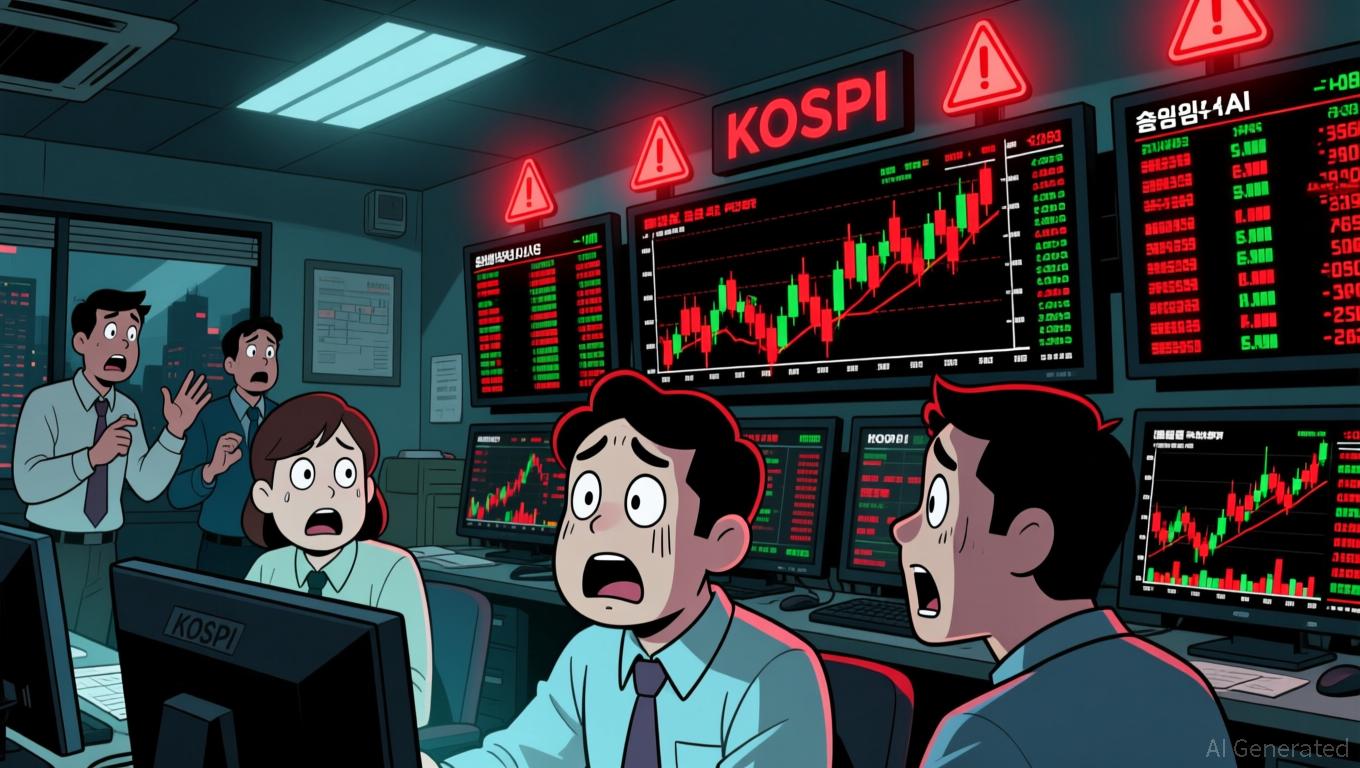
Seoul has now lost about $2.18 trillion in value, and the KOSPI looked set for its steepest monthly drop on record after the more than 4% fall on Monday. The move matters beyond Korea: when Samsung Electronics and SK HynixSKHY-- each fell more than 7%, the market's AI-sensitive core moved with it.
The bear case is straightforward. AI optimism is now running into China's chipmakers intensifying competition and earnings that failed to match elevated expectations. That risk is being magnified by retail demand for amplified exposure in leveraged products tracking major South Korean chip stocks. If leverage is still unwinding, waiting for full clarity could mean chasing the market after the hardest leg is over.
The bull case is more selective. Some analysts have argued the recent leverage-driven selloff was largely technical, which would make this more of a forced reset than a final verdict on the AI story. Even after the drawdown, the KOSPI remains 111.43% higher than a year ago. If selling is mostly a deleveraging event, today's flush could still become a future buying window.
Quick Backtesting Tool
Why the pullback turned into a washout
Profit-taking hit the market's heaviest names first
The sequence mattered. After the KOSPI's roughly 17% surge on Friday, investors did not quietly absorb those gains. Instead, they took profits, and the first weakness showed up in the market's largest stocks. Samsung Electronics and SK Hynix fell more than 7% each, and breadth deteriorated quickly because the rally had been concentrated in a narrow group of winners.
Leveraged chip-stock products amplified the reversal
Leveraged products tracking major South Korean chip stocks are tumbling. That matters because these instruments do more than magnify returns; they can also magnify reactive risk management. In a rising market, demand for leveraged exposure can reinforce momentum. In a falling market, it can do the opposite, turning late buyers into an additional source of selling pressure.
What the bull and bear camps are really arguing about
Bears see concentration risk with global reach. Korea is at the heart of the global semiconductor supply chain, so an AI-driven squeeze in Seoul can spill beyond local fundamentals. If the rally was mostly a crowded bet on a small set of winners, this reversal may be a broader warning about momentum built on narrow leadership.
Bulls, meanwhile, see a technical reset. Their case rests on the view that the selloff was largely technical, meaning the damage reflects financing and positioning pressure more than a clean break in AI demand. If that interpretation holds, the violence clears weaker positions rather than ending the longer trend.
Regulators are now in the tape
The finance minister is reviewing market stabilisation measures, including regulation of the funds, and senior officials met late Wednesday to discuss the crisis. That makes the next few sessions important.
If selling fades as these products lose force, the market may be finishing a cleanse. If new pressure builds around regulatory headlines or more forced deleveraging, the unwind is probably not done.
Near-term stance: treat this as a volatility spike until the washout resolves
The leverage unwind is still the clearest near-term mechanism, but the practical question is simple: is the market flushing excess risk, or is the AI leadership trend actually cracking? With the market still on course for its steepest monthly drop on record and the KOSPI having dropped as much as 12.6 percent in a single session, the more cautious near-term stance remains neutral to bearish. This does not yet look like a clean buying phase until the crash zone resolves.
What to watch next
- Leverage is still driving price: if selloffs keep tracking weakness in the leveraged chip-stock products, the unwind likely has more work to do.
- Leaders stop leading lower: if Samsung Electronics and SK Hynix stabilize first, the market may be moving from forced selling into a more constructive setup.
- Regulatory headlines change behavior: stabilization steps could calm pressure, while tougher rules on the funds could add fresh uncertainty.