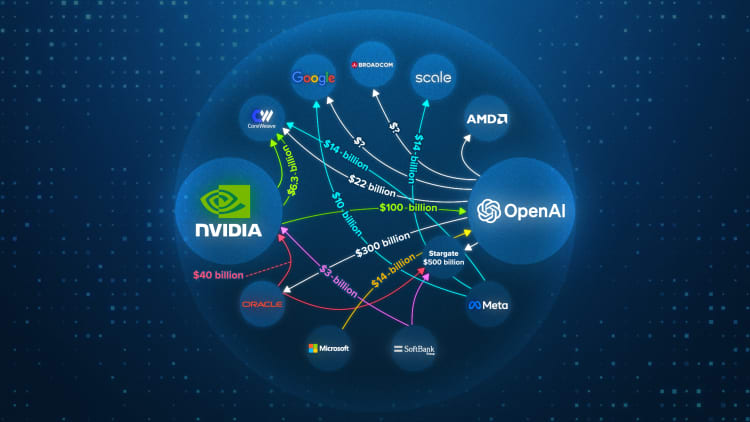
Hayes' core argument: AI financing is absorbing liquidity before Bitcoin's real bottom
Hayes' key claim is that liquidity has entered the system, but much of it has been absorbed by AI infrastructure rather than flowing into BitcoinBTC--. He points to about $1.5 trillion in AI-related debt issued from November 2022 through mid-2026, a scale that nearly matched the increase in the U.S. M2 money supply over the same window. His mechanism is straightforward: as long as AI is sucking up capital, Bitcoin won't bottom until an "AI bubble" implodes. In that framework, the crash-marked bottom is still part of the longer path toward $1 million.
How bulls and bears read the same setup
- Bulls argue the setup still holds because the correlated unwind Hayes expects has not happened yet, leaving room for a later policy response and a fresh liquidity wave into Bitcoin.
- Bears argue that if AI financing remains stable and no broader crisis emerges, Bitcoin may continue missing the liquidity burst that bullish timing calls depend on.
That is why timing matters. Hayes is not asking investors to bet on AI demand itself; he is asking them to judge whether the unwind is still ahead. If it arrives, the biggest upside likely comes after policymakers respond, not during the first panic leg down.
Quick Backtesting Tool
Why AI spending can become a balance-sheet problem
The risk is not that AI demand is imaginary. The risk is that the sector still looks more like a capital-intensive buildout than a proven economy-wide earnings engine. Estimates now point to more than $3 trillion in data-center buildout spending, while current monetization remains thin: AI generated only roughly $60 billion in 2025 in revenue against roughly $400 billion in capex. Federal Reserve research describes the phase as investment-led growth, with broad productivity gains still awaiting clearer evidence. That gap matters because financing can keep the buildout moving even before the cash returns show up.
How the financing risk spreads
A buildout of this size cannot rely on corporate cash alone. Reporting points to funding through blue-chip bonds, junk debt, private credit, and asset-backed pools, while legal analysis says companies have moved more than $120 billion in data-center spending off their balance sheets in under two years using corporate bonds, private credit, and off-balance-sheet SPVs. That can keep construction going, but it also spreads risk through a thicker capital stack and into less transparent parts of the system.
The transmission mechanism is straightforward:
- AI financing crowds demand in credit markets.
- Borrowing costs can rise for other borrowers as a result.
- Stress moves from an AI narrative trade into broader balance-sheet risk.
What to watch
Watch three things: whether AI-related issuance keeps crowding other borrowers, whether off-balance-sheet structures keep expanding, and whether monetization starts closing the gap with capex. If the revenue gap narrows, the bearish financing case weakens. If it does not, the boom becomes more vulnerable under its own debt load.

Bitcoin's upside still depends on a liquidity turn, not just AI fears
Hayes' call is really a liquidity-timing call: Bitcoin hasn't hit its cycle bottom yet and will not do so until an AI-related unwind broadens. The bullish path still exists because he expects a sharp rally if the AI bubble bursts and the Federal Reserve resumes large-scale liquidity injections. But the practical signal is market behavior during that unwind, not the rhetoric around it.
Why Bitcoin could still re-rate after the shock
Near-term weakness and longer-term upside are not necessarily contradictory. Earlier market action showed how fragile the transmission can be: a liquidity crash can pull Bitcoin down with other risk assets, and institutions pulled nearly $1 billion from ETFs during that squeeze. But the market structure is different from earlier cycles, with fewer reflexive 80% drawdowns and more institutional participation. That does not remove the downside, but it may make a later recovery more resilient if policy and risk appetite improve.
What would challenge the timing call
- If Bitcoin bottoms and leads higher before any broad AI unwind, Hayes' timing call was early, even if the higher-timeframe bull case still survives.
- If stress stays contained within AI financing and never triggers a wider liquidity event or a major policy response, Bitcoin may continue missing the flow trigger Hayes is waiting for.
The practical watchpoint is simple: look for the selloff, then easing, then Bitcoin's rotation from liquidity barometer back toward capital destination.