Here is the setup: a Singapore-listed company that used to sell mobile top-up cards in Indonesia has pivoted into manufacturing concrete blocks in India. In September 2025 it spent about $4.9 million to buy a 51 percent stake in Brimax AAC Products LLP, a maker of autoclaved aerated concrete - that is, lightweight, steamed concrete used in construction, the sort of thing that goes into walls and partitions. Then in May 2026 it renamed the subsidiary Modi Hebel India LLP. Modi, the family name of the company's controlling shareholder. Hebel, a globally recognized AAC brand.
That is not the sort of rebranding you do when you are trying to build a standalone brand for a building-materials business. It is the sort of rebranding you do when the brand is supposed to signal lineage, not product. The name tells the customer that this is the Modi family's concrete operation, licensed under an outside name, not that it has developed its own market identity. That is a signal worth paying attention to, because the way a company names its only operating subsidiary says something about what it is trying to sell.
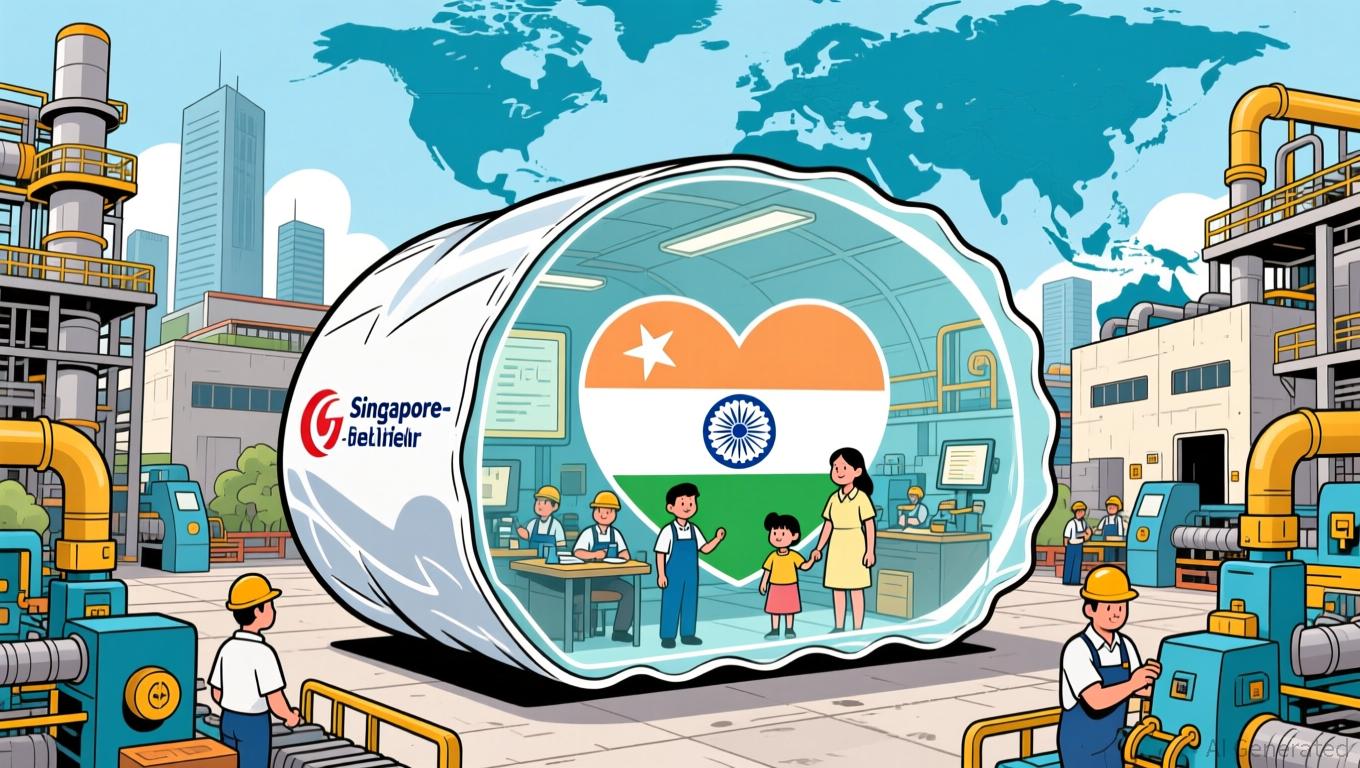
The basic point is this: Digilife Technologies (SGX: BAI) is a shell that has been emptied of its old telecom and ICT businesses and refilled with a single concrete plant in Vadodara, India. The people who control the shell - Dr. Bhupendra Kumar Modi, who holds about 57 percent of Digilife's shares, and his private holding company Rajarshi Modi Private Limited - now hold that shell, which holds a majority stake in a concrete plant that carries the family's name. The public listing is the wrapping; the family business is the contents.
Quick Backtesting Tool
That is not an unusual structure. It is a standard move. But there are wrinkles that make it worth examining more carefully.
Digilife paid INR 336.6 million (about $4.9 million at the time) for 51 percent of Brimax. The remaining 49 percent stayed with the original Brimax shareholders - a group of Indian entrepreneurs including Dineshbhai Devasi, Badrilal Vanghabhai Devasi, and three members of the Dholu family. That was the deal structure in September 2025. It is unclear from available public information whether the minority 49 percent has changed hands; any transfer may have been arranged privately, or may not have happened at all. The structure is worth noting. If the minority stake were consolidated under Modi-family interests, the controlling shareholder would sit on both sides of the same transaction, even if Digilife holds the majority stake on paper. The acquisition was subject to shareholder approval at an extraordinary general meeting, and Dr. Modi, as controlling shareholder, was positioned to influence that approval. He is - or may now be - the economic beneficiary of the minority interest as well.
The rebranding to "Modi Hebel" adds another layer. Digilife says it secured rights to use the Hebel brand name for AAC construction technology in India. Hebel is a real brand with genuine recognition in developed markets. Borrowing its name for an Indian subsidiary gives the product an instant credibility signal. But pairing it with "Modi" - the controlling shareholder's surname - is the odd part. If the goal were to build a brand that could eventually stand apart from the listed group, you would not lead with the founder's family name. You would do that if the brand itself is meant to be a vehicle for the family's reputation and influence in the Indian construction market.
There is also the question of what Digilife actually owns. The AAC plant is currently shut down. Digilife announced in May 2026 that it will suspend manufacturing until around October 2026 to install upgraded machinery. The INR 38 crore (roughly $4.5 million) upgrade is meant to shift production from AAC blocks only to also include AAC panels, which are higher-margin and used in more sophisticated construction applications. The company has said it remains a "going concern" while financing discussions continue. The market cap of Digilife was approximately S$10.55 million as of May 13, 2026. So, in U.S. dollar terms, the public company was valued at less than twice the price it paid for the majority stake in the plant, and the plant is not currently producing anything.
Let me lay out the plumbing, because once you see the structure, the framing falls into place.
The original Brimax owners needed a buyer for a majority stake. A listed company needed an operating business to justify its existence after selling off its telecom unit. The controlling shareholder of the listed company has his family name at stake - in the broadest sense - and a pipeline of Indian business contacts. The deal gives the listed company a concrete asset (literally), gives the original sellers liquidity, and gives the controlling shareholder a new operating vehicle that carries his surname and a borrowed global brand. The public listing becomes a funding source and a credibility wrapper for what is essentially a family-controlled manufacturing business.
That is not a bad structure. It is a common one. Small-cap listed companies on Singapore's Catalist board frequently serve this role - a public shell that acquires a real operating business and uses the listing to raise capital or signal credibility. The question for investors is not whether the structure is unusual; it is whether the economics work and whether the alignment of interests is clean enough.
On economics, the picture is incomplete. The plant is offline for five months of upgrades. The company is discussing financing. The total addressable market for AAC in India is large - India's construction sector is growing, and AAC is a more efficient, lighter, and cheaper alternative to conventional brick and block - but Digilife is a tiny player in a fragmented market with well-capitalized competitors. The INR 38 crore upgrade is not a trivial sum for a company whose market cap was approximately S$10.55 million as of May 13, 2026. It represents a substantial share of the company's entire market value.
On alignment, the picture is murkier. When the controlling shareholder of a public company is also - directly or indirectly - connected to the minority interest in the company's main asset, the usual conflicts of interest apply. Related-party pricing, management fees, distribution arrangements, and capital calls all become channels through which value can flow from the public company toward the controlling shareholder's orbit, or vice versa. The Singapore Exchange requires disclosure of material related-party transactions, but the structure does not eliminate the possibility of informal value transfer: a favorable management agreement, a side contract for distribution, or a capital-injection timing that benefits one shareholder more than another. These are not allegations; they are the standard friction points of this kind of structure.
The simplest model is this: Digilife is a publicly listed wrapper around a single concrete plant in India that the controlling shareholder wants to grow under his family name. The public listing gives it access to capital and a level of institutional credibility that a private LLP would not have. The 51-49 split with the original Brimax founders - or potentially with the Modi family if the minority stake has been consolidated - means that the economic risk of the subsidiary is shared, at least on paper. Whether that sharing is economically meaningful, or merely a formal arrangement, depends on the operating agreement, management structure, and voting mechanics of the LLP, none of which are fully transparent.
The rebranding to Modi Hebel is the clearest signal the company has sent. It says: this is a Modi family operation, and it has access to a global brand name. It does not say: this is an independent building-materials business with its own market identity. That distinction matters because it tells you what the company is trying to build - a branded family asset with a public listing, not a standalone construction-materials franchise.
For an investor, the structural questions are straightforward. Is the AAC plant's economics compelling enough to justify the public listing and the upgrade capex? Will the plant ramp production after October 2026 and generate revenue that moves the needle for a company this small? And is the relationship between the controlling shareholder and the subsidiary clean enough that minority shareholders in Digilife can trust the public company is not serving as a funding conduit for a private family business? The answer to the last question is the one that matters most, and it is the one the public filings have not fully resolved.