A circuit breaker activation sounds like a headline. In practice, it is just the exchange admitting that normal trading broke down and someone has to step in and hold the door shut. What happened to Burcelik Vana in late July is not a story about the company's business. It is a story about what happens when a thin-float stock meets a mechanical trading rule.
Here is the plumbing. Burcelik Vana - ticker BURVA on Borsa Istanbul - makes industrial valves. The company's average daily trading volume is roughly 27,571 shares. That is a stock where a moderately sized order can move the price because there are not enough standing bids and offers to absorb it. And when the price moves enough, BIST's equity circuit breaker kicks in: continuous trading stops, the stock shifts to a single-price call auction, orders collect for 10 minutes under the revised rules that took effect in September 2025, then trading resumes at whatever consolidated price the auction produces.
Burcelik Vana hit that mechanism on July 29. Two days later, on July 31, it happened again. And here is the number that tells you how much ground the stock gave up between those two halts: the company's market capitalization fell from 6.39 billion Turkish lira on the 29th to 5.6 billion on the 31st. That is roughly 800 million lira - about a 12 percent wipeout - in three trading days, on a stock whose average daily volume is 27,500 shares.
Quick Backtesting Tool
Understanding what I understand about thin-liquidity mechanics would tell me that this is a classic feedback loop. A large order or a cluster of sell orders pushes the price past the circuit breaker threshold. The halt signals distress to anyone watching - even if the underlying reason is just mechanical - and when the call auction reopens, the consolidated price is lower, which triggers more selling or more nervousness. The second halt on July 31 was not a fresh event; it was the continuation of the same liquidity vacuum that started on the 29th. When you have only 26,000 shares changing hands on a typical day, you do't need a scandal or an earnings miss to blow through a 10 percent intraday threshold. You need one large player who decides to exit.
The revised BIST circuit breaker framework actually shortened the pause periods. The exchange moved from a two-stage index-based halt (at 5 percent and 7 percent decline) to a single stage at 6 percent, and standardized the post-halt order collection at 10 minutes. That is cleaner on paper, but it also means the market gets less cooling-off time. For a stock like Burcelik Vana, the faster the auction cycle, the more likely the price just resets to the next level of the same directional move. Same mechanism. Same thinness. Different session.
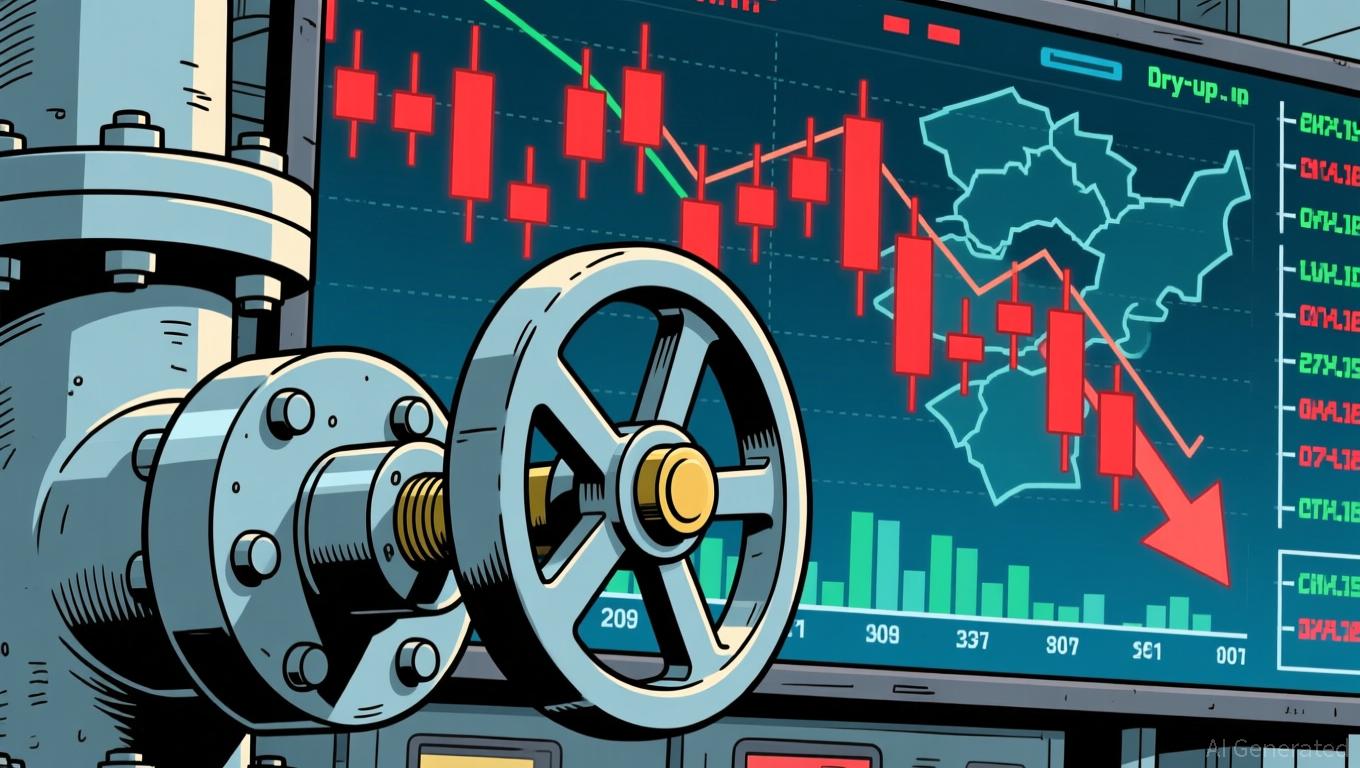
What I cannot confirm from available reporting is what specifically triggered the initial move. There is no widely cited earnings surprise, governance incident, or sector event attached to the July 29 halt. That absence itself is information. In a thickly traded stock, a circuit breaker would almost always be attached to something - a downgrade, a regulatory action, a miss. When the trigger is missing, the cause is usually structural: a holder with too large a position relative to the float, executing in a market that cannot absorb the size. Whether that was a domestic institutional seller, a foreign position being unwound in a currency-turbulent Turkish market, or simply a technical liquidation, the plumbing is the same. The order flow exceeded the available liquidity, the price moved past the threshold, and the circuit breaker did exactly what it is designed to do - but the cure (a 10-minute auction pause) does not fix the disease (someone who needs to sell more shares than the market can handle).
Yahoo Finance quotes the stock at 790 lira, down 29.50 or 3.6 percent in the most recent session. That drop after the halts shows the selling pressure has not been fully absorbed. A stock that has triggered the circuit breaker twice and is still drifting lower is not in a stable regime.
Here is the conditional chain for what happens next. If the original seller has finished and no new large order appears, the stock should stabilize at its new price level - but that stabilization will take time because the thin volume means it takes only a moderate order to spike it in either direction. If the seller is still working through the position, another circuit breaker is not a question of whether but when. And if Turkish macro conditions - the lira has been under persistent pressure - add currency-level selling pressure to domestic equity flows, the circuit breaker becomes a recurring feature, not a one-off event.
The takeaway is not about whether Burcelik Vana is a good valve company. It is about what circuit breakers actually tell you. They do not tell you the direction of the next day. They tell you that liquidity has disappeared and the exchange has to manufacture an orderly price. In a stock with 27,000 shares of average daily volume, that is a warning signal that deserves attention regardless of fundamentals.
The views expressed here are the author's own and do not constitute investment advice. Past performance is not indicative of future results.