Why the anger is about imbalance, not just personalities
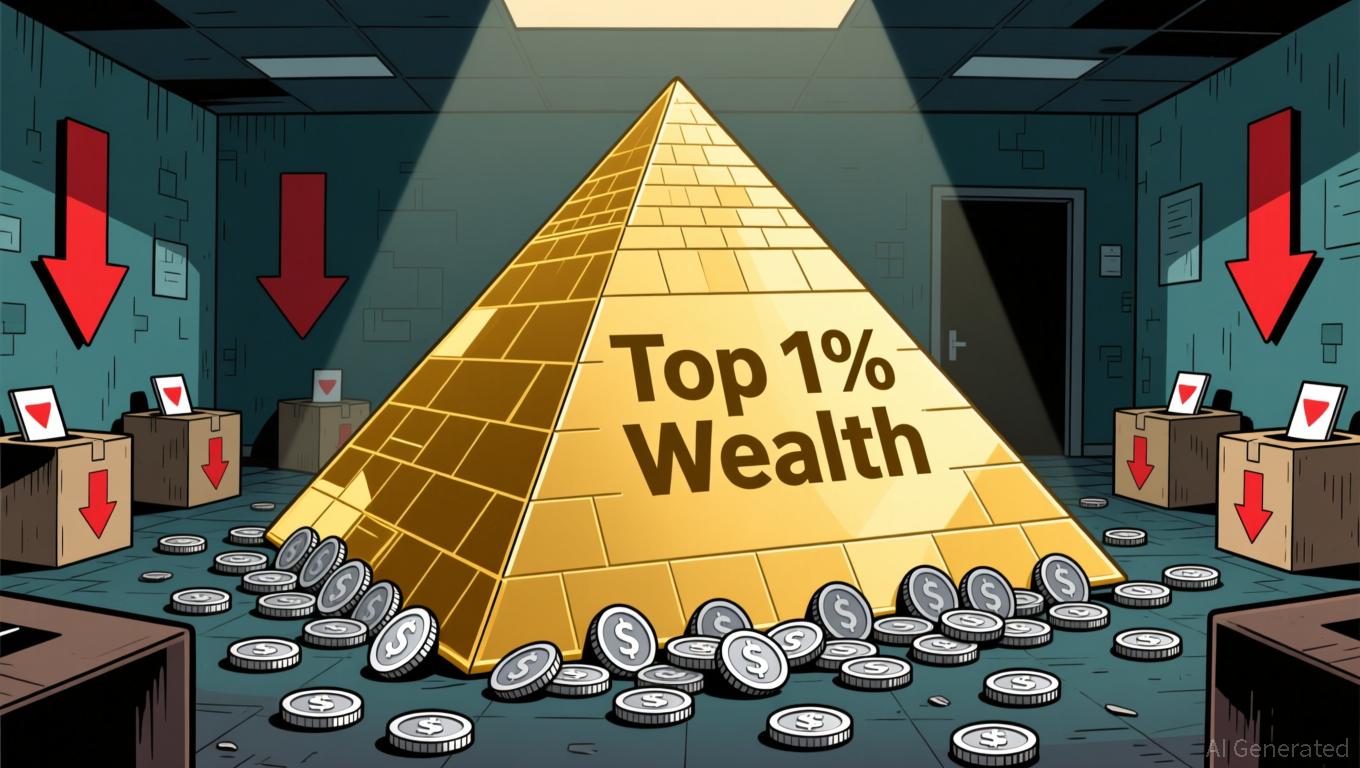
The outrage is not really about individual billionaires. It is about an imbalance that has become harder to ignore. The richest 1% now own 37% of global wealth, while the poorest half holds just 2%. In the U.S., that gap is more extreme than in any other major developed nation, and the market's most visible fortunes reinforce the signal: the top 12 billionaires now hold more than $2.7 trillion. That kind of concentration changes public psychology. Net worth starts to look less like a personal achievement and more like a symbol of a system that feels stacked.
The backlash matters now because it is colliding with lived economic pressure. California's billionaire tax has made it to the November 2026 election as a proposed one-time 5% wealth tax, while many workers are still coping with an economy where inflation has wiped out recent gains in wage growth. For investors, that combination matters. The resentment is no longer just online noise; it is moving into politics and policy.
When billionaire wealth reached $18.3 trillion amid visible household strain, the political question stops being whether people like billionaires. It becomes who should shoulder the cost of stability. That can shape tax policy, wealth transfers, and broader market rules. Investors who treat this as mere spectacle are underestimating the setup.
Quick Backtesting Tool
Why the backlash feels intellectually respectable
In the U.S., wealth is not just uneven; it is concentrated enough that people begin to link net worth with agenda-setting power. Polling shows majorities say wealth inequality is a big problem, and Americans largely want government action on the issue. That helps explain why anti-billionaire sentiment feels more credible today than it would in a more balanced economic climate.
Wealth can translate into influence
The mechanism is straightforward. Extreme wealth can be converted into political and cultural influence. One recent briefing notes that billionaires are over 4,000 times more likely to hold political office than ordinary people. Pair that with a situation where inflation has wiped out recent gains in wage growth, and the backlash stops looking like simple envy. It starts to look like a reaction to perceived unequal power.
Why some investors still dismiss it
The bullish counterargument is that voters condemn billionaires in polls but rarely deliver sweeping policy change. There is some evidence for that view. But it is weak when public opinion, ballot politics, and spending behavior all move in the same direction. California's proposed one-time 5% wealth tax reaching the ballot is a sign that the anger is no longer abstract. It is becoming a policy window.
The market risk is concentration, not just cultural resentment
The mistake investors can make is confusing a moral mood with a portfolio strategy. The backlash against extreme wealth matters partly because narrow funding cycles often look socially offensive before they break. In markets, that shows up as concentration. The top 10 S&P 500 names now account for approximately 40-41% of total market capitalization, and in the latest 28-session rally, just 10 stocks drove 69% of the gains. That is not broad participation. It is a small momentum cohort doing most of the work.
AI enthusiasm is narrowing the rally
Optimism around AI has lifted the index, but breadth remains shallow. 22 S&P 500 names have already doubled this year, and the gain has been concentrated in a narrow set of leaders. That creates a false sense of diversification. Investors may think they own the market, while their returns are increasingly tied to the same story.
Why sentiment matters to prices
Social mood matters because markets are not driven by fundamentals alone. They are also driven by confidence and consensus. Inequality concerns matter here because they make investors and the public more sensitive to rallies that look controlled by a small club. The market is already flagging that tension: AI infrastructure spending and rising earnings expectations are supporting prices, while household balance sheets are more fragile and long-term rates are rising.
Portfolio implication
The takeaway is not to trade on moral outrage. It is to respect what that outrage says about crowd behavior. When returns come from such a thin pool, chasing the same dominant winners raises asymmetric risk. A broader tilt - away from overreliance on the same ten names and toward a wider set of AI beneficiaries - is a more disciplined response than pretending concentration is normal diversification.
Is the hostility deserved, or is it just cathartic?
The backlash is best understood as a warning sign, not as a license for pure catharsis.
The verdict
Yes, the anger has a real target. Americans broadly see the gap as a major problem, which suggests this is not just trolling aimed at rich individuals majorities say wealth inequality is a big problem. And no, it is not rational to dismiss the concentration either. When one group holds 37% of global wealth and billionaire assets have swelled to $18.3 trillion, the economic and political spillovers are harder to ignore.
The bull case is straightforward: public outrage often sounds louder than policy. The bear case is stronger because the same psychology driving the backlash is also visible in markets. The S&P 500 has become a bet on a narrow club, with the top 10 names making up about 40-41% of index weight. AI enthusiasm has deepened that concentration, and 22 S&P 500 names have already doubled this year, largely around the AI trade.
So the real question for investors is not morality. It is durability. Watch three things: whether ballot outcomes turn outrage into policy, whether AI capex keeps earning its premium, and whether breadth finally broadens beyond a handful of winners. If those checks fail, the crowd is more fragile than it looks.