Aurora's commercialization case is stronger, but revenue conversion now matters most
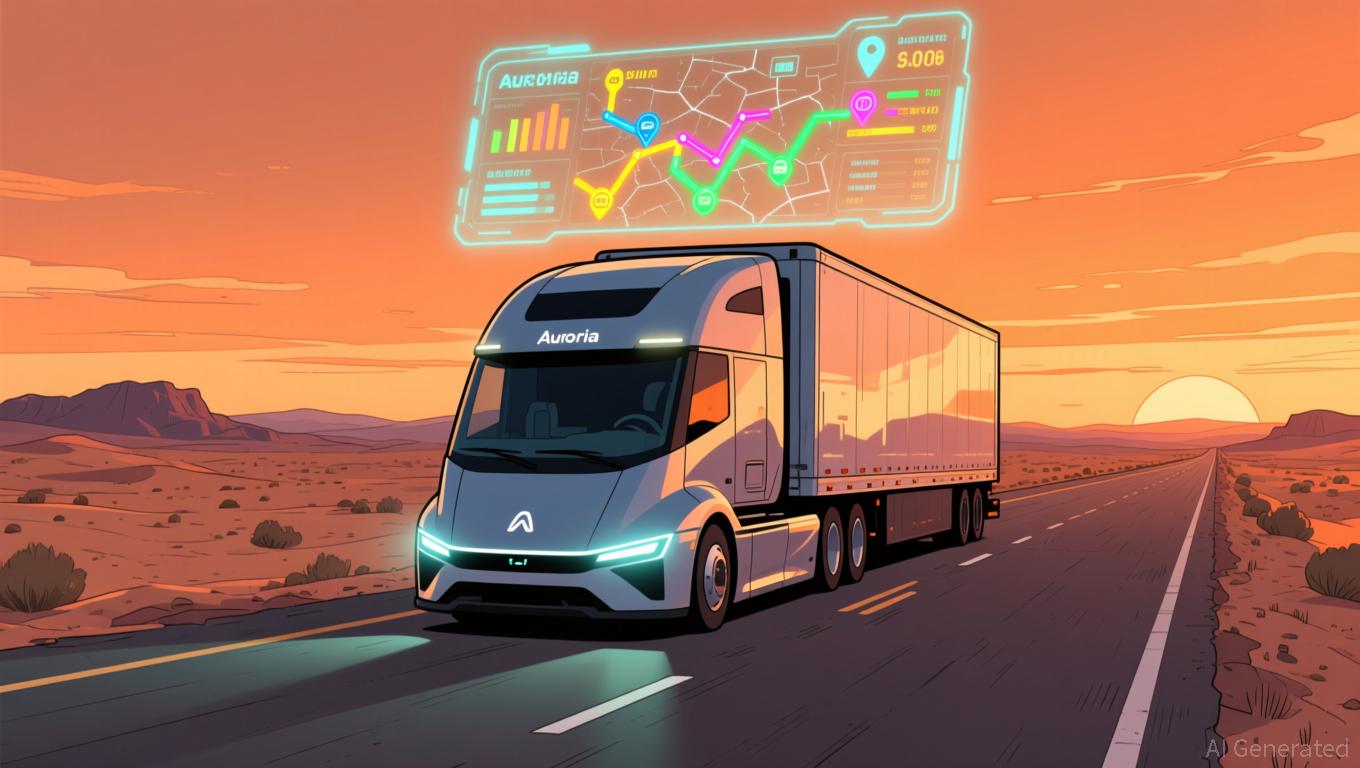
This is now an execution call, not just an autonomy narrative. Aurora has moved beyond proving the technology can work in isolation; the stock increasingly depends on whether management can turn 200 driverless trucks in operation by year-end into visible commercial conversion over the next few quarters.
Safety and hardware progress have improved the setup
The operating progress is real. Aurora has logged nearly 440,000 driverless miles with 100% on-time performance and zero Aurora Driver-attributed collisions. That does not prove scale, but it does strengthen the case that the system is moving from experimentation toward repeatable service.
The second-generation hardware also makes the scaling argument more credible. The new kit is built to last for a million miles and is expected to cut overall hardware cost by more than half. That matters because the next phase of the story is about unit economics, uptime, and repeat loads-not just technical proof.
Quick Backtesting Tool
The near-term debate is commercial follow-through
That is why the next few months matter more than the long-term dream. Bulls can point to the safety record, lower-cost hardware, and growing customer footprint. Bears can point to the financials: Aurora reported Q2 2026 revenue reached $2 million and net loss reported at $270 million. The upgrade, then, is not a claim that monetization is solved. It is a claim that the scoreboard has changed: investors now need evidence that deployments are starting to convert into revenue.
Institutional ownership adds support, but it does not reduce execution risk
The commercialization test now has a second filter: who owns the stock while Aurora races toward year-end deployment.
Institutional participation is broad and still growing
Aurora has 592 institutional owners. According to the same ownership snapshot, institutions held 107.07% of shares outstanding on a long-only basis and added 45.79MM shares over the most recent quarter. That is meaningful backing for the bull case, and the direction of travel matters more than the raw level.
It also means the stock is already fairly well covered institutionally. The next leg higher likely needs either fresh buying or stronger commercial proof, not just the existence of prior interest.
Ownership concentration raises price sensitivity
The ownership structure also has a downside. As one ownership overview notes, the top 6 shareholders own 52% of the company. Combined with heavy institutional participation, that can make the shares more sensitive to shifts in sentiment if execution disappoints.
That is why insider alignment still matters, even if it is not the main driver here.
Insider buying is supportive, but not decisive
The clearest insider-buying signal is CEO Christopher Urmson, who bought 258,000 shares for an estimated $1,000,627. Another executive also bought shares worth about $989,460, so this is not a zero-confidence picture. But compared with the scale of institutional ownership, it is still a relatively modest signal.
The practical takeaway is straightforward: institutional accumulation is helping support the story, but ownership structure alone does not remove execution risk. If the rollout toward 200 driverless trucks in operation slips, the stock can still be hit hard because a large share of the float is already sensitive to institutional trading behavior.
What would validate the upgrade-and what would break it
The upgrade now rests less on "the tech looks better" and more on whether the business is following through. Aurora has commercial operations began, a fleet built to last for a million miles, and second-generation hardware that is expected to cost less than the prior version. That improves the setup, but it does not settle the investment case.
What needs to happen next
The bullish checklist is simple:
- Keep driverless freight activity visible as Aurora moves toward 200 driverless trucks in operation by year-end.
- Show that customer agreements and pipeline interest are converting into repeat revenue rather than remaining mostly future potential.
- Demonstrate that the lower-cost second-generation platform is starting to improve the economics of scaling, not just the product specification.
What would invalidate the thesis
The bearish case no longer requires doubting the technology outright. It only requires monetization to stay behind deployment. The upgrade weakens if:
- the 200-truck target remains mainly a fleet-count story without corresponding revenue progress;
- operating performance deteriorates from the current safety and reliability baseline; or
- the cheaper hardware never shows up in the company's financial results.
That is why the rating upgrade is conditional: constructive on commercialization, cautious on timing. The case improves if sustained driverless operations, customer conversion, and lower hardware costs start to line up over the next few quarters. It breaks if deployments keep advancing faster than commercial proof.