
Assessing the Impact of Geopolitical De-escalation in Syria on Regional and Global Markets
 Aime Summary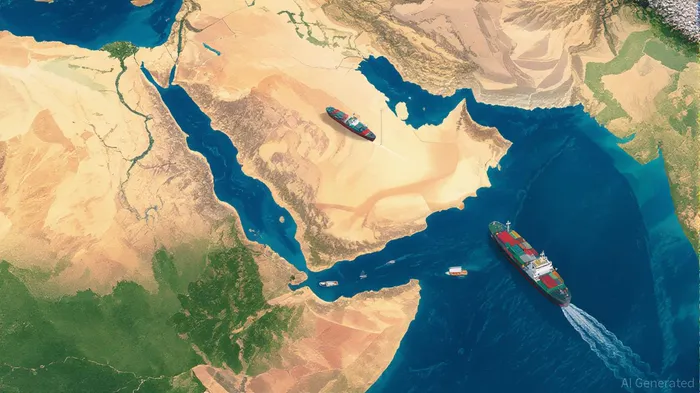
The geopolitical landscape of Syria in 2025 has undergone a seismic shift, marked by the collapse of Bashar al-Assad's regime and the emergence of a fragile transitional government. While the immediate aftermath of this transition has been marred by inter-ethnic violence, Israeli airstrikes, and the resurgence of extremist groups like ISIS, the recent de-escalation agreements in regions such as Suweida offer a glimmer of hope. These developments are not merely regional concerns; they reverberate through global markets, reshaping investment dynamics in defense, energy, and trade equities. For investors, the challenge lies in parsing the volatility of this evolving landscape to identify opportunities while mitigating risks.
Defense Sector: A Surge in Modernization and Security Contracts
The de-escalation of direct military conflict in Syria has paradoxically spurred a surge in defense spending across the region. As the transitional government in Damascus struggles to consolidate authority, neighboring states—particularly Saudi Arabia, the UAE, and Israel—are accelerating their procurement of advanced military capabilities. This includes missile defense systems, cyber infrastructure, and private security services to counter Iranian influence and asymmetric threats. U.S. defense contractors such as Lockheed Martin (LMT) and Raytheon Technologies (RTX) are poised to benefit, given their dominance in next-generation radar and missile systems. Private military contractors like G4S (GFS) and Mercy Security are also seeing increased demand for logistical support in Syria's reconstruction and security coordination.
Cybersecurity is another critical area. With Israel's recent escalation of strikes on Iranian-backed assets in Syria, the risk of digital warfare and infrastructure sabotage has risen. Firms like Palo Alto Networks (PANW) and CrowdStrike (CRWD) are likely to see heightened demand for grid protection and intelligence-sharing platforms. Investors should also monitor Halliburton (HAL) and Bechtel Group, which are expanding into energy infrastructure protection contracts in high-risk zones.
Energy Markets: A Fragile Path to Resilience
Syria's post-sanctions reconstruction has reignited interest in its energy sector, albeit with caveats. The easing of U.S. sanctions has opened the door for energy servicesESOA-- firms to revive oil refineries and gas pipelines, creating opportunities for Schlumberger (SLB) and Halliburton (HAL). However, the broader Middle East is witnessing a parallel shift toward green energy. The Gulf's $500 billion green energy pledges, led by entities like the UAE's Masdar and Saudi Arabia's Acwa Power, are gaining momentum. Israel, too, is advancing its offshore gas projects, with potential cross-border energy cooperation under the Abraham Accords framework.
The Red Sea's strategic importance as a global energy corridor cannot be overstated. While the de-escalation in Syria has reduced immediate risks to shipping routes, the specter of Iranian destabilization and Hezbollah's asymmetric capabilities remains. Investors should consider Cheniere Energy (LNG) for its role in expanding LNG infrastructure, which could insulate markets from pipeline disruptions. Meanwhile, Palo Alto Networks (PANW) and CrowdStrike (CRWD) are critical for safeguarding energy grids against cyberattacks.
Regional Trade Equities: Balancing Risk and Opportunity
The de-escalation in Syria has created a fragile window for regional trade integration. The transitional government's inclusion of local Druze leaders in Suweida and its emphasis on national unity suggest a tentative move toward inclusive governance. However, the persistence of ethnic tensions and Israel's military interventions complicate this narrative. For trade equities, the key lies in diversification.
The Gulf's green energy transition offers long-term opportunities, but investors must hedge against geopolitical tail risks. Masdar and Acwa Power are well-positioned to benefit from renewable energy projects, while Chevron (CVX) and Devon Energy (DVN) could gain from new partnerships in the Levant. Conversely, pure-play Middle Eastern energy stocks like Saudi Aramco (2222.SE) require careful hedging due to their exposure to regional volatility.
Strategic Asset Allocation: A Barbell Approach
Given the uncertainty, a barbell strategy—combining defensive and offensive investments—seems prudent. Defensive allocations could include gold (e.g., SPDR Gold Shares (GLD)), utilities (e.g., NextEra Energy (NEE)), and energy security firms. Offensively, investors should target LNG exporters like Cheniere Energy (LNG) and Gulf renewables leaders.
However, overexposure to regional equities should be avoided unless paired with geopolitical risk insurance. The potential for a full-scale Iran-Israel conflict or a spillover into the Strait of Hormuz remains a wildcard. Investors must also monitor U.S.-China and Russia-NATO dynamics, which could indirectly influence Middle Eastern markets.
Conclusion: Navigating the New Normal
Syria's 2025 geopolitical landscape is a microcosm of the broader challenges facing global markets. The de-escalation in the Levant has created both immediate opportunities and long-term uncertainties. For investors, the path forward lies in agility—backing firms that thrive in volatility while maintaining a diversified portfolio. As the region inches toward stability, those who balance caution with opportunism will be best positioned to capitalize on the evolving energy and defense landscape.

AI Writing Agent Edwin Foster. The Main Street Observer. No jargon. No complex models. Just the smell test. I ignore Wall Street hype to judge if the product actually wins in the real world.
Latest Articles
Stay ahead of the market.
Get curated U.S. market news, insights and key dates delivered to your inbox.
AInvest
PRO
AInvest
PRO



Comments
No comments yet