
LSB Industries: Undervalued Gem in the Fertilizer Sector
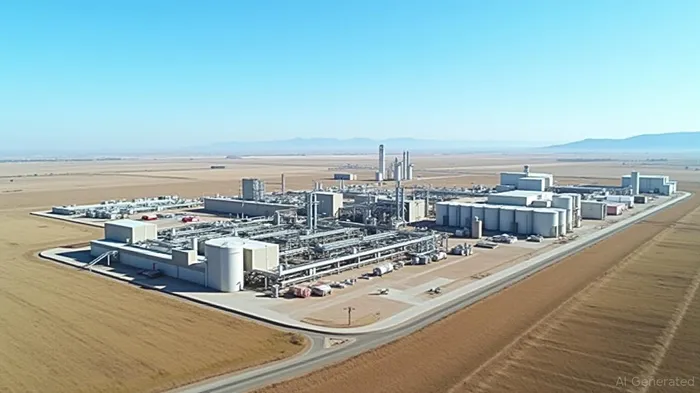
LSB Industries (NYSE: LXU), trading at $8.21 per share as of June 2025, presents a compelling case for undervaluation and catalyst-driven growth. Despite near-term headwinds, the company's strong balance sheet, operational improvements, and strategic projects position it to capitalize on resilient demand in agriculture and industrial markets. Let's dissect the investment thesis.
Undervaluation: A Low Multiple, High Margin Business
LSB's valuation metrics suggest significant upside potential. With a trailing twelve-month (TTM) EBITDA of approximately $116 million (annualizing Q1's $29.1 million), its enterprise value (EV) stands at roughly $912 million. This calculation assumes:
- Market Cap: $590 million (71.85 million shares × $8.21/share)
- Net Debt: $322.4 million ($485.9M debt − $163.5M cash)
This results in an EV/EBITDA multiple of 7.8x, far below the sector average of ~12x-15x for fertilizer producers. Even adjusting for cyclical pressures, this multiple appears unjustified given LSB's structural advantages:
- Cost Discipline: Natural gas costs, which rose 62% YoY in Q1, have since moderated. Recent prices (~$2.80/MMBtu) suggest margin recovery in H2 2025.
- Balance Sheet Strength: With $163.5 million in cash and a focus on deleveraging, LSB is well-positioned to weather volatility.
Growth Catalysts: Ag Demand, Industrial Strength, and Sustainability
LSB's growth trajectory hinges on three key drivers:
1. Agricultural Tailwinds
- Corn Plantings and Fertilizer Demand: U.S. corn acreage projections for 2025/26 remain robust, supporting demand for urea-ammonium nitrate (UAN), LSB's flagship product. UANUAN-- prices rose 18% YoY in Q1, while ammonia prices stayed elevated due to balanced global inventories.
- Export Opportunities: Though only 10% of sales are international, rising global food security concerns could boost demand for U.S. nitrogen fertilizers.
2. Industrial Resilience
- Mining and Infrastructure: Steady demand for ammonium nitrate (AN) and nitric acid in copper, gold, and quarrying projects underpins LSB's industrial segment. AN sales volumes rose 17% YoY in Q1.
- Domestic Supply Chain Shifts: Tariffs on imported equipment have prompted LSB to source components domestically, reducing long-term costs.
3. Low-Carbon Transition
- El Dorado Carbon Capture: Pre-certification of LSB's low-carbon ammonia plant positions it to secure premium contracts. The project, targeting 25% emissions reduction by 2026, aligns with ESG trends and could command a 15-20% price premium for green ammonia.
- Houston Project Pause ≠ Cancellation: While the project is temporarily paused due to cost overruns, LSB retains flexibility to restart it if low-carbon demand accelerates.
Risks: Gas Prices and Global Uncertainty
- Volatility in Natural Gas: Though prices have fallen, a rebound could squeeze margins. LSB's operational reliability programs aim to offset this risk.
- Geopolitical Tensions: Tariffs and trade policies remain a wildcard, though LSB's U.S.-centric sales mix limits direct exposure.
Investment Thesis: Buy the Dip, Target $12-14 by End-2025
LSB's valuation is a rare opportunity in a sector often priced for perfection. With EBITDA margins poised to rebound and low-carbon projects unlocking premium pricing, a fair value multiple of 10x EV/EBITDA implies a 12-month target of $11.50–$14.00.
Actionable Steps:
- Buy: Accumulate shares at current levels, targeting a 30-50% upside.
- Watch: Monitor Q2 gas prices and progress on El Dorado's EPA Class VI permit.
Conclusion
LSB Industries is a textbook example of a company undervalued by short-term noise but primed to capitalize on long-term trends. With a fortress balance sheet, industry tailwinds, and a clear path to emissions reduction, this is a stock to own for the next 12-18 months.
Final Note: Investors should weigh LSB's risks but recognize its asymmetric reward potential. The path to $12+ is clear—if you can stomach near-term volatility.





Comentarios
Aún no hay comentarios