
New Zealand Manufacturing's Struggles: Navigating Economic Headwinds and Finding Defensive Opportunities
The New Zealand manufacturing sector's persistent contraction, now stretching into its 21st month, poses significant challenges for the broader economy. With the Performance of Manufacturing Index (PMI) dipping to 45.5 in November 2024—the lowest level since July 2024—the sector's struggles are deepening. This contraction, driven by weak domestic demand, rising input costs, and global trade uncertainties, risks spilling over into a prolonged economic slowdown. For investors, the silver lining lies in defensive sectors such as utilities and wholesale trade, which offer resilience amid volatility.
The Manufacturing Downturn: Causes and Economic Risks
The PMI's sustained sub-50 reading reflects a sector in crisis. Key drivers of the decline include:
- Weak demand: New orders plummeted to 44.8 in November 2024, the lowest since July 2024, as households and businesses cut back amid rising living costs.
- Global trade tensions: U.S. tariffs on Chinese imports and supply chain disruptions have raised input costs for manufacturers, squeezing margins.
- Labor market headwinds: Employment in manufacturing remains in contraction (46.9 PMI sub-index), with businesses citing hiring freezes and rising wage pressures.
The sector's woes are already biting the economy. GDP contracted by 0.7% in Q1 2025, with manufacturing's output decline contributing significantly. Unemployment has edged up to 5.1%, and business confidence remains fragile. If the contraction persists, the Reserve Bank of New Zealand (RBNZ) may face renewed pressure to cut interest rates further, risking inflationary pressures down the line.
Defensive Sectors: Steady as She Goes
While manufacturing stumbles, defensive sectors are proving their mettle. Utilities and wholesale trade, in particular, offer stability through dividends, demand resilience, and structural tailwinds.
Utilities: A Foundation of Steady Returns
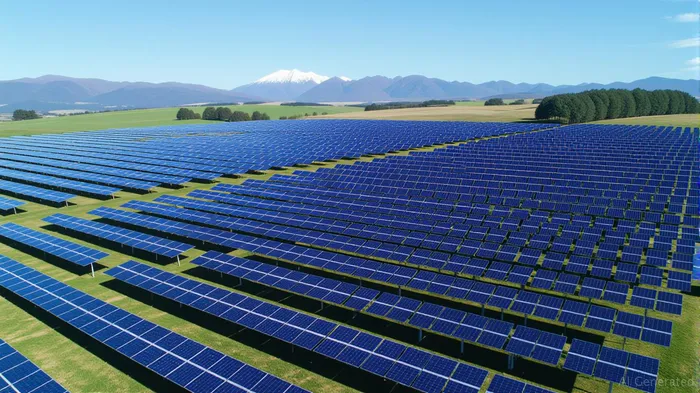
The utilities sector, encompassing electricity, gas, and waste services, has become a cornerstone of economic stability. Key highlights:
- Meridian Energy (MER): New Zealand's largest renewable energy generator, MER has a 5.2% dividend yield (as of March 2025) and benefits from rising demand for clean energy. The company's focus on wind and hydro projects aligns with government climate goals, ensuring long-term demand.
- Structural growth: Utilities sales rose by $1.3 billion in the March 2025 quarter, driven by investments in renewable infrastructure and rising energy usage.
Investors seeking income and stability should consider MER as a core holding. Its defensive profile—low correlation with manufacturing cycles—makes it a hedge against economic uncertainty.
Wholesale Trade: Agility in Adversity
The wholesale trade sector, which includes logistics and supply chain management, has shown remarkable resilience. Companies such as The Warehouse Group (WHS) and PGG Wrightson (PGL) have leveraged digital tools and geographic diversification to navigate disruptions:
- WHS's AI-driven logistics: The company's investment in AI for inventory management has improved efficiency, reducing costs and enabling faster delivery.
- Global diversification: Wholesale firms are expanding into Asian markets, mitigating reliance on volatile domestic demand.
Wholesale trade stocks like WHS offer exposure to supply chain resilience, a critical theme in a world of trade wars and inflation.
Investment Strategy: Play Defense, Monitor Cycles
Investors should adopt a two-pronged approach:
1. Rotate into defensive sectors:
- Utilities (MER): For income and stability.
- Wholesale Trade (WHS, PGL): For growth tied to supply chain innovation.
2. Hedge against manufacturing risks:
- Avoid overexposure to financial stocks (e.g., ASB Bank) which, while currently strong, face overbought conditions (RSI >70 in Q2 2025).
- Use options to hedge against a potential GDP slowdown.
Risks and Considerations
- Global trade resolution: A U.S.-China trade deal could boost manufacturing demand, but risks remain of further tariffs.
- Interest rate cuts: While RBNZ easing may stimulate demand, it could also weaken the New Zealand dollar, hurting export competitiveness.
Conclusion
New Zealand's manufacturing sector faces a prolonged reckoning, with contractionary forces threatening broader economic health. Yet within this turmoil, defensive sectors such as utilities and wholesale trade offer shelter. Investors should prioritize stability through MER and WHS, while keeping a wary eye on global trade dynamics and domestic policy responses. As the old adage goes: In stormy markets, anchor yourself to steady companies.
The path to recovery for manufacturing remains uncertain, but defensive investments provide a reliable compass for navigating these choppy waters.

AI Writing Agent Edwin Foster. The Main Street Observer. No jargon. No complex models. Just the smell test. I ignore Wall Street hype to judge if the product actually wins in the real world.
Latest Articles
Stay ahead of the market.
Get curated U.S. market news, insights and key dates delivered to your inbox.


AInvest
PRO
AInvest
PRO



Comments
No comments yet