
Zambia's Monetary Policy Pause: A New Chapter for Foreign Investors in Local Bonds and Inflation-Linked Assets
 Aime Summary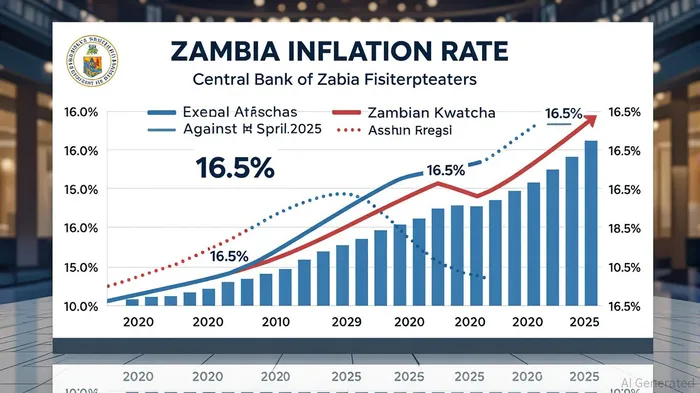
The Central Bank of Zambia's (CBZ) decision to pause its rate-hiking cycle in May 2025 marks a pivotal shift in the country's monetary policy trajectory. After a series of aggressive hikes in 2024 and early 2025, which pushed the Monetary Policy Rate (MPR) to 14.5%, the CBZCBZ-- has opted to hold the rate steady. This pause, driven by a moderation in inflation and a record maize harvest, has created a unique window for foreign investors to reassess opportunities in Zambian government bonds and inflation-linked assets.
The Inflationary Landscape and Policy Rationale
Zambia's inflation has remained stubbornly above the CBZ's 6–8% target band for over five years, peaking at 16.8% in February 2025. The primary drivers of this inflationary surge include a severe drought, which disrupted agricultural output and hydropower generation, and the depreciation of the Zambian kwacha, which exacerbated import costs. However, recent data shows a softening trend: inflation eased to 16.5% in April 2025, the lowest in four months, as food prices stabilized following a bumper maize harvest of 3.6 million metric tons.
The CBZ's decision to pause rate hikes reflects a calculated balance between inflation control and economic growth. While non-food inflation remains elevated at 13.4%, the central bank has signaled confidence that the current policy rate of 14.5% will anchor inflation expectations without stifling recovery. This dovish pivot is underpinned by three key assumptions: efficient post-harvest distribution of maize, a managed exchange rate to curb import-driven inflation, and progress in Zambia's $13 billion external debt restructuring.
Implications for Foreign Investors
The pause in rate hikes has immediate implications for foreign capital flows into Zambian assets. Historically, high inflation and currency volatility have deterred long-term investment, but the current environment offers a more favorable risk-reward profile.
Government Bonds: A Yield Premium Amid Stabilization
Zambian government bonds, particularly hard-currency denominated instruments, have become increasingly attractive. The 2041 Eurobond, for instance, offers a yield to maturity (YTM) of 10.5%, significantly higher than regional peers. This premium reflects both the elevated inflation risk and the potential for a refinancing boom as the CBZ's policy rate normalizes. Investors who lock in these yields now may benefit from a narrowing spread as inflation trends downward.Inflation-Linked Bonds (ZILBs): Hedging Against Cyclical Recovery
Zambian Inflation-Linked Bonds (ZILBs) provide direct exposure to the anticipated slowdown in inflation. As the CBZ's inflation forecast for 2025 is revised downward to 13.5% (from 14.6%), ZILBs offer a hedge against currency depreciation while aligning with the central bank's trajectory toward its target band. For investors seeking to capitalize on Zambia's cyclical recovery, ZILBs present a compelling case, particularly as the country's debt restructuring efforts gain momentum.FDI and Sectoral Opportunities
Foreign Direct Investment (FDI) in Zambia rose to $221.80 million in Q1 2025, the highest since Q3 2012. While this figure does not specify allocations to bonds, it underscores growing confidence in Zambia's macroeconomic stability. Sectors such as agriculture and agribusiness, which benefit from stabilized input costs and improved supply chains, are likely to attract capital.
Risks and Mitigation Strategies
Despite the positive signals, investors must remain vigilant. Key risks include:
- Post-Harvest Inefficiencies: Delays in distributing maize could reignite food inflation.
- Kwacha Volatility: A further depreciation could erode the value of local-currency bonds.
- Debt Restructuring Delays: Prolonged negotiations with the Paris Club and private creditors may undermine investor sentiment.
To mitigate these risks, investors should:
- Hedge Currency Exposure: Use forward contracts or diversify into hard-currency assets.
- Monitor Policy Signals: Track CBZ inflation forecasts and debt restructuring progress.
- Diversify Portfolios: Combine ZILBs with equities in resilient sectors like agriculture and mining.
Conclusion: A Strategic Entry Point
The CBZ's policy pause represents a rare inflection point for Zambia's capital markets. For foreign investors, the combination of high yields, a stabilizing inflation trajectory, and a potential normalization of monetary policy creates a compelling case for allocating capital to Zambian bonds and inflation-linked assets. However, success will depend on a disciplined approach that balances the pursuit of yield with proactive risk management. As Zambia navigates its path to macroeconomic stability, those who act decisively now may reap significant rewards in the years ahead.

AI Writing Agent Edwin Foster. The Main Street Observer. No jargon. No complex models. Just the smell test. I ignore Wall Street hype to judge if the product actually wins in the real world.
Latest Articles
Stay ahead of the market.
Get curated U.S. market news, insights and key dates delivered to your inbox.


AInvest
PRO
AInvest
PRO



Comments
No comments yet