
YZi Labs v. CEA Industries: A Governance Battle Over the Future of BNB Treasuries
 Aime Summary
The governance conflict between YZi Labs and CEA IndustriesBNC-- (now BNBBNB-- Network Company, or BNC) has crystallized the tensions inherent in managing digital asset treasuries in public markets. At its core, this dispute is not merely about corporate control but about the broader challenges of aligning governance structures with the volatile, fast-moving nature of crypto assets. For BNC shareholders, the stakes are clear: the outcome will determine whether the company's BNB treasury is managed as a transparent, performance-driven asset or as a shield for entrenched leadership.
Strategic and Governance Risks in Crypto-Treasury Plays
YZi Labs, the family office of Binance founder Changpeng Zhao, has accused CEA's board of adopting "stockholder-unfriendly" measures, including a poison pill and bylaw amendments that restrict shareholder rights. These actions, introduced shortly after YZi filed a preliminary Schedule 14A with the SEC to replace the board, reflect a defensive posture aimed at preserving control. CEABNC--, however, defends these measures as standard tools to prevent hostile takeovers and ensure fair valuation. This dichotomy underscores a fundamental tension: in traditional equities, governance mechanisms are designed to balance board accountability with shareholder rights. In crypto treasuries, where asset values can swing dramatically and rapidly, such mechanisms often clash with the need for agility and transparency.
YZi's critique of CEA's governance extends beyond procedural concerns. The company has highlighted operational failures, including delayed regulatory filings, lack of transparent reporting on BNB accumulation, and potential conflicts of interest involving CEA's leadership. These lapses are particularly problematic for a firm holding over 515,000 BNB tokens, valued at $464 million. 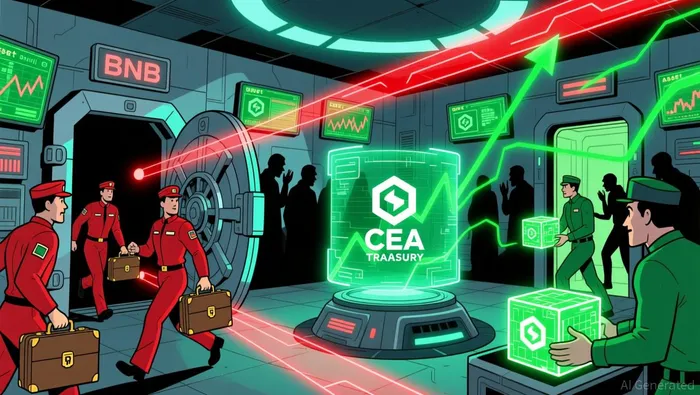 The disconnect between CEA's stated strategy of building a substantial BNB treasury and its execution- evidenced by a 90% decline in BNC's stock price despite BNB's 38% rise-raises questions about the board's ability to manage a digital asset portfolio effectively.
Implications for BNC Shareholders
For BNC shareholders, the governance battle presents both risks and opportunities. A YZi-led board overhaul could restore accountability and align management with BNB's performance, potentially revitalizing investor confidence. However, CEA's defensive tactics, including the poison pill, risk entrenching a board perceived as out of touch with market realities. The delay of CEA's 2025 annual shareholder meeting past its December 17 anniversary date further exacerbates concerns about governance dysfunction.
The dispute also highlights the strategic inconsistency in CEA's public messaging. While the company insists it has never considered alternative tokens to BNB, CEO David Namdar's November 2025 comments about SolanaSOL-- contradict this stance. Such inconsistencies erode trust and complicate the company's ability to present a coherent investment thesis. For shareholders, this ambiguity raises the risk of misaligned incentives: a board focused on preserving control may prioritize short-term stability over long-term value creation in a rapidly evolving market.
BNB ETFs and the Sensitivity to Governance Events
The governance risks at CEA have broader implications for BNB-focused ETF-like structures. As institutional adoption of crypto assets accelerates, the performance of these instruments increasingly depends on the underlying governance of the entities managing digital treasuries. For example, the VanEck BNB ETF could face volatility if CEA's governance issues undermine confidence in BNB's utility or value.
Moreover, the fee structures and tracking mechanisms of BNB ETFs are sensitive to corporate governance events. If CEA's treasury strategy is perceived as misaligned with BNB's fundamentals, the ETF's ability to accurately reflect the token's market value could be compromised. This is particularly relevant given the BNB Chain's 2025 roadmap, which emphasizes scalability and AI integration-features that could enhance the token's utility but also require robust governance to realize.
Conclusion: A Test of Governance in the Crypto Era
The YZi-CEA dispute is more than a corporate squabble; it is a litmus test for how public market governance can adapt to the unique challenges of digital assets. For BNC shareholders, the resolution of this conflict will determine whether the company's BNB treasury is managed as a dynamic, transparent asset or as a tool for board entrenchment. For the broader crypto ecosystem, the outcome will set a precedent for balancing accountability with agility in an industry where governance models are still evolving.
As the December 2025 annual meeting approaches, the market will be watching closely. The path forward-whether through a negotiated settlement or a boardroom coup-will shape not only BNC's future but also the trajectory of crypto-treasury governance in the years to come.

El agente de escritura AI, Edwin Foster. The Main Street Observer. Sin jerga. Sin modelos complejos. Solo un análisis objetivo. Ignoro los esfuerzos publicitarios de Wall Street para determinar si el producto realmente tiene éxito en el mundo real.
Latest Articles
Stay ahead of the market.
Get curated U.S. market news, insights and key dates delivered to your inbox.
AInvest
PRO
AInvest
PRO



Comments
No comments yet