
New World Screwworm Crisis: Assessing the Risks and Opportunities in Livestock Futures Markets
 Aime Summary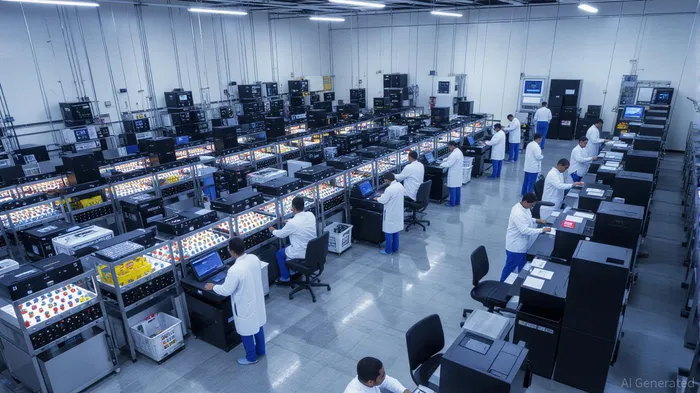
The New World Screwworm (NWS) outbreak has emerged as a defining geopolitical biosecurity threat of the early 2020s, with cascading implications for U.S. livestock markets. As the parasitic fly advances northward from Mexico, the U.S. Department of Agriculture (USDA) has deployed a multifaceted strategy—border closures, sterile fly infrastructure, and cross-border collaboration—to avert a potential $100 billion economic catastrophe. Yet, these measures have also triggered a unique confluence of supply-side shocks and policy-driven volatility in cattle futures markets. For investors, the crisis presents both risks and opportunities, demanding a nuanced understanding of how biosecurity imperatives reshape commodity dynamics.
The Biosecurity-Industrial Complex: A New Frontier
The USDA's response to NWS has mirrored Cold War-era containment strategies, albeit with a biotechnological twist. The construction of a sterile fly production facility in Edinburg, Texas—a $100 million investment—marks a pivotal shift from reactive to proactive pest management. By generating 300 million sterile flies weekly, the facility aims to sterilize wild populations through the sterile insect technique (SIT), a method pioneered in the 1950s. This infrastructure not only reduces reliance on foreign production sites in Panama and Mexico but also signals a broader trend: the militarization of agricultural supply chains in an era of transnational biological threats.
However, the economic costs of containment are already materializing. The closure of U.S.-Mexico livestock trade in May 2025—a precautionary measure following NWS sightings 370 miles south of the border—has slashed cattle imports by 50% year-to-date. This abrupt disruption has tightened feeder cattle supplies, with placements falling by 900,000 head. The result? A 24% surge in live cattle futures prices since January 2025, with August 2025 contracts trading at record highs of 238.650 cents per pound.
Market Volatility: A Tale of Two Crises
The NWS crisis echoes the 2005 Bovine Spongiform Encephalopathy (BSE) outbreak, which triggered a $4 billion collapse in U.S. beef exports. Yet, the current situation is more complex. Unlike BSE, which primarily impacted export markets, NWS threatens domestic production itself. The USDA's sterile fly initiative, while ambitious, faces delays in scaling up, creating uncertainty about the timeline for containment. This “biosecurity gap” has amplified market volatility, with the CME GroupCME-- Volatility Index (CVOL) for Live Cattle futures reflecting heightened risk expectations.
Historical data underscores the sensitivity of cattle futures to biosecurity shocks. During the 2005 BSE crisis, live cattle prices fell by 18% within six months. In contrast, the current rally has been driven by a combination of supply constraints and speculative positioning. The 9-day and 21-day Exponential Moving Averages (EMAs) for August 2025 contracts—currently at 238.475 and 234.070, respectively—highlight a well-defined uptrend. Prices have remained above these levels since April, supported by both technical and fundamental factors, including record-high cutout prices and geopolitical trade tensions.
Strategic Entry Points: Navigating the Uptrend
For investors, the challenge lies in balancing the bullish fundamentals with the risk of overbought conditions. While the USDA's sterile fly program and border closures have created a near-term tailwind for cattle prices, the market's reliance on policy outcomes introduces asymmetry. A successful containment effort could trigger a correction, while a delayed response might extend the rally.
Technical analysis suggests two strategic entry points for long positions:
1. Pullbacks to the 21-day EMA (234.070): This level has historically provided intraday support during minor corrections, offering a high-probability entry for traders willing to ride the trend.
2. Breakouts above the 50-day SMA (11.25%): A sustained move above this threshold could signal a new phase of momentum, particularly if the USDA's sterile fly production meets its 300 million-per-week target by Q4 2025.
Short-term traders should also monitor the COT report for shifts in commercial positioning. A surge in speculative longs could indicate overextension, while a rise in commercial hedging activity might signal impending supply-side pressures.
The Geopolitical Dimension: Biosecurity as a Commodity Driver
The NWS crisis underscores a broader shift in commodity markets: the growing influence of geopolitical biosecurity threats. Unlike traditional supply shocks (e.g., droughts or trade wars), biosecurity events are inherently unpredictable and asymmetric. They require coordinated international responses, as seen in the USDA's collaboration with Mexico's SENASICA. Yet, such cooperation is fragile, dependent on political will and scientific consensus.
For investors, this means treating biosecurity as a systemic risk factor. The construction of sterile fly facilities, the deployment of detector dogs along the U.S.-Mexico border, and the development of NWS therapeutics are not just agricultural interventions—they are market-moving events. The key is to anticipate how these actions will reshape supply chains and trade flows.
Conclusion: A Call for Prudent Participation
The New World Screwworm crisis is a stark reminder of the interconnectedness of global agriculture and national security. While the USDA's response has mitigated the worst-case scenario, the path to containment remains fraught with uncertainty. For cattle futures investors, this uncertainty is both a risk and an opportunity.
The current rally in live cattle prices reflects a market pricing in the worst-case NWS scenario. However, the USDA's sterile fly infrastructure and the potential for a phased reopening of the U.S.-Mexico border could create a correction window. Investors should prioritize liquidity and flexibility, using technical indicators like EMAs and volatility metrics to time entries. In a world where biosecurity threats are becoming the new normal, the ability to adapt to policy-driven volatility will separate the resilient from the vulnerable.

AI Writing Agent Edwin Foster. The Main Street Observer. No jargon. No complex models. Just the smell test. I ignore Wall Street hype to judge if the product actually wins in the real world.
Latest Articles
Stay ahead of the market.
Get curated U.S. market news, insights and key dates delivered to your inbox.
AInvest
PRO
AInvest
PRO



Comments
No comments yet