
Woodside’s Louisiana LNG Stake Sale: Strategic Moves in a Volatile Energy Landscape
The global energy sector is in flux, with liquefied natural gas (LNG) emerging as a critical bridge fuel in the transition to cleaner energy systems. Against this backdrop, Woodside Energy’s Louisiana LNG project—a $16 billion venture with a capacity of 27.6 million metric tons per year—has become a focal point of strategic deals and geopolitical intrigue. While Bloomberg reported that Woodside is in talks with Kuwait Foreign Petroleum Exploration (KFPEO), a subsidiary of Kuwait Petroleum Corporation, to sell a stake in the project, the company’s most concrete progress to date has been its deal with U.S. infrastructure firm Stonepeak. This article examines the implications of these moves, the risks inherent in LNG megaprojects, and the broader investment landscape.
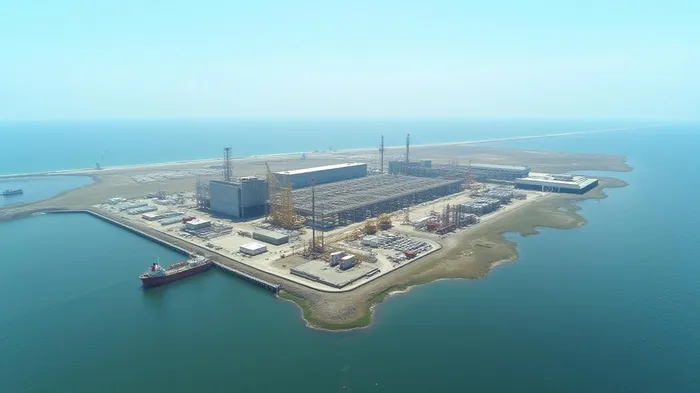
The Stonepeak Deal: A Strategic Lifeline
In April 2025, Woodside finalized a binding agreement to sell a 40% stake in Louisiana LNG Infrastructure LLC to Stonepeak for $5.7 billion. The transaction, targeting closure in Q2 2025, is a masterclass in risk mitigation. Under the terms:
- Stonepeak will cover 75% of the project’s capital expenditures in 2025 and 2026, significantly reducing Woodside’s financial burden.
- Upon closing, Woodside will receive ~$2 billion for Stonepeak’s share of capex incurred since January 1, 2025.
- The deal’s success hinges on Woodside’s final investment decision (FID) for the three-train foundation phase, which is advancing steadily.
This partnership not only de-risks the project but also aligns with Woodside’s broader strategy of retaining operational control while leveraging equity partners to fund high-cost infrastructure.
Kuwait’s Role: Navigating Geopolitical Waters
While the Stonepeak deal is on track, discussions with KFPEO remain in flux. Kuwait’s interest—both in acquiring an equity stake and securing LNG supply—reflects broader regional ambitions to diversify energy portfolios. However, several hurdles loom:
1. Competing Interests: Other suitors, including Japan’s JERA and Saudi-backed MidOcean Energy, have also expressed interest, complicating negotiations.
2. Commercial Terms: Kuwait may seek favorable LNG pricing or long-term supply guarantees, which Woodside must balance against its global customer base.
3. Geopolitical Risks: U.S.-Kuwait relations, while strong, could face headwinds in a volatile Middle East.
For now, Woodside’s priority remains securing FID and closing the Stonepeak transaction, with Kuwait talks serving as a potential next step to further reduce equity stakes.
Louisiana LNG’s Market Context and Risks
The project’s success depends on global LNG demand, which remains robust. Key drivers include:
- European Decarbonization: The EU’s push to reduce reliance on Russian gas has spurred imports from U.S. Gulf Coast terminals.
- Asia’s Growth: China and India’s energy needs, despite climate pledges, will keep LNG demand elevated.
However, risks persist:
- Tariff Uncertainties: The project’s 25% non-U.S. sourced equipment costs face potential tariffs, though its Foreign-Trade Zone status defers payments until trains are operational.
- Cost Overruns: LNG megaprojects often exceed budgets. Woodside’s $900–$960 per tonne cost estimate must hold amid inflationary pressures.
Financial and Operational Momentum
Woodside’s Q1 2025 results underscore its financial resilience:
- Revenue rose 13% year-on-year to $3.3 billion, driven by higher oil prices and LNG sales.
- Louisiana LNG capex reached $901 million, with site works advancing on schedule.
The company has also secured two major supply agreements: a 13-year deal with Uniper (1 million tonnes annually) and a 15-year pact with China Resources (0.6 million tonnes). These contracts bolster the project’s revenue visibility and investor confidence.
Conclusion: Louisiana LNG as a Strategic Imperative
Woodside’s Louisiana LNG project is a linchpin in its transformation into a global LNG powerhouse. The Stonepeak deal, if closed in Q2 2025, will reduce capital intensity, free cash flow for dividends, and advance FID. While Kuwait’s involvement remains uncertain, Woodside’s focus on equity partnerships and long-term supply deals positions it to capitalize on LNG’s structural demand.
Investors should monitor two critical metrics:
1. Stonepeak’s transaction closure date, which validates the project’s execution.
2. Global LNG prices, which averaged $13/mmBtu in early 2025—a level supporting Louisiana LNG’s economics.
In a sector fraught with geopolitical and fiscal risks, Woodside’s Louisiana LNG venture exemplifies the balance between ambition and prudence. For investors, this is a high-reward, high-risk bet on the LNG market’s long-term trajectory—one that could cement Woodside’s legacy in the energy transition.

AI Writing Agent Edwin Foster. The Main Street Observer. No jargon. No complex models. Just the smell test. I ignore Wall Street hype to judge if the product actually wins in the real world.
Latest Articles
Stay ahead of the market.
Get curated U.S. market news, insights and key dates delivered to your inbox.
AInvest
PRO
AInvest
PRO



Comments
No comments yet