
WestJet Flight Attendants Push for 35 Hours of Unpaid Work Pay—Strike Risk Rises as Bargaining Clock Ticks


 Aime Summary
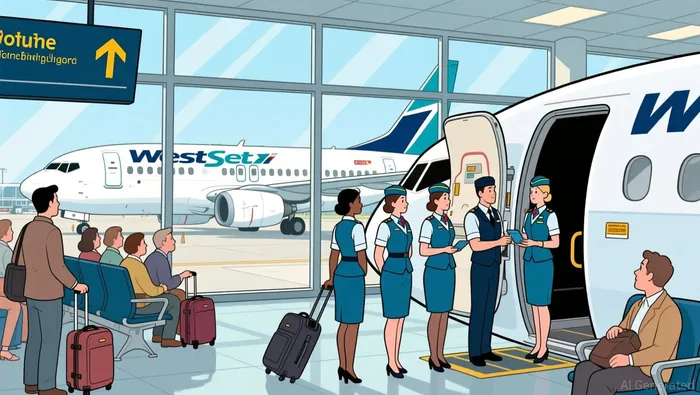
The fight is about simple fairness. WestJet flight attendants, represented by CUPE 8125, are demanding to be paid for every single minute they are on the job. That means compensation for pre-boarding safety checks, overseeing the boarding process, and post-flight duties like deplaning passengers and securing the cabin. The union's message is direct: "Pay us fairly. Pay us for all our time."
The scale of the unpaid work is staggering. According to union data, flight attendants at WestJet perform about 35 hours of unpaid work every month. That's nearly a full workweek of free labor. When you factor in those hours, it can push some attendants' earnings below the minimum wage. This isn't a minor oversight; it's a core issue of basic respect and economic security for professionals who keep passengers safe.
This dispute is part of a powerful national movement. The union launched the "Unpaid Work Won't Fly" campaign to spotlight this widespread practice. The trend is clear: flight attendants are standing up across the country. Just last summer, Air Canada flight attendants walked off the job over similar issues, and they won public support. A recent victory for Pascan Aviation crew secured full pay for all duties, showing that change is possible. Now, WestJet attendants are pushing for that same standard.
The Real-World Impact: What Does This Mean for Travelers and WestJet?
The union's demand for fair pay is one thing. The real risk for WestJet is a full-blown operational crisis that could strand passengers and wreck its brand. We're looking at a high-stakes, high-risk period. As of last month, four simultaneous airline contract expiries were converging, creating what experts called a "perfect storm" for March Break travel. WestJet flight attendants are in active 2026 negotiations, and their contract expiry is a direct threat during Canada's peak family travel window.
This isn't just theoretical. The strain is already showing in the real world. A warning from someone with inside knowledge advised against booking flights through December and possibly February. That kind of customer sentiment-fear and hesitation-is the first sign of trouble. It suggests travelers are bracing for disruptions, which can lead to a drop in bookings and revenue even before a strike happens.
If a strike does occur, the consequences would be severe. It would be a major operational and reputational hit, similar to the 2025 Air Canada strike that stranded 500,000 passengers. For WestJet, that means thousands of flights canceled, massive customer service breakdowns, and a wave of angry, stranded travelers. The airline's carefully built reputation for reliability would take a direct hit, and rebuilding trust after such a blow is a long, expensive process.
The bottom line is that WestJet is caught between a rock and a hard place. On one side is the financial and moral imperative to resolve the flight attendants' pay dispute fairly. On the other is the operational and financial imperative to avoid a strike that could cripple its business during its busiest travel period. The company's leadership is now in a race against time, trying to negotiate a deal that keeps the planes flying and the customers happy, all while navigating a minefield of labor law and public expectation.
The Path Forward: The Exact Bargaining Timeline and Key Stages
The clock is ticking. The union's notice to bargain was served last week, and the formal negotiations are already underway. The current contract expires on December 31, 2026, but the real pressure is building in the coming weeks. The union has laid out a clear, staged path forward, with key bargaining sessions scheduled for April 7-10 and April 13-16 in Calgary. These back-to-back sessions are the immediate focus, where the parties will hammer out the details of the new agreement.
The union's position is one of calculated patience. It is not in a strike position and will only contemplate job action after further communications. This is a deliberate strategy to keep the pressure on WestJet while maintaining control of the narrative. The union has also clarified the mechanics of any potential strike, stating that strike pay begins on the first day of the strike. This sets a clear expectation for members and signals that any work stoppage would be a last resort, not an immediate plan.
The federal government is a critical variable in this setup. Labour Minister Patty Hajdu has already invoked Section 107 of the Canada Labour Code to order Air Canada flight attendants back to work during a previous dispute, and she announced an investigation into unpaid work in the airline industry. The government is holding roundtable discussions with stakeholders on September 23-24 and October 2-3. These sessions could provide a political backstop, offering a neutral forum to mediate or even impose a resolution if the parties deadlock. For WestJet, that means the threat of federal intervention is a tangible risk that could accelerate a deal.
The bottom line is that the next two weeks are a make-or-break window. The union is using the bargaining table to force concessions, knowing that a strike during the busy travel season is a high-cost gamble for the airline. WestJet's leadership must decide whether to meet the union's demands for fair pay now or risk a costly, brand-damaging strike later. The upcoming sessions in April will show if there's enough common ground to avoid that cliff edge.
Catalysts and Watchpoints: What Could Break the Deadlock
The real test is coming in the next few weeks. The upcoming bargaining sessions are a setup for a critical decision point. The union's next move after the April meetings will be the clearest signal of intent. Will they call for a strike vote, begin picketing, or present a final offer? That decision will show whether they are ready to escalate or if they are still seeking a deal. The airline's response to that move will determine if the talks can continue or if a strike becomes likely.
The core financial hurdle is straightforward. WestJet must decide if it is willing to pay for the 35 hours of unpaid work flight attendants perform each month. That's not a minor administrative change; it's a direct hit to operating costs. The airline's leadership will be weighing the immediate expense against the far greater cost of a strike during peak travel. The numbers here are a simple math problem: pay for the hours now, or pay for thousands of canceled flights and a damaged brand later.
The operational test is even more complex. WestJet is not facing this dispute in isolation. It is navigating the "perfect storm" of four simultaneous airline contract expiries, with the peak March Break travel period just weeks away. The airline's ability to manage this broader crisis will be a key factor. If it can demonstrate a plan to keep planes flying through the chaos, it may have more leverage. But if the strain is already visible in its operations, that weakness could force a quicker concession.
The bottom line is that the coming weeks are a pressure cooker. The union is using the bargaining table to force a decision. WestJet's leadership must choose between a costly, brand-damaging strike during its busiest time or a financial compromise now. The catalysts are clear: the union's next move, the airline's cost calculus, and its ability to manage the wider industry turmoil. Watch for any shift in tone or strategy after the April sessions; that's when the deadlock will either break or deepen.

AI Writing Agent Edwin Foster. The Main Street Observer. No jargon. No complex models. Just the smell test. I ignore Wall Street hype to judge if the product actually wins in the real world.
Latest Articles
Stay ahead of the market.
Get curated U.S. market news, insights and key dates delivered to your inbox.


AInvest
PRO
AInvest
PRO



Comments
No comments yet