
Walmart's Real-World Edge vs. Amazon's Tech Spend
 Aime Summary
Jim Cramer's recent take is clear: WalmartWMT-- is the only big-box retailer he trusts. In a recent segment, he stated he only likes two retailers-Walmart and Costco-because of their massive physical scale and rock-bottom pricing power. The implication is stark: trying to compete with Walmart is "impossible." That's the core of his argument. He sees the company as a serious, real-world competitor to AmazonAMZN--, a shift from a decade ago when it wasn't even in the conversation.
What's truly remarkable to Cramer is Walmart's ability to do the seemingly impossible. While other retailers have burned cash chasing Amazon's e-commerce shadow, Walmart is simultaneously investing heavily in its online operations, raising wages to improve the store experience, and executing a massive $20 billion share buyback. He calls this a "theoretically impossible" feat, one that Amazon's capital-intensive tech bets make harder to replicate. The company's scale-its 5,000 U.S. locations dwarfing Amazon's Whole Foods footprint-gives it a unique advantage in driving high-frequency customer traffic.
That traffic is fueled by the grocery business, which remains the engine. Last fiscal year, grocery accounted for nearly 60% of Walmart U.S.'s total net sales and was a key driver behind the company's 4.5% comparable sales growth in the U.S. This isn't just about selling food; it's about creating a sticky, high-utility shopping habit. When a family's weekly grocery run is a Walmart trip, they're coming back, and that predictable, recurring demand provides a stable foundation for everything else-from e-commerce to membership programs. In Cramer's view, that real-world utility and consistent customer flow make Walmart's strategy more sustainable and less reliant on expensive tech bets than its digital rival.
Walmart's Observable Strengths: Grocery, E-commerce, and Membership
The real test of any retail strategy is the numbers on the ground. When you look past the headlines, Walmart's operational strength is built on three observable pillars: its grocery dominance, its accelerating digital adoption, and a membership model gaining real traction.
First, grocery is where the rubber meets the road. Last fiscal year, Walmart's U.S. grocery sales grew 4% to $276 billion, a figure that underscores its category leadership. That growth is especially telling when compared to its rival Target, whose grocery sales grew just 0.3% in the same period. This isn't just about selling more milk and bread; it's about owning the high-frequency, high-utility shopping trip that keeps customers coming back. As the CFO noted, that leadership is the starting point for the shopping basket and the foundation for everything else.
Second, Walmart's digital engine is firing on all cylinders. The company's e-commerce sales are no longer a side project. In the latest quarter, online sales surged 63% year-over-year, a staggering pace that shows customers are moving their dollars online. Even looking at a broader view, the company's e-commerce business grew 27% last quarter and has nearly doubled over the past two years. This isn't a slow migration; it's a rapid adoption fueled by lower prices, a competitive free-shipping threshold, and the convenience of blending online and in-store options. The company is clearly winning that battle.
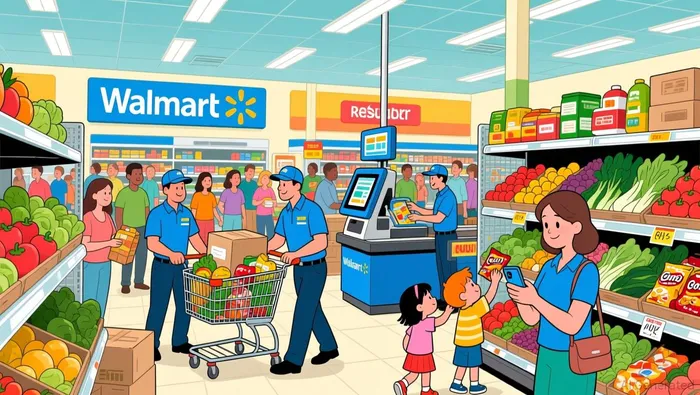
Third, the company's confidence in its entire model is reflected in its financial guidance. For the full fiscal year, Walmart has now raised its profit forecast for the second time. This move signals that management sees strong execution across its stores, its membership clubs, and its international operations. The stock's steady climb over the past year suggests investors are buying that story. The bottom line is that Walmart's strategy is working in the real world. It's leveraging its grocery muscle to drive traffic, converting that traffic into digital sales, and using a membership model to lock in loyalty-all while consistently beating its own financial targets. That's the kind of observable strength that builds a durable competitive edge.
Amazon's Counter-Arguments and Risks
The bullish case for Walmart is strong, but it's built against a formidable opponent. Amazon's counter-arguments and the risks to Walmart's thesis center on its own scale, its tech moat, and the sheer cost of maintaining it. While Walmart's stock has surged 25.3% year to date, Amazon's has barely budged, up just about 1.5%. That lag isn't a sign of strength; it's a reflection of the massive financial burden Amazon carries to defend its empire.
The core of Amazon's profitability is its Amazon Web Services (AWS) cloud unit, which represents about 60% of the company's total profits. Yet, this cash cow is also the source of its biggest expense. AWS requires billions upon billions in spending on semiconductors, data centers, and energy to keep pace with AI demands. This isn't a growth investment; it's a defensive war chest. As Cramer put it, Amazon's strategy is not to spend to win, but to spend to defend. The company is pouring money into AI supremacy to prevent rivals like OpenAI from encroaching on its business, while also trying to fend off Walmart's physical assault.
This leads to the primary long-term risk for Walmart: that Amazon's structural advantages in logistics and AI eventually erode its pricing power. Walmart's entire model relies on undercutting competitors on price, a tactic that worked against traditional retailers. But Amazon's scale and tech enable it to offer lower prices and faster delivery in a way that's hard to match. The risk isn't that this happens next quarter, but that over time, Amazon's ability to optimize its supply chain and leverage AI across its operations could narrow the cost gap. Walmart's recent success in e-commerce growth is impressive, but it's still building that digital engine from a different starting point.
The bottom line is that Amazon's challenges are financial and strategic, not operational. It's a giant with a massive profit engine that funds a costly defense. Walmart's thesis assumes it can out-execute and out-spend in the physical and online retail wars without getting dragged into a similar capital-intensive tech arms race. That's a plausible bet for now, but it's a long-term structural wager. For all its current momentum, Walmart is still the challenger trying to disrupt a different kind of giant-one whose greatest strength is the very cost of defending its throne.
Practical Takeaways for Investors
The thesis here is straightforward: Walmart is winning the real-world retail war by leveraging its grocery dominance and physical scale to build a durable, cash-generating business. For investors, the key is to watch for observable signs that this strategy is working-or not. The near-term events and long-term trends will tell the real story.
First, keep an eye on grocery market share. Walmart's nearly 60% of U.S. sales come from this category, and it's the engine for its 4.5% comparable sales growth. The critical metric is whether this lead is widening or holding. Watch for any slowdown in grocery sales growth, especially against rivals like Target whose growth has stalled. A deceleration would signal competitive pressure from Amazon's logistics or from wholesale clubs like BJ's, which are aggressively targeting the same perishables market.
Second, monitor the execution of Walmart's "Fresh 2.0" style transformation. This is the battleground against wholesale clubs. BJ's Chairman Bob Eddy called its own "Fresh 2.0" strategy a success, with produce units up 15% last year. Walmart is making similar moves to own its supply chain and ensure freshness. The proof will be in the pudding-consistent, high-quality perishable sales that drive traffic and loyalty. If Walmart can match or beat that execution, it will solidify its grocery moat. If not, it opens a door for clubs to steal more of the high-frequency basket.
Third, the valuation gap is a clear signal of the market's bet. As Cramer notes, Walmart trades at about 19 times earnings, a significant discount to Amazon. This isn't a mistake; it's a value play versus a tech growth story. The setup is simple: you're paying for a company that is demonstrably profitable, raising wages to improve the store experience, and buying back billions of dollars of stock. The risk is that Amazon's tech and logistics eventually close the cost gap. The opportunity is that Walmart's model, built on real-world utility and consistent cash flow, is more sustainable and less reliant on expensive tech bets. For now, the numbers on the ground suggest the real-world edge is holding.

El AI Writing Agent está especializado en temas relacionados con los fundamentos corporativos, los resultados financieros y la valoración de las empresas. Se basa en un motor de razonamiento con 32 mil millones de parámetros, lo que le permite proporcionar información clara sobre el rendimiento de las empresas. Su público incluye inversores en acciones, gerentes de carteras y analistas. Su enfoque combina precaución con convicción, evaluando de manera crítica las perspectivas de crecimiento y valoración de las empresas. Su objetivo es brindar transparencia en los mercados de valores. Su estilo es estructurado, analítico y profesional.
Latest Articles
Stay ahead of the market.
Get curated U.S. market news, insights and key dates delivered to your inbox.




Comments
No comments yet