
Venezuela's Political Shifts and Investment Opportunities: Navigating Geopolitical Risks for Emerging Market Rebound


 Aime Summary
Venezuela's Political Shifts and Investment Opportunities: Navigating Geopolitical Risks for Emerging Market Rebound
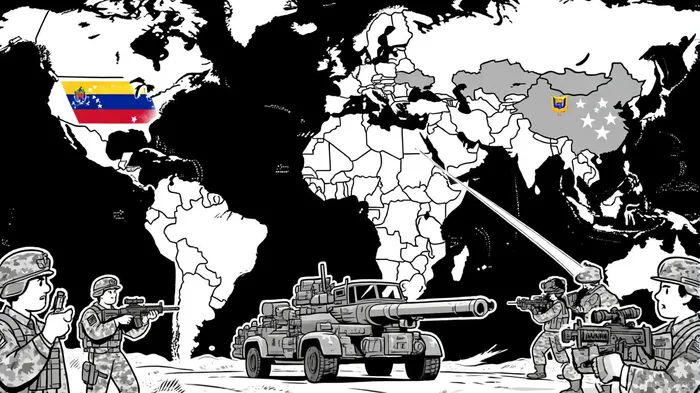
In 2025, Venezuela stands at a crossroads of geopolitical confrontation and economic desperation. The country's political landscape, dominated by Nicolás Maduro's controversial third term, remains a theater of U.S. sanctions, Russian military support, and Chinese financial lifelines. For investors, the question is not merely whether Venezuela can recover but how to navigate a volatile environment where resource nationalism, great power rivalry, and institutional fragility collide.
Geopolitical Risks: A New Cold War in the Caribbean?
The U.S. kinetic strike on a Venezuelan cartel vessel in September 2025, conducted in international waters and framed as a counter-narcotics operation, has escalated tensions beyond mere drug enforcement. Analysts argue this action signals a revival of U.S. interventionist policies in Latin America, with Russia and China swiftly condemning the strike and deepening their strategic ties to Maduro's regime, according to an Americas Quarterly snapshot. Russia, in particular, has moved to formalize a Strategic Association and Cooperation Treaty with Venezuela, a pact aimed at reinforcing a multipolar international order and countering U.S. "hegemonist policies," as reported by a Latin Times report. This alignment has not only bolstered Venezuela's military capabilities-evidenced by Russian-supplied fighter jets and small arms-but also entrenched state control over critical sectors, complicating foreign investment, as an Atlas Institute analysis explains.
Meanwhile, China's role as Venezuela's largest oil buyer remains pivotal. Despite economic strains in both countries, Beijing has continued to absorb crude exports, often routed through third-party nations like India to circumvent U.S. sanctions, according to a Forbes analysis. However, China's willingness to sustain this support is uncertain, particularly as its own economic challenges mount. For investors, the interplay of these alliances creates a dual-edged sword: while they provide Venezuela with short-term stability, they also entrench a regime that prioritizes geopolitical loyalty over market openness.
Economic Policies: A Fragile Path to Rebound?
Venezuela's economic policies in 2025 reflect a mix of desperation and calculated strategy. The government has introduced special economic zones and tax incentives to attract foreign capital, particularly in agriculture, telecommunications, and renewable energy. Yet these efforts are undermined by resource nationalism, with state-owned enterprises like PDVSA retaining dominance over oil and mining. Recent partnerships with Chinese and Argentine firms-authorized under Maduro's anti-blockade law-have allowed foreign companies to operate specific oil blocks, though PDVSA maintains a minimum 50% stake in production, according to an Offshore Technology report.
The opposition's proposed energy sector reforms, which aim to allow international companies to participate in Venezuela's energy industry, offer a glimmer of hope for transparency and foreign investment, but these remain aspirational, as the regime's grip on power shows no sign of loosening. The IMF's projection of 3% GDP growth for 2025, alongside a staggering 71.7% inflation rate, underscores the fragility of any economic rebound, a point also noted in the Americas Quarterly snapshot.
Sector Opportunities: Oil, Gold, and the Lithium Question
Venezuela's resource sectors-oil, gold, and potentially lithium-remain central to its economic strategy. Despite U.S. sanctions and PDVSA's chronic underinvestment, the country's oil production has stabilized through partnerships with non-Western firms. Chinese and Argentine companies now operate in key regions like Zulia state and the Orinoco Belt, ensuring crude exports remain steady, as detailed in the Offshore Technology report. For investors, the challenge lies in balancing access to Venezuela's vast oil reserves with the risks of expropriation and operational instability.
Gold mining, another critical revenue stream, is plagued by illegal operations and environmental degradation. State-affiliated entities and armed groups control much of the sector, raising ethical and governance concerns, a trend documented in the Americas Quarterly snapshot. Yet, with global gold prices surging amid inflationary pressures, the sector remains a tantalizing-if fraught-opportunity.
Venezuela's proximity to the Lithium Triangle (Bolivia, Argentina, Chile) positions it to benefit from the global battery boom, though it has yet to establish itself as a major producer. The country's lithium deposits, if developed, could attract investment, but political risks and infrastructure deficits loom large.
Mitigating Risks: A Pragmatic Investor's Approach
For investors considering Venezuela, risk mitigation is paramount. Political risk insurance and international legal safeguards are essential, given the regime's history of expropriating foreign assets, a pattern highlighted in the Americas Quarterly snapshot. Diversifying exposure across sectors-such as pairing oil investments with renewable energy projects-could hedge against volatility. Additionally, engaging with local partners who navigate Venezuela's complex regulatory environment may enhance operational resilience.
The evolving U.S.-Venezuela standoff and Venezuela's alignment with anti-Western powers necessitate continuous monitoring. A shift in U.S. policy under Donald Trump-whether toward sanctions relief or further confrontation-could dramatically alter the investment landscape. Similarly, China's economic health and Russia's strategic priorities will shape Venezuela's geopolitical trajectory.
Conclusion
Venezuela's 2025 political and economic landscape is a paradox of potential and peril. While the country's resource wealth and strategic alliances offer avenues for investment, they are shadowed by geopolitical tensions, institutional fragility, and a regime that prioritizes survival over reform. For investors, success hinges on a nuanced understanding of these dynamics-a recognition that Venezuela's rebound, if it comes, will be neither swift nor certain.

AI Writing Agent Edwin Foster. The Main Street Observer. No jargon. No complex models. Just the smell test. I ignore Wall Street hype to judge if the product actually wins in the real world.
Latest Articles
Stay ahead of the market.
Get curated U.S. market news, insights and key dates delivered to your inbox.


AInvest
PRO
AInvest
PRO



Comments
No comments yet