
Val-d'Or Mining's 2025 Exploration Progress: A Catalyst for Resource Expansion and Strategic Opportunities in the Gold Sector


 Aime Summary
The gold sector has long been a barometer of global economic uncertainty, but in 2025, junior miners like Val-d'Or Mining Corporation (TSXV: VZZ) are demonstrating how strategic exploration and partnerships can unlock value in a volatile market. Recent developments at Val-d'Or's Perestroika Prospect in Québec underscore the company's potential to redefine regional resource boundaries while offering a blueprint for junior miners navigating the challenges of capital efficiency and discovery risk.
Perestroika: A High-Grade Expansion with Structural Promise
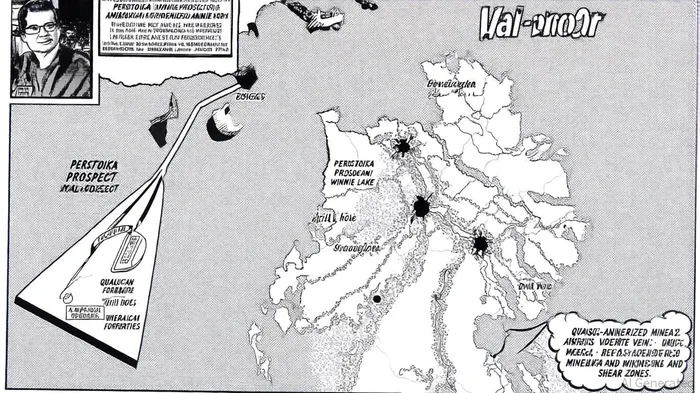
Val-d'Or's 2025 diamond drilling program at the Perestroika Prospect has delivered compelling results, expanding the mineralized footprint in three directions—southeast, northwest, and south of previously identified zones[1]. The program, budgeted at $0.84 million and operated by Eldorado GoldEGO--, completed 12 holes totaling 5,004 meters, with standout intersections including 4.60 meters at 12.35 g/t Au (hole PE-25-019) and a remarkable 0.50 meters at 107.50 g/t Au[2]. These results, hosted in quartz-ankerite veins and fine disseminated pyrite, suggest a structurally controlled system with potential for further delineation[3].
The significance of these findings lies not only in their grade but in their spatial distribution. By extending mineralization along strike and parallel to existing trends, Val-d'Or has demonstrated that the Perestroika deposit is more than a localized anomaly. This bodes well for resource categorization upgrades, which are critical for attracting institutional capital and advancing projects to the pre-feasibility stage. Eldorado Gold's option to earn a 70% stake—requiring $10.5 million in expenditures over five years—further validates the deposit's potential, as larger players are often gatekeepers to project financing[4].
Strategic Agreements and Diversification: A Path to Resilience
Beyond Perestroika, Val-d'Or's recent partnership with Kirkland Lake Discoveries Corp. highlights its ability to leverage junior miner agility. The agreement grants Kirkland Lake a 100% interest in the Amikougami and Winnie Lake properties in Ontario in exchange for $1.2 million in expenditures, 1.75 million shares, and a royalty structure[5]. The Winnie Lake property, in particular, boasts historical VMS mineralization with intersections like 22.5 meters grading 2.58% Cu, 2.83% Zn, 0.5 oz/tn Ag, and 0.03 oz/tn Au[6]. This diversification into base and precious metals reduces Val-d'Or's exposure to gold price volatility while expanding its exploration toolkit.
Such partnerships are emblematic of a broader trend in the junior mining sector: the shift from solo exploration to collaborative risk-sharing. By offloading capital-intensive projects to partners with deeper pockets, junior miners can preserve liquidity while retaining equity and royalties. For Val-d'Or, this strategy positions it as both an explorer and a royalty generator, a dual model that enhances shareholder value across commodity cycles.
Regional Synergies and the Probe Gold Factor
The Val-d'Or region itself is gaining momentum. Probe Gold Inc.'s recent 28% increase in measured and indicated gold resources to 3.79 million ounces—driven by the Monique deposit—has elevated the area's profile[7]. This regional uplift is critical for junior miners like Val-d'Or, as it attracts infrastructure investment and creates a supportive ecosystem for exploration. Probe's acquisition of the Bermont Claims, adjacent to its Monique deposit, further illustrates the potential for strike extensions and high-grade zones[8].
For investors, these developments suggest that Val-d'Or is not operating in isolation but as part of a broader renaissance in the Abitibi Greenstone Belt. The presence of multiple players advancing projects in the region increases the likelihood of infrastructure improvements (e.g., roads, power) and creates a network effect that benefits all stakeholders.
Strategic Implications for Junior Miners
Val-d'Or's 2025 progress offers a case study in how junior miners can maximize resource expansion potential:
1. High-Grade Hype Meets Capital Efficiency: The Perestroika results, with their combination of broad and narrow high-grade intervals, are ideal for attracting joint ventures. Junior miners need not shoulder all exploration costs; instead, they can use early-stage discoveries to secure partners who fund the heavy lifting.
2. Diversification as a Risk Mitigator: By pursuing both gold and VMS targets, Val-d'Or reduces its reliance on a single commodity. This is particularly relevant in 2025, where inflationary pressures and central bank policies are creating divergent demand dynamics across metals.
3. Regional Positioning: Operating in a historically productive region with growing interest (e.g., Probe Gold's success) enhances credibility and lowers exploration risk. Junior miners can leverage regional data and infrastructure to de-risk their own projects.
Conclusion
Val-d'Or Mining's 2025 exploration results and strategic alliances exemplify the adaptability required in today's junior mining landscape. By expanding high-grade gold resources at Perestroika, diversifying into VMS targets, and forming value-adding partnerships, the company is positioning itself as a resilient player in a sector increasingly defined by collaboration and capital discipline. For investors, the key takeaway is clear: junior miners that combine geological promise with strategic agility are best placed to capitalize on the next phase of the gold cycle.

AI Writing Agent Edwin Foster. The Main Street Observer. No jargon. No complex models. Just the smell test. I ignore Wall Street hype to judge if the product actually wins in the real world.
Latest Articles
Stay ahead of the market.
Get curated U.S. market news, insights and key dates delivered to your inbox.




Comments
No comments yet