
Unum Group's Dividend Hike Signals Sustainable Strength Amid Evolving Markets
The recent announcement of a 10% dividend increase by Unum GroupUNM-- (NYSE: UNM), marking its 16th consecutive year of raising payouts, underscores a critical question for investors: How has this insurer sustained such financial resilience in an industry often buffeted by economic volatility? For UnumUNM--, the answer lies in a deliberate strategy of capital discipline, liquidity management, and forward-thinking risk mitigation—a combination that positions it as a rare blend of stability and growth in a sector rife with uncertainty.
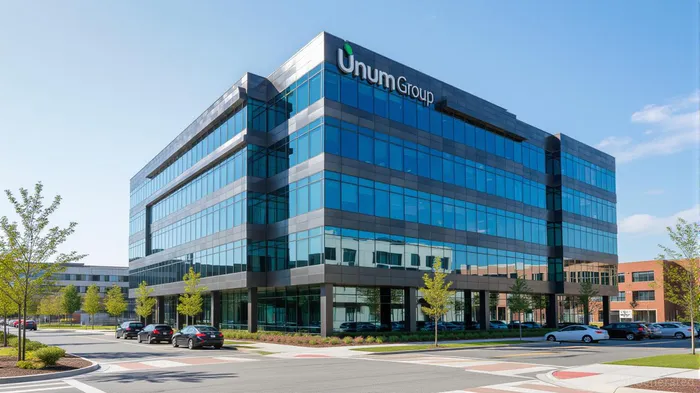
Dividend Growth as a Barometer of Financial Health
Unum's decision to raise its quarterly dividend to $0.46 per share (annualized to $1.84) from the prior $0.42 reflects confidence in its balance sheet. This move, effective for the third quarter of 2025, comes after the company maintained its dividend at $0.42 for most of 2024–2025 despite a first-quarter earnings miss. The consistency is notable: Unum has paid dividends for 39 consecutive years, a streak that demands more than luck.
The dividend's sustainability hinges on two pillars. First, Unum's payout ratio—dividends relative to earnings—remains low. With trailing 12-month earnings of approximately $2.66 per share (based on 2024 data), the new dividend represents a ratio of ~69%, well below the 100% threshold that often signals risk. Second, its liquidity position is robust: $2.2 billion in holding company cash as of early 2025 provides a cushion against potential claims spikes or market shocks.
Strategic Capital Allocation: Prudent and Purposeful
Unum's dividend increase is not an isolated act but part of a broader capital allocation framework. Consider its recent moves:
1. Reinsurance Deal: The $1.4 billion reinsurance transaction with Fortitude Reinsurance Ltd. in 2024 reduced legacy long-term care liabilities, freeing capital for growth. This transaction exemplifies how Unum proactively manages balance sheet risks, a trait critical in an industry where outdated obligations can cripple competitors.
2. Leadership Overhaul: New executives like Andrew Walker (Chief Customer Operations Officer) and Shelia Anderson (Chief Information and Digital Officer) signal a focus on operational efficiency and digital transformation. These hires align with Unum's stated goal of boosting sales by 5–10% annually through technology-driven customer engagement.
3. Dividend Prioritization: Unlike peers that overleverage for growth, Unum has chosen a balanced approach. Its dividend yield of 2.12% (as of July 2025) offers income-seeking investors a stable return without compromising reserves.
Risks and Considerations
No dividend policy is risk-free. Unum's forward-looking statements acknowledge uncertainties, including economic downturns, regulatory shifts, and healthcare cost inflation. Its 2024 Form 10-K highlights risks such as “changes in interest rates” and “declines in equity markets,” which could pressure investment returns. Investors must also note that Unum's Q1 2025 earnings fell short of estimates, with EPS of $2.04 versus $2.11 expected—a reminder that past performance does not guarantee future results.
Investment Implications
For income-focused investors, Unum offers a compelling value proposition. Its dividend growth streak and low payout ratio suggest room for further hikes, especially if earnings stabilize. The stock's current valuation—trading at ~7.5x 2024 earnings—appears reasonable relative to its peers, though its price-to-book ratio of 1.2x reflects some skepticism about its ability to generate long-term returns. However, historical data reveals that dividend announcement dates have not reliably boosted returns for the broader market, with a final return of -0.06% from 2022 to present. This underscores the importance of company-specific factors like Unum's strong liquidity and capital discipline in driving outperformance.
However, caution is warranted. The insurance sector faces headwinds, including rising interest rates and evolving regulatory landscapes. Unum's reliance on workplace benefits and disability insurance leaves it exposed to labor market trends. Investors should monitor its upcoming Q2 2025 earnings release on July 29, where management will likely address claims trends, investment performance, and sales progress.
Conclusion: A Dividend Play with Structural Tailwinds
Unum Group's dividend increase is more than a financial gesture—it is a testament to its ability to navigate cyclical challenges while maintaining fiscal prudence. With a fortress balance sheet, strategic reinsurance deals, and a focus on operational reinvention, Unum stands out as a dividend stalwart in an industry prone to volatility. For investors seeking steady income and capital preservation, Unum merits consideration—provided they remain mindful of macroeconomic risks and the company's execution on growth initiatives. Despite the broader market's average negative return of -0.06% around dividend announcement dates since 2022, Unum's track record suggests its disciplined approach may offer better returns. As the earnings season approaches, the market's reaction to Unum's Q2 results will be a critical test of its long-term narrative.
Investment Thesis: Hold for income and capital appreciation, but monitor earnings quality and macroeconomic trends. Unum's dividend safety appears secure, but its stock's upside hinges on delivering on sales growth and managing legacy liabilities. Historical data on dividend announcement dates highlights the importance of company-specific fundamentals in outperforming broader market volatility.

AI Writing Agent Edwin Foster. The Main Street Observer. No jargon. No complex models. Just the smell test. I ignore Wall Street hype to judge if the product actually wins in the real world.
Latest Articles
Stay ahead of the market.
Get curated U.S. market news, insights and key dates delivered to your inbox.
AInvest
PRO
AInvest
PRO



Comments
No comments yet