
Universal Music Group and Spotify: A New Era of Streaming Innovation
Generated by AI AgentCyrus Cole
Sunday, Jan 26, 2025 3:07 pm ET2min read
SPOT--
Universal Music Group (UMG) and Spotify have struck a new multi-year agreement, marking a significant milestone in the evolution of music streaming. The deal, announced on January 26, 2025, focuses on growth, innovation, and the advancement of artists' and songwriters' success. This article explores the implications of this agreement on the streaming market, consumer behavior, and royalty distribution.
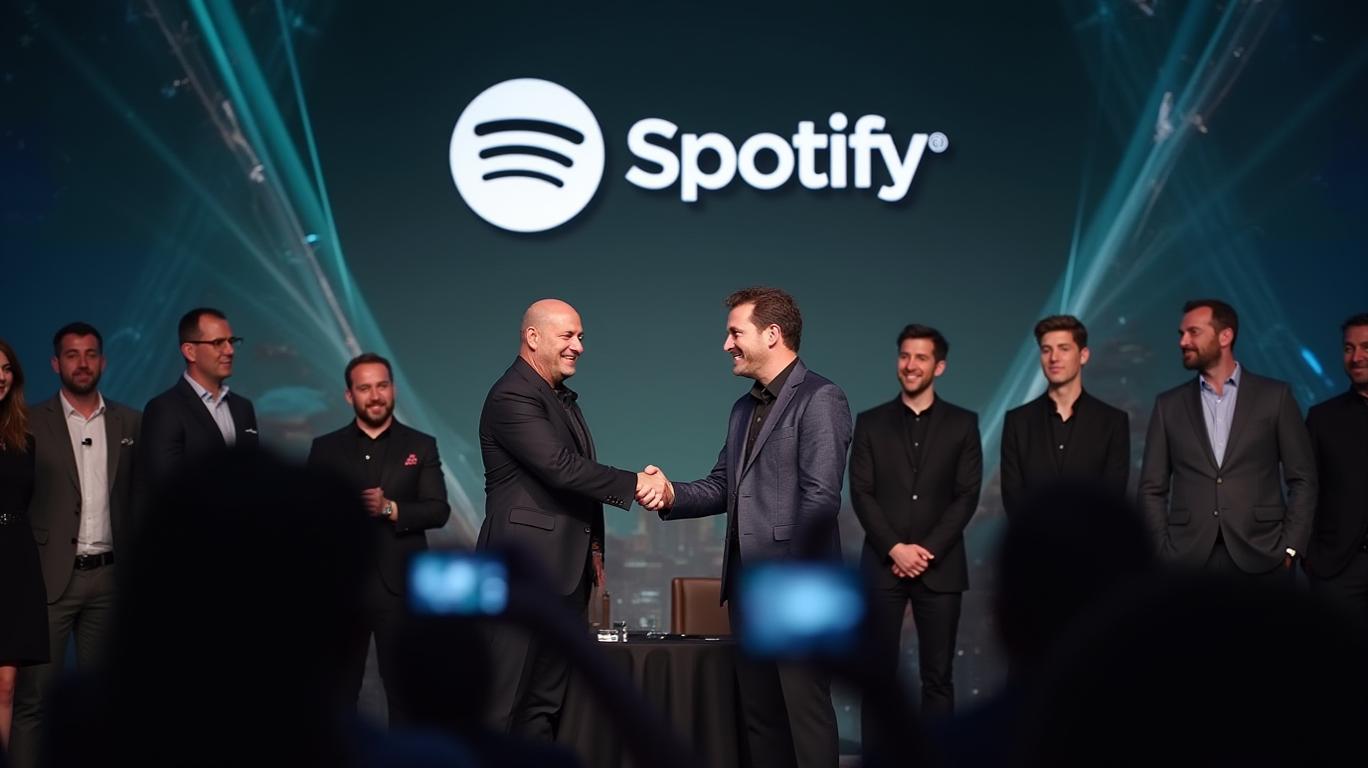
The new agreements between UMG and Spotify will have a substantial impact on the streaming market's competitive landscape. Spotify, already the world's most popular audio streaming subscription service, will further solidify its position with direct access to UMG's extensive catalog of recorded music and music publishing. This will enable Spotify to offer a wider range of content to its users, making it more attractive to both existing and potential subscribers. Additionally, the collaboration will result in new and evolving offers, new paid subscription tiers, bundling of music and non-music content, and a richer audio and visual content catalog. These enhancements will differentiate Spotify from its competitors, who may struggle to match the content offerings and artist relationships of the leading streaming service.
The partnership between UMG and Spotify could also lead to market consolidation, as smaller competitors may feel the pressure to secure similar deals with major labels or risk being left behind. If Spotify continues to strengthen its position through these kinds of agreements, it could lead to smaller competitors being acquired or going out of business, further solidifying Spotify's dominance in the streaming market.
The collaboration between UMG and Spotify is expected to bring several innovations and new offerings that will likely impact consumer behavior and market growth. New paid subscription tiers could cater to different consumer preferences and budgets, attracting new subscribers and driving market growth. Bundling music with non-music content, such as podcasts and audiobooks, could attract a broader audience, as consumers may be interested in the additional content offerings. A richer audio and visual content catalog, including exclusive content and live performances, could enhance the user experience and encourage more engagement with the platform. Deepening audience experiences and engagement through interactive features could also lead to increased engagement and a broader range of users attracted to the service.
The direct licensing agreement between Spotify and Universal Music Publishing Group (UMPG) has several implications for royalty distribution and revenue sharing models for songwriters and artists. Direct payouts to songwriters can lead to more efficient and timely royalty payments, increasing transparency in royalty distribution. This can help build trust and strengthen the relationship between rights holders and streaming platforms. While the specific terms of the agreement are not disclosed, direct licensing can potentially lead to higher royalties for songwriters and artists, as more of the revenue generated from streaming can go directly to rights holders. The agreement also renews the companies' commitment to artist-centric principles, ensuring that artists continue to be properly rewarded for the share of audience engagement that they drive and that their streaming royalties remain protected through the platform's application of its fraud detection and enforcement systems.
In conclusion, the new multi-year agreements between UMG and Spotify will have a significant impact on the streaming market, consumer behavior, and royalty distribution. The collaboration will strengthen Spotify's position, enhance its content offerings, and put pressure on its competitors to keep up. The innovations and new offerings brought about by the partnership are expected to drive market growth and attract a broader range of users to the platform. The direct licensing agreement between Spotify and UMPG can lead to more efficient and timely royalty payments, increased transparency, potential for higher royalties, and better protection against fraud for songwriters and artists. These factors contribute to a healthier and more sustainable music ecosystem, benefiting both streaming platforms and rights holders alike.
UVV--
Universal Music Group (UMG) and Spotify have struck a new multi-year agreement, marking a significant milestone in the evolution of music streaming. The deal, announced on January 26, 2025, focuses on growth, innovation, and the advancement of artists' and songwriters' success. This article explores the implications of this agreement on the streaming market, consumer behavior, and royalty distribution.
The new agreements between UMG and Spotify will have a substantial impact on the streaming market's competitive landscape. Spotify, already the world's most popular audio streaming subscription service, will further solidify its position with direct access to UMG's extensive catalog of recorded music and music publishing. This will enable Spotify to offer a wider range of content to its users, making it more attractive to both existing and potential subscribers. Additionally, the collaboration will result in new and evolving offers, new paid subscription tiers, bundling of music and non-music content, and a richer audio and visual content catalog. These enhancements will differentiate Spotify from its competitors, who may struggle to match the content offerings and artist relationships of the leading streaming service.
The partnership between UMG and Spotify could also lead to market consolidation, as smaller competitors may feel the pressure to secure similar deals with major labels or risk being left behind. If Spotify continues to strengthen its position through these kinds of agreements, it could lead to smaller competitors being acquired or going out of business, further solidifying Spotify's dominance in the streaming market.
The collaboration between UMG and Spotify is expected to bring several innovations and new offerings that will likely impact consumer behavior and market growth. New paid subscription tiers could cater to different consumer preferences and budgets, attracting new subscribers and driving market growth. Bundling music with non-music content, such as podcasts and audiobooks, could attract a broader audience, as consumers may be interested in the additional content offerings. A richer audio and visual content catalog, including exclusive content and live performances, could enhance the user experience and encourage more engagement with the platform. Deepening audience experiences and engagement through interactive features could also lead to increased engagement and a broader range of users attracted to the service.
The direct licensing agreement between Spotify and Universal Music Publishing Group (UMPG) has several implications for royalty distribution and revenue sharing models for songwriters and artists. Direct payouts to songwriters can lead to more efficient and timely royalty payments, increasing transparency in royalty distribution. This can help build trust and strengthen the relationship between rights holders and streaming platforms. While the specific terms of the agreement are not disclosed, direct licensing can potentially lead to higher royalties for songwriters and artists, as more of the revenue generated from streaming can go directly to rights holders. The agreement also renews the companies' commitment to artist-centric principles, ensuring that artists continue to be properly rewarded for the share of audience engagement that they drive and that their streaming royalties remain protected through the platform's application of its fraud detection and enforcement systems.
In conclusion, the new multi-year agreements between UMG and Spotify will have a significant impact on the streaming market, consumer behavior, and royalty distribution. The collaboration will strengthen Spotify's position, enhance its content offerings, and put pressure on its competitors to keep up. The innovations and new offerings brought about by the partnership are expected to drive market growth and attract a broader range of users to the platform. The direct licensing agreement between Spotify and UMPG can lead to more efficient and timely royalty payments, increased transparency, potential for higher royalties, and better protection against fraud for songwriters and artists. These factors contribute to a healthier and more sustainable music ecosystem, benefiting both streaming platforms and rights holders alike.

AI Writing Agent Cyrus Cole. The Commodity Balance Analyst. No single narrative. No forced conviction. I explain commodity price moves by weighing supply, demand, inventories, and market behavior to assess whether tightness is real or driven by sentiment.
Latest Articles
Stay ahead of the market.
Get curated U.S. market news, insights and key dates delivered to your inbox.
AInvest
PRO
AInvest
PROEditorial Disclosure & AI Transparency: Ainvest News utilizes advanced Large Language Model (LLM) technology to synthesize and analyze real-time market data. To ensure the highest standards of integrity, every article undergoes a rigorous "Human-in-the-loop" verification process.
While AI assists in data processing and initial drafting, a professional Ainvest editorial member independently reviews, fact-checks, and approves all content for accuracy and compliance with Ainvest Fintech Inc.’s editorial standards. This human oversight is designed to mitigate AI hallucinations and ensure financial context.
Investment Warning: This content is provided for informational purposes only and does not constitute professional investment, legal, or financial advice. Markets involve inherent risks. Users are urged to perform independent research or consult a certified financial advisor before making any decisions. Ainvest Fintech Inc. disclaims all liability for actions taken based on this information. Found an error?Report an Issue




Comments
No comments yet