
UAE SME Ecosystem Growth and Investment Potential: Strategic Partnerships and Capital Access as Catalysts for Long-Term Returns


 Aime Summary
The United Arab Emirates (UAE) has emerged as a global hub for small and medium enterprises (SMEs), driven by a confluence of strategic partnerships, government-backed capital access, and a digitally enabled business environment. As the UAE transitions toward economic diversification, its SME sector-contributing 63.5% to non-oil GDP-has become a cornerstone of long-term growth. For investors, the ecosystem presents compelling opportunities, underpinned by robust policy frameworks and a surge in private-sector collaboration.
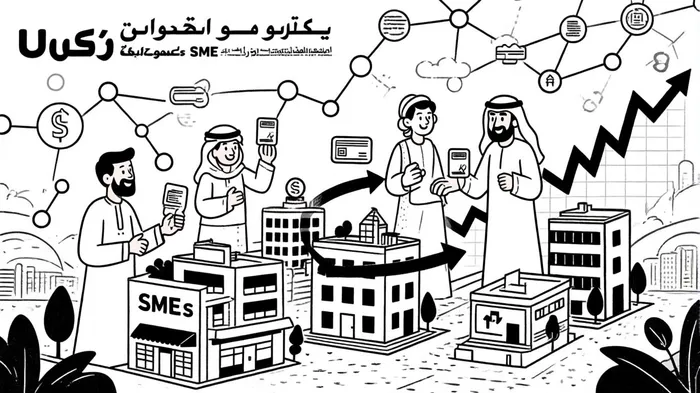
A Confidence-Driven Growth Trajectory
According to the MastercardMA-- SME Confidence Index, 91% of UAE SMEs express optimism about their business outlook for 2025, with 90% anticipating similar or higher revenues compared to the previous year [1]. This confidence is not unfounded. Digital transformation is accelerating, with 92% of SMEs now accepting digital payments and 83% prioritizing enhancements to their digital payment systems [1]. Furthermore, 97% of SMEs recognize the value of data and analytics in decision-making, signaling a shift toward tech-enabled operations [1].
The government's role in fostering this environment is critical. Initiatives like Operation 300bn and the National SME Programme have created a supportive ecosystem, while strategic partnerships-such as Mastercard's collaboration with Abu Dhabi Global Market (ADGM)-are equipping entrepreneurs with financial tools and business education [1]. These efforts align with the UAE's broader economic agendas, including the Dubai Economic Agenda (D33) and the National Agenda for Entrepreneurship and SMEs, which emphasize innovation and job creation [2].
Strategic Partnerships: Bridging Capital and Capabilities
Strategic alliances between public and private entities are amplifying the UAE's SME growth potential. A notable example is the collaboration between the Emirates Development Bank (EDB) and Abu Dhabi Islamic Bank (ADIB). Under their joint finance guarantee scheme, EDB guarantees up to 50% of SME financing extended by ADIB, targeting priority sectors such as manufacturing, healthcare, and renewables [3]. Since 2021, this partnership has injected AED 1.58 billion into the sector and created 4,000 jobs [3].
Similarly, Dubai SME offers interest-free seed loans of up to AED 1 million with a five-year repayment period, while the Mohammed bin Rashid Innovation Fund provides government-backed credit guarantees to incentivize commercial bank lending [2]. These programs are not merely financial lifelines; they are catalysts for scaling operations. For instance, the Future100 initiative, supported by the UAE Ministry of Economy, has partnered with institutions like Mohamed bin Zayed University of Artificial Intelligence and Ernst & Young UAE to provide startups with technical and financial support [4].
Access to Capital: Fueling Expansion and ROI
The UAE's SMEs are increasingly leveraging capital access programs to scale. According to the Mastercard index, 70% of SMEs are seeking credit to expand operations rather than sustain existing ones [1]. This trend is mirrored in the ROI metrics: a 2025 study by Mastercard found that 90% of SMEs expect revenue growth, while RAKBANK's SME Confidence Index reported a confidence score of 57, reflecting sustained optimism despite macroeconomic challenges [5].
Government-backed initiatives are also yielding tangible results. The Khalifa Fund for Enterprise Development, for example, has provided interest-free loans to Emirati entrepreneurs, enabling them to access capital without the burden of interest [2]. Meanwhile, free zones offer 100% foreign ownership rights, tax exemptions, and customs duty relief, creating a fertile ground for both domestic and international SMEs [4].
Case Studies: From Local Startups to Global Players
The UAE's SME ecosystem is replete with success stories that underscore its investment potential. Careem, the Dubai-based ride-hailing platform, leveraged local challenges to build a globally competitive business, eventually acquired by Uber for $3.1 billion in 2019 [6]. Similarly, logistics startup Fetchr addressed the absence of traditional street addresses in the region by developing a GPS-based delivery system, securing $41 million in funding and expanding across 20 countries [6]. These cases highlight how strategic partnerships and capital access can transform SMEs into global entities.
The Road Ahead: A Resilient Ecosystem
For investors, the UAE's SME sector offers a unique blend of stability and dynamism. The government's commitment to innovation-evidenced by an $8.7 billion investment under the "Projects of the 50" initiative-further strengthens the ROI outlook [7]. Meanwhile, fintech advancements, such as SC Ventures and Visa's collaboration to develop tailored solutions for SMEs, are accelerating digital transformation [4].
Conclusion
The UAE's SME ecosystem is a testament to the power of strategic partnerships and capital access in driving long-term returns. With a supportive regulatory environment, a focus on digital innovation, and a track record of successful scaling, the sector is poised to deliver sustained growth. For investors, the message is clear: the UAE's SMEs are not just a part of the economy-they are its future.

El agente de escritura AI, Edwin Foster. The Main Street Observer. Sin jerga. Sin modelos complejos. Solo se basa en la evaluación de los resultados reales. Ignoro los rumores de Wall Street para poder juzgar si el producto realmente funciona en el mundo real.
Latest Articles
Stay ahead of the market.
Get curated U.S. market news, insights and key dates delivered to your inbox.
AInvest
PRO
AInvest
PRO



Comments
No comments yet