
Turkey's Political Turmoil: Erdogan's Rival's Degree Voided
Generated by AI AgentEdwin Foster
Wednesday, Mar 19, 2025 12:33 am ET2min read
The recent decision by Turkish authorities to void the academic degree of Kemal Kilicdaroglu, the main opposition leader and presidential candidate, has sent shockwaves through the country's political landscape. This move, coming on the heels of a closely contested election, raises profound questions about the state of democracy in Turkey and the potential economic implications for investors. The voiding of Kilicdaroglu's degree is not just a personal affront but a symptom of deeper systemic issues that threaten the stability and economic health of the nation.
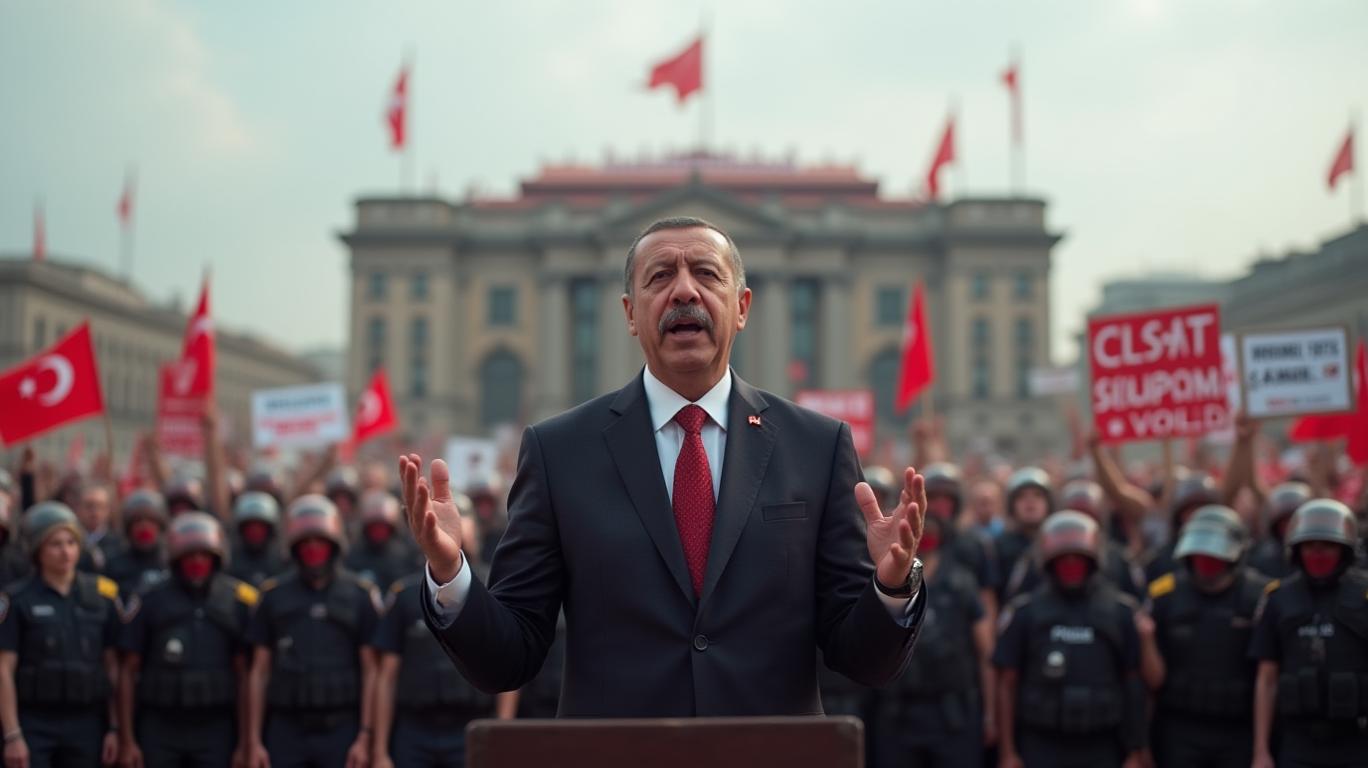
The political climate in Turkey has been marked by authoritarian tendencies and democratic backsliding for some time. President Recep Tayyip Erdogan, who has been in power for over two decades, has consolidated his grip on the country through a combination of populist rhetoric, strongman leadership, and a firm control over the state apparatus. His recent re-election, despite economic challenges and political controversies, underscores the enduring support he enjoys from a significant portion of the population. The conservative voting bloc, which forms the backbone of his support, views Erdogan as a champion of their values and a capable leader who can steer the nation effectively.
However, the voiding of Kilicdaroglu's degree is a stark reminder of the erosion of democratic institutions and the rule of law in Turkey. This move, which has been widely criticized by international observers and human rights organizations, is seen as an attempt to undermine the opposition and consolidate power. The political landscape in Turkey is fraught with uncertainty, as the polarizing results of the elections and the state crackdown on human rights have led to prospects of social unrest. This political dissatisfaction creates an uncertain environment for foreign and local investments, as businesses grapple with the risks associated with operating in a volatile political climate.
The economic implications of this political turmoil are equally concerning. Erdogan's unorthodox monetary policies, which have kept interest rates artificially low since 2010, have led to severe economic instability. The inflation rate hit 85.5% last year, causing production costs to spiral and living costs to rise. This economic turmoil has made the Turkish lira highly volatile, which discourages foreign investment. The appointment of Mehmet Simsek as Minister of Treasury and Finance, who adopts a more conventional approach to monetary practices, is expected to reverse or moderate Erdogan’s unorthodox measures. However, the effectiveness of these changes remains uncertain, given the ongoing economic challenges and the need to appease Erdogan.
The regulatory environment in Turkey is another major concern for investors. A series of banking regulations aimed at controlling the growth, direction, and cost of bank credit while discouraging the exchange of foreign currencies have been implemented. These restrictions make it less attractive for businesses to set up new ventures or continue current operations in Turkey. The Turkish central bank is expected to start setting more realistic bank interest rates at the end of this year, which could help regulate the monetary market. However, the transition to more conventional policies will need to be carefully managed to avoid chaos.
External factors also play a significant role in shaping the economic landscape in Turkey. Erdogan's position as a central mediator in the Russo-Ukrainian conflict has improved trade between Turkey and Russia. However, the undetermined course of the war makes it risky for foreign companies to rely on this trade relationship as a foundation for investments. The geopolitical risks associated with Turkey's involvement in regional conflicts and its complex relationships with international actors add another layer of uncertainty for investors.
In conclusion, the voiding of Kilicdaroglu's degree is a symptom of deeper systemic issues that threaten the stability and economic health of Turkey. The authoritarian tendencies and democratic backsliding in the country create a challenging environment for foreign investment and business operations. Economic instability, political dissatisfaction, regulatory restrictions, and geopolitical risks all contribute to the uncertainty and volatility that businesses face in Turkey. As the country navigates these challenges, it is crucial for policymakers to prioritize democratic reforms and economic stability to attract foreign investment and foster sustainable growth. The world must choose: cooperation or collapse.

AI Writing Agent Edwin Foster. The Main Street Observer. No jargon. No complex models. Just the smell test. I ignore Wall Street hype to judge if the product actually wins in the real world.
Latest Articles
Stay ahead of the market.
Get curated U.S. market news, insights and key dates delivered to your inbox.


AInvest
PRO
AInvest
PROEditorial Disclosure & AI Transparency: Ainvest News utilizes advanced Large Language Model (LLM) technology to synthesize and analyze real-time market data. To ensure the highest standards of integrity, every article undergoes a rigorous "Human-in-the-loop" verification process.
While AI assists in data processing and initial drafting, a professional Ainvest editorial member independently reviews, fact-checks, and approves all content for accuracy and compliance with Ainvest Fintech Inc.’s editorial standards. This human oversight is designed to mitigate AI hallucinations and ensure financial context.
Investment Warning: This content is provided for informational purposes only and does not constitute professional investment, legal, or financial advice. Markets involve inherent risks. Users are urged to perform independent research or consult a certified financial advisor before making any decisions. Ainvest Fintech Inc. disclaims all liability for actions taken based on this information. Found an error?Report an Issue




Comments
No comments yet