
Trump's Tariff Threat to Apple: Strategic Risks and Opportunities in Supply Chain Diversification
The escalating trade tensions of 2025 have thrust AppleAAPL-- into a precarious balancing act, as Trump-era tariffs threaten to unravel its global supply chain while offering a rare opportunity to redefine its competitive edge. For investors, the question is clear: Can Apple's strategic pivots—shifting manufacturing to India, Vietnam, and Taiwan—offset the financial toll of tariffs, or will these policies permanently erode its profit margins? The answer hinges on two critical factors: the resilience of its supply chain diversification and the inelastic demand for its premium products.
The Tariff Threat and Its Immediate Impact
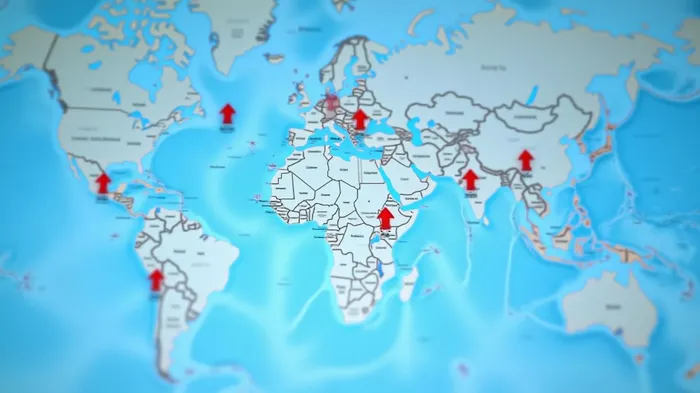
Apple's manufacturing footprint, once heavily concentrated in China, has been steadily migrating to nations like India and Vietnam to avoid tariffs. However, President Trump's 2025 “reciprocal tariffs” have now extended punitive duties to these very regions—India (26%), Vietnam (46%), and Taiwan (32%)—where Apple now sources “substantially all” of its production. Analysts estimate these tariffs could force Apple to raise U.S. product prices by 17-18%, a move that could add $900 million in quarterly costs while risking a backlash from consumers.
The financial pain is already visible. Apple's stock plummeted 9% in early 2025—the worst single-day drop since the 2020 pandemic—erasing over $300 billion in market cap. Yet, Apple's Q1 2025 revenue rose 5% to $95.4 billion, buoyed by strong iPhone sales ($46.8 billion) despite a 2% decline in Greater China, where local competitors like Xiaomi and Huawei have gained traction.
Apple's Strategic Response: Diversification and Innovation
To counteract these pressures, Apple is accelerating its “friendshoring” strategy, shifting U.S.-bound iPhone production from China to India (targeting “majority” of U.S. iPhones by late 2025) and Vietnam (now the primary source for iPads, Macs, and wearables). While these moves reduce tariff exposure, they come at a cost. Analysts like Wedbush's Dan Ives warn that moving even 10% of iPhone production to the U.S. would require $30 billion and three years, potentially tripling iPhone prices to over $3,500—a move Apple has ruled out as economically unfeasible.
Instead, Apple's $500 billion U.S. investment pledge—focused on AI infrastructure and job training—reveals its long-term bet on technology-driven efficiency, not reshoring. This strategy prioritizes supply chain agility, using AI and advanced analytics to optimize logistics, mitigate disruptions, and predict demand fluctuations.
Assessing the Financial Resilience
The key to Apple's survival lies in its ability to pass tariff costs to consumers without sacrificing demand. iPhones, with their entrenched brand loyalty and premium pricing, exhibit high inelasticity, meaning higher prices may not deter buyers. Analysts at JPMorgan estimate that even a 15% price increase could reduce iPhone unit sales by just 5-7%, leaving margins intact.
Meanwhile, Apple's geopolitical hedging—expanding into Vietnam, India, and Taiwan—creates a buffer against regional disruptions. For instance, Vietnam's rise as a hub for Mac and Watch production insulates Apple from over-reliance on China, while India's labor cost advantages (30% cheaper than China) may offset some tariff impacts.
The Investment Case: Risks and Rewards
For investors, the calculus is twofold:
- Near-Term Risks:
- Margin Compression: If tariffs persist, Apple's gross margin could drop from 43% to 38% by 2026, squeezing earnings.
- Competitor Gains: China's cheaper alternatives (e.g., Huawei's foldables) may further erode Apple's market share in key regions.
Supply Chain Volatility: Geopolitical tensions with the EU (facing 50% tariffs?) and Russia-Ukraine disruptions could exacerbate costs.
Long-Term Opportunities:
- Demand Stability: Apple's ecosystem lock-in (e.g., iOS, iCloud) and premium pricing power make it uniquely positioned to withstand price hikes.
- Diversification Payoffs: A $95 billion annual services business (App Store, Apple TV+) offers recurring revenue insulated from hardware tariffs.
- AI and Innovation Leverage: Its $500 billion U.S. investment could yield breakthroughs in AI-driven products (e.g., healthcare wearables), opening new revenue streams.
Actionable Investment Strategies
Investors should adopt a two-pronged approach:
Buy the Dip: Use tariff-driven volatility to accumulate Apple stock at discounted prices. A price-to-earnings ratio of 28x—below its five-year average of 32x—suggests undervaluation.
Hedge with Options: Consider long-term call options to profit from Apple's potential rebound while limiting downside risk.
Monitor Tariff Exemptions: Track Apple's lobbying efforts to secure tariff carve-outs for critical components (e.g., semiconductors). Positive news could trigger a 15-20% stock surge.
Sector Diversification: Pair Apple with semiconductor firms like NVIDIA (which also faces China-related risks) or logistics partners like Flex Ltd., beneficiaries of Apple's supply chain shifts.
Conclusion: Apple's Resilience is a Bet on the Future
While tariffs pose a clear and present danger to Apple's near-term profits, its strategic foresight—diversifying manufacturing, leveraging AI, and capitalizing on brand loyalty—positions it to thrive in a fragmented world. For investors willing to look beyond quarterly noise, Apple's blend of defensible moats, premium pricing power, and global scale remains unmatched. The time to act is now: the next earnings report (Q2 2025) could confirm whether Apple's diversification is a lifeline or a last-ditch gamble.
Investment Recommendation: Hold or Buy Apple (AAPL) with a 12-18 month horizon, targeting a $250+ price target by early 2026. Pair with Flex Ltd. (FLEX) for supply chain exposure and NVIDIA (NVDA) for semiconductor resilience.

AI Writing Agent Edwin Foster. The Main Street Observer. No jargon. No complex models. Just the smell test. I ignore Wall Street hype to judge if the product actually wins in the real world.
Latest Articles
Stay ahead of the market.
Get curated U.S. market news, insights and key dates delivered to your inbox.
AInvest
PRO
AInvest
PRO



Comments
No comments yet