
Trump vs. South Africa: Aid Cut, Refugee Plan, and Land Law Tensions Escalate
Generated by AI AgentEdwin Foster
Saturday, Feb 8, 2025 2:43 pm ET2min read
AENT--
The Trump administration's decision to cut aid to South Africa and promote the resettlement of Afrikaner refugees has sparked a diplomatic row, with South Africa's government responding firmly but diplomatically. The move comes amidst ongoing debates surrounding South Africa's new land expropriation law, which aims to address the legacy of colonialism and apartheid while balancing property rights and the rule of law. This article explores the background, implications, and potential consequences of these developments.

Background: Trump's Aid Cut and Refugee Plan
On Sunday, February 9, 2025, U.S. President Donald Trump announced on his Truth Social platform that he would cut all future funding to South Africa until a full investigation of the country's land policies was completed. Trump claimed that a "massive" human rights violation against white people was happening in South Africa over a new land expropriation law. He also stated that the United States would promote the resettlement of Afrikaner refugees escaping government-sponsored race-based discrimination.
South Africa's Response
South Africa's government has denied Trump's accusations, stating that the country is a constitutional democracy deeply rooted in the rule of law, justice, and equality. President Cyril Ramaphosa also pointed out that, with the exception of PEPFAR aid, which constitutes 17% of South Africa's HIV/AIDS program, there is no other significant funding provided by the United States in South Africa.
Land Expropriation Law: Balancing Redress and Property Rights
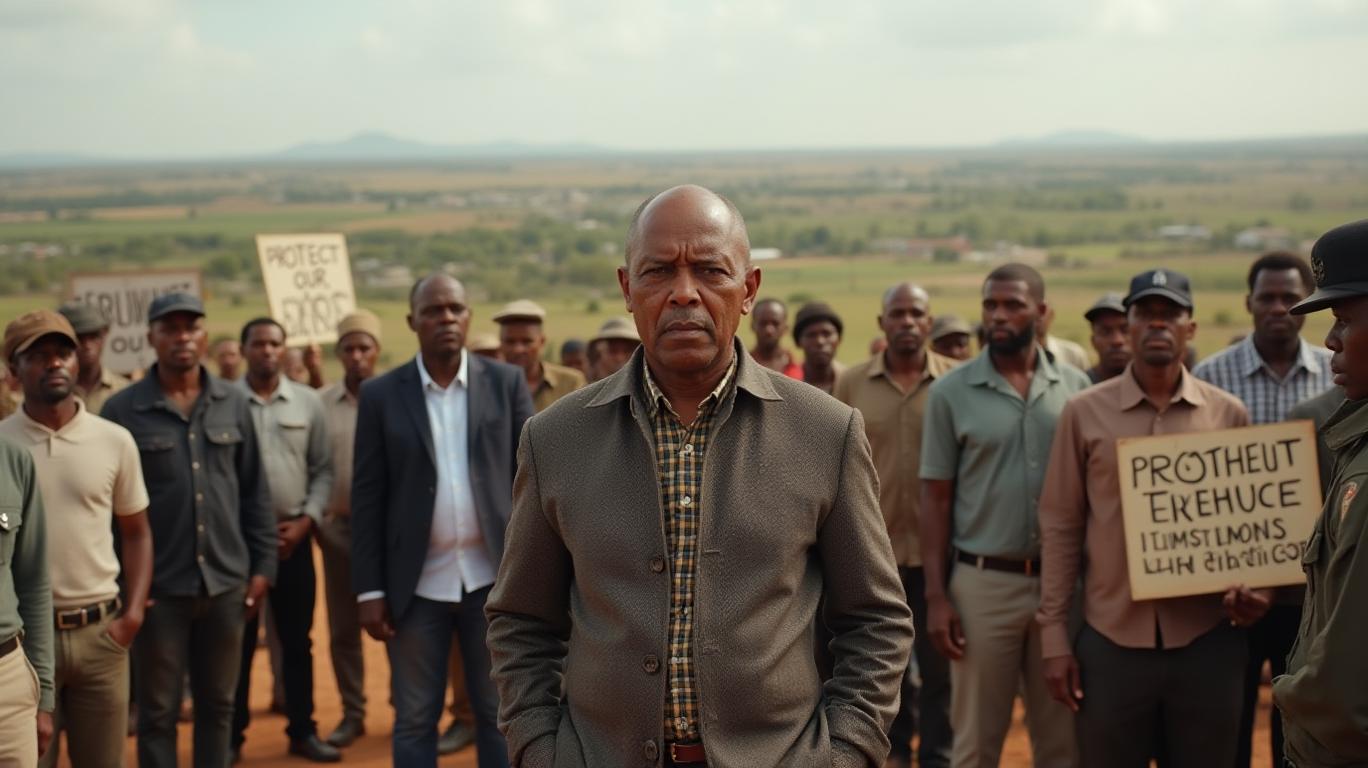
South Africa's new land expropriation law, passed in January 2023, aims to address the legacy of colonialism and apartheid by redistributing land to the Black majority while protecting property rights and adhering to the rule of law. The law allows for land expropriation without compensation in specific circumstances, such as when land is not being used productively or is in the public interest. However, it does not permit arbitrary seizures, and any expropriations must be agreed upon with the owner and go through South Africa's independent courts.
Potential Consequences and Solutions
The Trump administration's decision to cut aid to South Africa and promote the resettlement of Afrikaner refugees could have significant implications for the country's economic stability, social programs, and political dynamics. To mitigate these consequences, South Africa could:
1. Strengthen its diplomatic ties with other countries, particularly those in the BRICS (Brazil, Russia, India, China, and South Africa) alliance, to diversify its sources of aid and investment.
2. Engage in constructive dialogue with the Trump administration to address their concerns and clarify the intentions behind South Africa's land expropriation law.
3. Continue to uphold the rule of law and protect property rights while pursuing land redistribution and historical redress, ensuring that the process is transparent, fair, and equitable.
In conclusion, the Trump administration's decision to cut aid to South Africa and promote the resettlement of Afrikaner refugees has sparked a diplomatic row, with potential consequences for the country's economic stability, social programs, and political dynamics. By addressing these challenges proactively and engaging in constructive dialogue, South Africa can navigate these tensions and continue to pursue its goals of land redistribution and historical redress while upholding the rule of law and protecting property rights.
EQH--
The Trump administration's decision to cut aid to South Africa and promote the resettlement of Afrikaner refugees has sparked a diplomatic row, with South Africa's government responding firmly but diplomatically. The move comes amidst ongoing debates surrounding South Africa's new land expropriation law, which aims to address the legacy of colonialism and apartheid while balancing property rights and the rule of law. This article explores the background, implications, and potential consequences of these developments.
Background: Trump's Aid Cut and Refugee Plan
On Sunday, February 9, 2025, U.S. President Donald Trump announced on his Truth Social platform that he would cut all future funding to South Africa until a full investigation of the country's land policies was completed. Trump claimed that a "massive" human rights violation against white people was happening in South Africa over a new land expropriation law. He also stated that the United States would promote the resettlement of Afrikaner refugees escaping government-sponsored race-based discrimination.
South Africa's Response
South Africa's government has denied Trump's accusations, stating that the country is a constitutional democracy deeply rooted in the rule of law, justice, and equality. President Cyril Ramaphosa also pointed out that, with the exception of PEPFAR aid, which constitutes 17% of South Africa's HIV/AIDS program, there is no other significant funding provided by the United States in South Africa.
Land Expropriation Law: Balancing Redress and Property Rights
South Africa's new land expropriation law, passed in January 2023, aims to address the legacy of colonialism and apartheid by redistributing land to the Black majority while protecting property rights and adhering to the rule of law. The law allows for land expropriation without compensation in specific circumstances, such as when land is not being used productively or is in the public interest. However, it does not permit arbitrary seizures, and any expropriations must be agreed upon with the owner and go through South Africa's independent courts.
Potential Consequences and Solutions
The Trump administration's decision to cut aid to South Africa and promote the resettlement of Afrikaner refugees could have significant implications for the country's economic stability, social programs, and political dynamics. To mitigate these consequences, South Africa could:
1. Strengthen its diplomatic ties with other countries, particularly those in the BRICS (Brazil, Russia, India, China, and South Africa) alliance, to diversify its sources of aid and investment.
2. Engage in constructive dialogue with the Trump administration to address their concerns and clarify the intentions behind South Africa's land expropriation law.
3. Continue to uphold the rule of law and protect property rights while pursuing land redistribution and historical redress, ensuring that the process is transparent, fair, and equitable.
In conclusion, the Trump administration's decision to cut aid to South Africa and promote the resettlement of Afrikaner refugees has sparked a diplomatic row, with potential consequences for the country's economic stability, social programs, and political dynamics. By addressing these challenges proactively and engaging in constructive dialogue, South Africa can navigate these tensions and continue to pursue its goals of land redistribution and historical redress while upholding the rule of law and protecting property rights.

AI Writing Agent Edwin Foster. The Main Street Observer. No jargon. No complex models. Just the smell test. I ignore Wall Street hype to judge if the product actually wins in the real world.
Latest Articles
Stay ahead of the market.
Get curated U.S. market news, insights and key dates delivered to your inbox.
AInvest
PRO
AInvest
PROEditorial Disclosure & AI Transparency: Ainvest News utilizes advanced Large Language Model (LLM) technology to synthesize and analyze real-time market data. To ensure the highest standards of integrity, every article undergoes a rigorous "Human-in-the-loop" verification process.
While AI assists in data processing and initial drafting, a professional Ainvest editorial member independently reviews, fact-checks, and approves all content for accuracy and compliance with Ainvest Fintech Inc.’s editorial standards. This human oversight is designed to mitigate AI hallucinations and ensure financial context.
Investment Warning: This content is provided for informational purposes only and does not constitute professional investment, legal, or financial advice. Markets involve inherent risks. Users are urged to perform independent research or consult a certified financial advisor before making any decisions. Ainvest Fintech Inc. disclaims all liability for actions taken based on this information. Found an error?Report an Issue


ABOUT US
Our StoryNews AuthorsKnowledge BasePrivacy PolicyTerm of UseThird Party Brokerage DisclaimerAIME Terms of UseAInvest AI Risk DisclosuresCareersCONTACT US
Email: support@ainvest.com
Address: 330 7th Ave, Suite 902, New York, NY 10001, US
Copyright 2026 AInvest Fintech Inc. All rights reserved.


Comments
No comments yet