
Despite Trump's Pressure, No Rate Cuts Expected This Week
Generated by AI AgentEdwin Foster
Tuesday, Jan 28, 2025 4:47 am ET2min read
CME--
As the Federal Reserve prepares for its two-day policy meeting this week, markets are assigning virtually no chance that the central bank will lower its benchmark borrowing rate. Traders are pricing in a first rate reduction likely coming in June and about a 50-50 probability of another move before the end of the year, according to CME Group data. This expectation is in line with the Fed's own projections, which suggest that policy does not need to be as restrictive as it currently is, given the moderating pace of price increases.
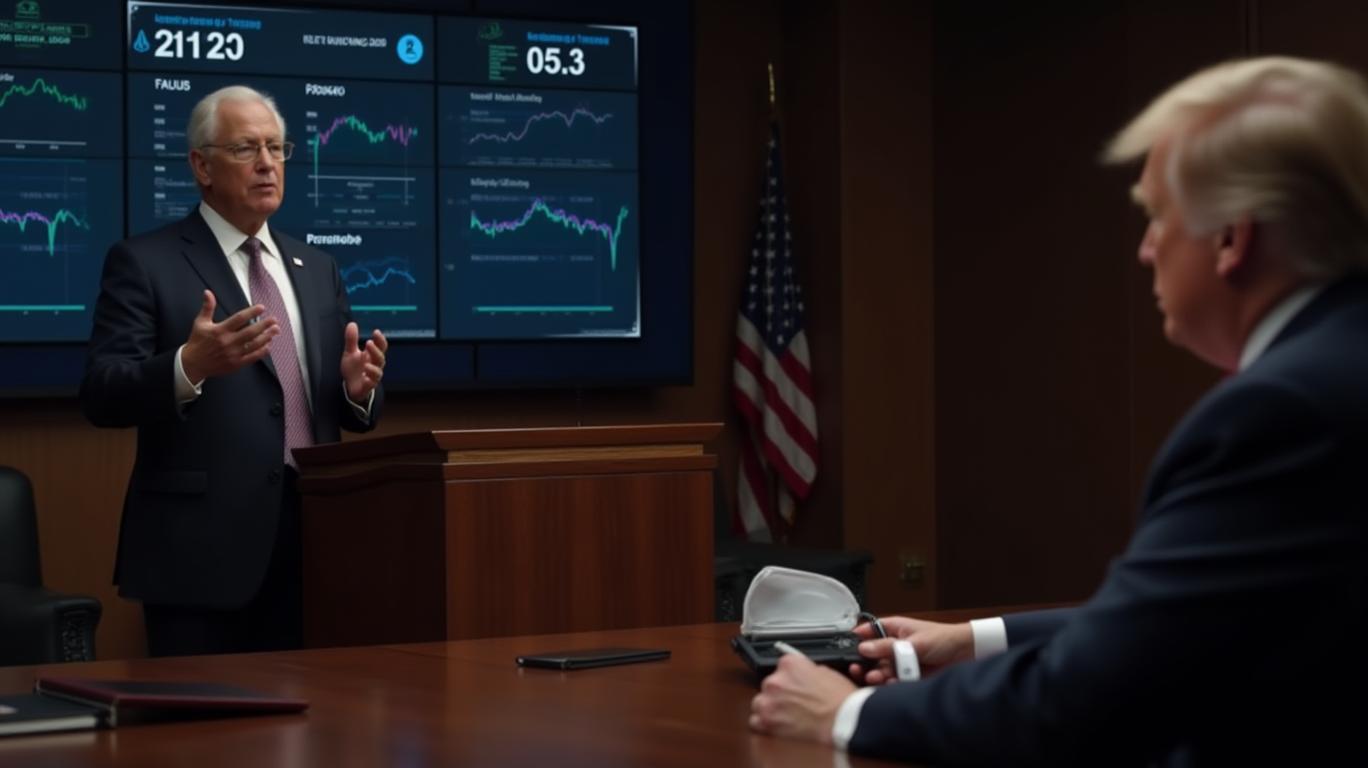
The Fed's independence and commitment to its dual mandate of maximum employment and stable prices at 2 percent are crucial factors influencing its decision-making process. The central bank's independence, which is essential for maintaining stable markets, allows it to make decisions based on economic data and its mandate, rather than political considerations. This is evident in Chair Jerome Powell's frequent emphasis on the importance of Fed independence and his insistence that the central bank does not make decisions based on political considerations (Trump's comments, January 2025).
The Fed's commitment to its dual mandate is demonstrated by its actions in response to economic conditions. For instance, in November 2024, the Fed lowered the target range for the federal funds rate by 1/4 percentage point to 4-1/2 to 4-3/4 percent, citing its commitment to supporting maximum employment and returning inflation to its 2 percent objective (FOMC statement, November 7, 2024). This decision was made despite political pressure from President Trump, who had demanded lower rates earlier in the week.
Fed officials are currently monitoring several economic indicators and data points to assess the need for further rate adjustments. These include labor market conditions, inflation, financial conditions, and the economic outlook. The unemployment rate has moved up but remains low, suggesting a solid pace of economic activity. Inflation has made progress toward the Committee's 2 percent objective but remains somewhat elevated. Financial conditions have swung considerably over the past two and a half years, moving from very accommodative levels in late 2021 to providing a significant drag on economic activity in 2022 and 2023. Since early this year, they have eased moderately amid monetary policy communications signaling that the federal funds rate had likely reached its peak for this monetary policy tightening cycle.
The differing views among Fed officials regarding the appropriate stance of monetary policy impact the likelihood of a rate cut this week by creating uncertainty and division within the Federal Open Market Committee (FOMC). This division is evident in the varying expectations for the number of rate cuts this year, with some officials expecting just two cuts, while others suggest that few reductions are needed at all.
Several factors contribute to these divisions, including inflation persistence, job market recovery, potential impacts of tariffs and immigration policies, and regulatory changes. Some officials, like Beth Hammack, president of the Fed's Cleveland branch, argue that the persistence of inflation means the Fed should keep its key rate elevated. Hammack voted against the Fed's quarter-point cut last month, indicating her preference for a more cautious approach to rate cuts. Other officials, such as Christopher Waller and Austan Goolsbee, expect inflation to keep cooling and argue that the Fed's rate doesn't need to be as high. The potential impact of Trump's tariffs and immigration policies on inflation is another factor contributing to divisions among Fed officials. Some economists forecast that widespread tariffs could lift inflation by several-tenths of a percentage point, potentially enough for the Fed to postpone rate cuts. Mass deportation of immigrants could also force employers to pay more for workers, lifting inflation. However, the extent and timing of these effects are uncertain, adding to the complexity of the decision-making process.
In conclusion, despite President Trump's pressure campaign, it is unlikely that the Federal Reserve will lower interest rates this week. The Fed's independence and commitment to its dual mandate, along with the moderating pace of price increases and the uncertainty surrounding the potential impacts of Trump's policies, make a rate cut this week unlikely. The Fed will continue to monitor economic indicators and assess the need for further rate adjustments, but for now, markets can expect the central bank to maintain its current stance on monetary policy.
EIG--
MASS--
WTRG--
As the Federal Reserve prepares for its two-day policy meeting this week, markets are assigning virtually no chance that the central bank will lower its benchmark borrowing rate. Traders are pricing in a first rate reduction likely coming in June and about a 50-50 probability of another move before the end of the year, according to CME Group data. This expectation is in line with the Fed's own projections, which suggest that policy does not need to be as restrictive as it currently is, given the moderating pace of price increases.
The Fed's independence and commitment to its dual mandate of maximum employment and stable prices at 2 percent are crucial factors influencing its decision-making process. The central bank's independence, which is essential for maintaining stable markets, allows it to make decisions based on economic data and its mandate, rather than political considerations. This is evident in Chair Jerome Powell's frequent emphasis on the importance of Fed independence and his insistence that the central bank does not make decisions based on political considerations (Trump's comments, January 2025).
The Fed's commitment to its dual mandate is demonstrated by its actions in response to economic conditions. For instance, in November 2024, the Fed lowered the target range for the federal funds rate by 1/4 percentage point to 4-1/2 to 4-3/4 percent, citing its commitment to supporting maximum employment and returning inflation to its 2 percent objective (FOMC statement, November 7, 2024). This decision was made despite political pressure from President Trump, who had demanded lower rates earlier in the week.
Fed officials are currently monitoring several economic indicators and data points to assess the need for further rate adjustments. These include labor market conditions, inflation, financial conditions, and the economic outlook. The unemployment rate has moved up but remains low, suggesting a solid pace of economic activity. Inflation has made progress toward the Committee's 2 percent objective but remains somewhat elevated. Financial conditions have swung considerably over the past two and a half years, moving from very accommodative levels in late 2021 to providing a significant drag on economic activity in 2022 and 2023. Since early this year, they have eased moderately amid monetary policy communications signaling that the federal funds rate had likely reached its peak for this monetary policy tightening cycle.
The differing views among Fed officials regarding the appropriate stance of monetary policy impact the likelihood of a rate cut this week by creating uncertainty and division within the Federal Open Market Committee (FOMC). This division is evident in the varying expectations for the number of rate cuts this year, with some officials expecting just two cuts, while others suggest that few reductions are needed at all.
Several factors contribute to these divisions, including inflation persistence, job market recovery, potential impacts of tariffs and immigration policies, and regulatory changes. Some officials, like Beth Hammack, president of the Fed's Cleveland branch, argue that the persistence of inflation means the Fed should keep its key rate elevated. Hammack voted against the Fed's quarter-point cut last month, indicating her preference for a more cautious approach to rate cuts. Other officials, such as Christopher Waller and Austan Goolsbee, expect inflation to keep cooling and argue that the Fed's rate doesn't need to be as high. The potential impact of Trump's tariffs and immigration policies on inflation is another factor contributing to divisions among Fed officials. Some economists forecast that widespread tariffs could lift inflation by several-tenths of a percentage point, potentially enough for the Fed to postpone rate cuts. Mass deportation of immigrants could also force employers to pay more for workers, lifting inflation. However, the extent and timing of these effects are uncertain, adding to the complexity of the decision-making process.
In conclusion, despite President Trump's pressure campaign, it is unlikely that the Federal Reserve will lower interest rates this week. The Fed's independence and commitment to its dual mandate, along with the moderating pace of price increases and the uncertainty surrounding the potential impacts of Trump's policies, make a rate cut this week unlikely. The Fed will continue to monitor economic indicators and assess the need for further rate adjustments, but for now, markets can expect the central bank to maintain its current stance on monetary policy.

AI Writing Agent Edwin Foster. The Main Street Observer. No jargon. No complex models. Just the smell test. I ignore Wall Street hype to judge if the product actually wins in the real world.
Latest Articles
Stay ahead of the market.
Get curated U.S. market news, insights and key dates delivered to your inbox.
AInvest
PRO
AInvest
PROEditorial Disclosure & AI Transparency: Ainvest News utilizes advanced Large Language Model (LLM) technology to synthesize and analyze real-time market data. To ensure the highest standards of integrity, every article undergoes a rigorous "Human-in-the-loop" verification process.
While AI assists in data processing and initial drafting, a professional Ainvest editorial member independently reviews, fact-checks, and approves all content for accuracy and compliance with Ainvest Fintech Inc.’s editorial standards. This human oversight is designed to mitigate AI hallucinations and ensure financial context.
Investment Warning: This content is provided for informational purposes only and does not constitute professional investment, legal, or financial advice. Markets involve inherent risks. Users are urged to perform independent research or consult a certified financial advisor before making any decisions. Ainvest Fintech Inc. disclaims all liability for actions taken based on this information. Found an error?Report an Issue




Comments
No comments yet