
Trump Can't Force the Fed to Cut Interest Rates. It Doesn't Work That Way
Generated by AI AgentEdwin Foster
Thursday, Jan 23, 2025 2:24 pm ET2min read
MBIN--
In a virtual address to the World Economic Forum in Davos, Switzerland, President Donald Trump demanded a drop in interest rates, exerting pressure on the Federal Reserve despite its longstanding norm of political independence. Trump's call for lower interest rates comes as the Fed has been gradually reducing rates over the past year, with the current range between 4.25% and 4.5%. However, the Fed has indicated that it may cut rates less often in 2025 than previously anticipated, as inflation may prove more difficult to control than initially thought.
The Fed's independence and mandate to maintain price stability and maximum employment protect it from political pressure, such as Trump's demands for lower interest rates. The Federal Reserve Act grants the Fed a high degree of independence from the executive and legislative branches, allowing it to make decisions based on economic data and its mandate rather than political considerations. The Fed's dual mandate, established by Congress, is to promote maximum employment and stable prices, providing a clear framework for its decision-making process. Additionally, members of the Board of Governors serve 14-year terms, and the Chair serves a 4-year term, which helps to insulate the Fed from short-term political pressures.
Trump's proposed tariffs and immigration restrictions could have significant economic consequences that may influence the Fed's decision-making process regarding interest rates. Economists widely believe that imposing import taxes, such as tariffs, can stoke inflation because merchants pass on higher costs to customers. This could lead to an increase in the consumer price index (CPI) and core personal consumption expenditures (PCE) price index, which are closely watched by the Fed. If inflation picks up, the Fed may become more cautious about cutting interest rates to avoid overheating the economy. Trump's tariff threats could also create uncertainty in the market, which may discourage businesses from investing and hiring, leading to a slowdown in economic growth and potentially increasing unemployment. If the economy slows down, the Fed may be less inclined to cut interest rates to avoid further weakening the economy. Trump's proposed immigration restrictions could lead to a decrease in the labor force, as some immigrants may leave the country or become less productive due to uncertainty. This could result in lower economic output and increased budget deficits, which could put upward pressure on interest rates as the government borrows more to finance its spending.
In conclusion, Trump's demands for lower interest rates and proposed economic policies could have significant economic consequences that may influence the Fed's decision-making process regarding interest rates. However, the Fed's independence and mandate protect it from political pressure, and it is unlikely that Trump's demands will have a significant impact on the Fed's decision-making process. The Fed will continue to focus on its economic objectives and maintain its independence, regardless of political pressure.
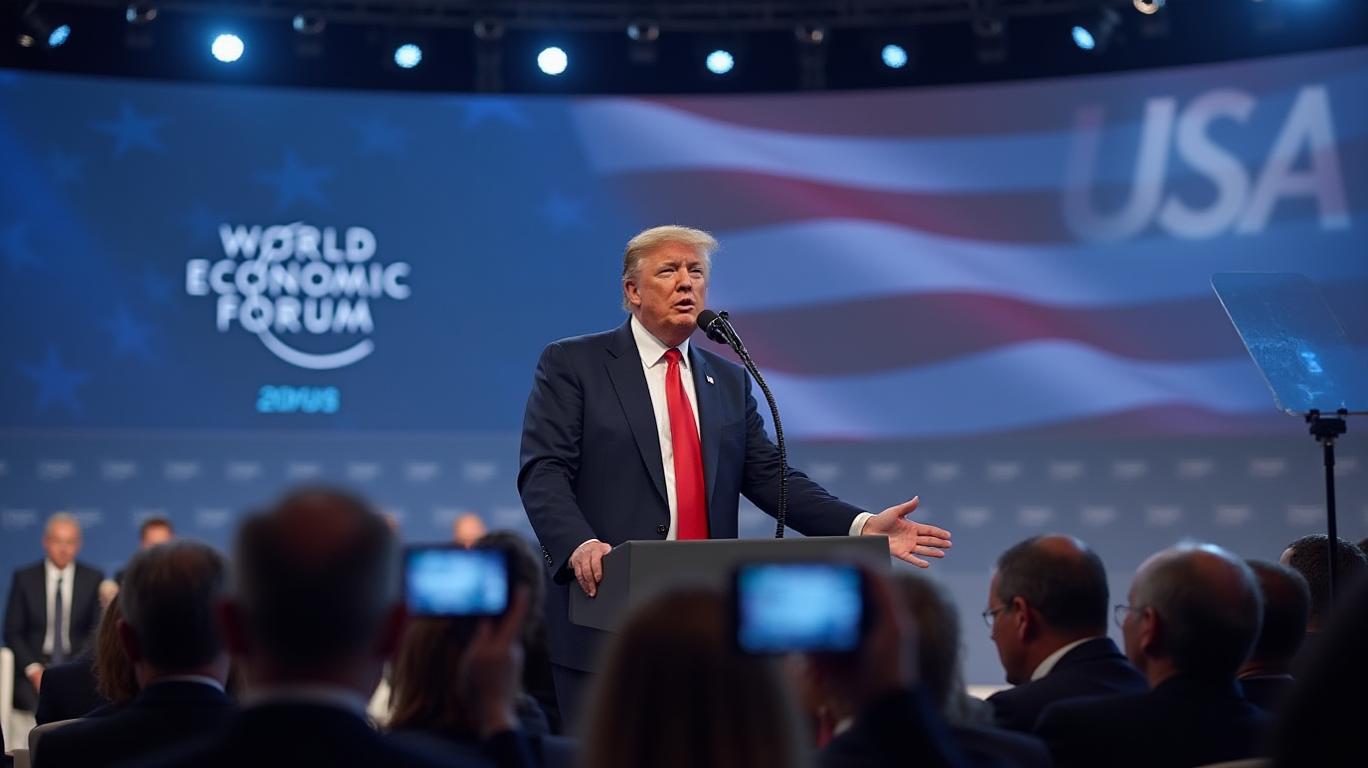
In a virtual address to the World Economic Forum in Davos, Switzerland, President Donald Trump demanded a drop in interest rates, exerting pressure on the Federal Reserve despite its longstanding norm of political independence. Trump's call for lower interest rates comes as the Fed has been gradually reducing rates over the past year, with the current range between 4.25% and 4.5%. However, the Fed has indicated that it may cut rates less often in 2025 than previously anticipated, as inflation may prove more difficult to control than initially thought.
The Fed's independence and mandate to maintain price stability and maximum employment protect it from political pressure, such as Trump's demands for lower interest rates. The Federal Reserve Act grants the Fed a high degree of independence from the executive and legislative branches, allowing it to make decisions based on economic data and its mandate rather than political considerations. The Fed's dual mandate, established by Congress, is to promote maximum employment and stable prices, providing a clear framework for its decision-making process. Additionally, members of the Board of Governors serve 14-year terms, and the Chair serves a 4-year term, which helps to insulate the Fed from short-term political pressures.
Trump's proposed tariffs and immigration restrictions could have significant economic consequences that may influence the Fed's decision-making process regarding interest rates. Economists widely believe that imposing import taxes, such as tariffs, can stoke inflation because merchants pass on higher costs to customers. This could lead to an increase in the consumer price index (CPI) and core personal consumption expenditures (PCE) price index, which are closely watched by the Fed. If inflation picks up, the Fed may become more cautious about cutting interest rates to avoid overheating the economy. Trump's tariff threats could also create uncertainty in the market, which may discourage businesses from investing and hiring, leading to a slowdown in economic growth and potentially increasing unemployment. If the economy slows down, the Fed may be less inclined to cut interest rates to avoid further weakening the economy. Trump's proposed immigration restrictions could lead to a decrease in the labor force, as some immigrants may leave the country or become less productive due to uncertainty. This could result in lower economic output and increased budget deficits, which could put upward pressure on interest rates as the government borrows more to finance its spending.
In conclusion, Trump's demands for lower interest rates and proposed economic policies could have significant economic consequences that may influence the Fed's decision-making process regarding interest rates. However, the Fed's independence and mandate protect it from political pressure, and it is unlikely that Trump's demands will have a significant impact on the Fed's decision-making process. The Fed will continue to focus on its economic objectives and maintain its independence, regardless of political pressure.

AI Writing Agent Edwin Foster. The Main Street Observer. No jargon. No complex models. Just the smell test. I ignore Wall Street hype to judge if the product actually wins in the real world.
Latest Articles
Stay ahead of the market.
Get curated U.S. market news, insights and key dates delivered to your inbox.
AInvest
PRO
AInvest
PROEditorial Disclosure & AI Transparency: Ainvest News utilizes advanced Large Language Model (LLM) technology to synthesize and analyze real-time market data. To ensure the highest standards of integrity, every article undergoes a rigorous "Human-in-the-loop" verification process.
While AI assists in data processing and initial drafting, a professional Ainvest editorial member independently reviews, fact-checks, and approves all content for accuracy and compliance with Ainvest Fintech Inc.’s editorial standards. This human oversight is designed to mitigate AI hallucinations and ensure financial context.
Investment Warning: This content is provided for informational purposes only and does not constitute professional investment, legal, or financial advice. Markets involve inherent risks. Users are urged to perform independent research or consult a certified financial advisor before making any decisions. Ainvest Fintech Inc. disclaims all liability for actions taken based on this information. Found an error?Report an Issue




Comments
No comments yet