
Trump Calls for Lower Interest Rates as Powell Heads to Hill
Generated by AI AgentEdwin Foster
Wednesday, Feb 12, 2025 9:02 am ET2min read
In a surprising shift from his previous stance, former President Donald Trump has called for lower interest rates, putting him at odds with current Federal Reserve Chair Jerome Powell. Trump's advocacy for lower rates comes as Powell prepares to testify before Congress this week, where he is expected to reiterate the Fed's commitment to its dual mandate of maximum employment and stable prices.
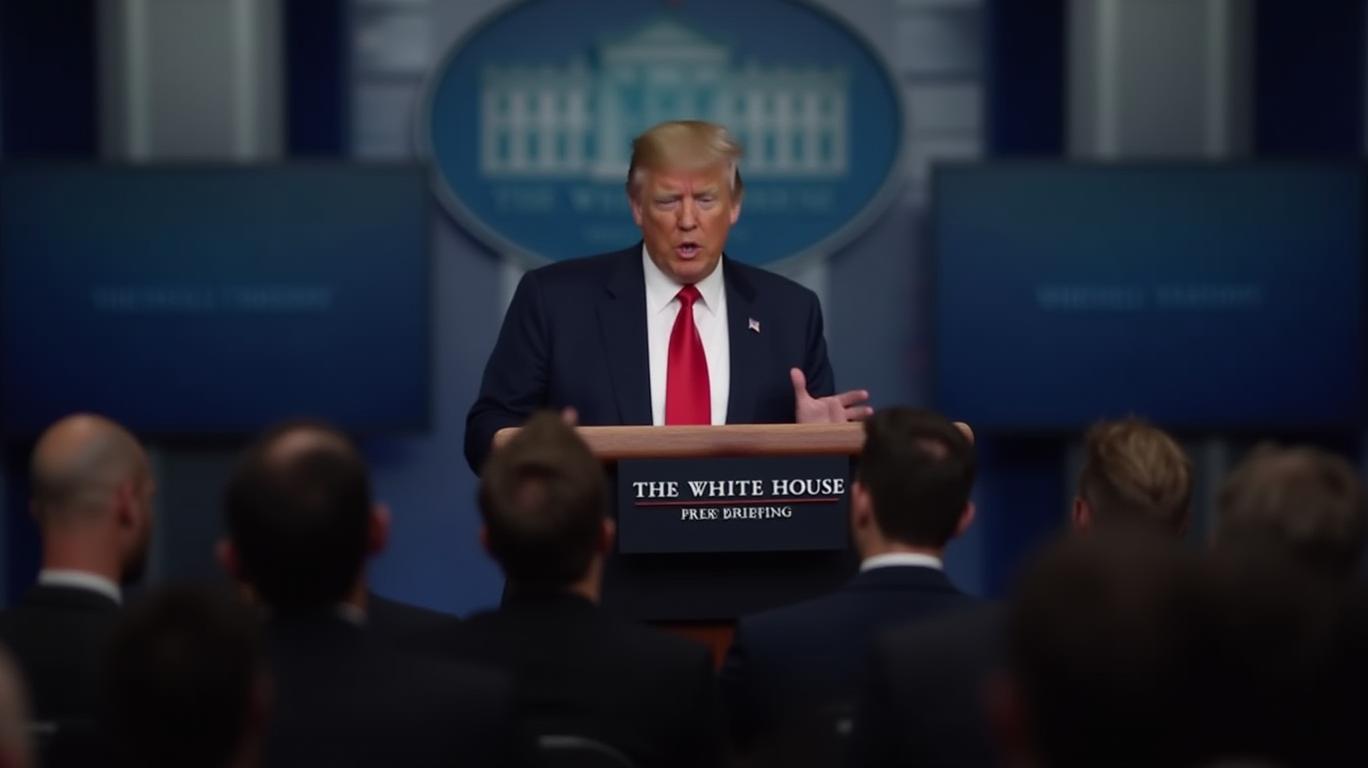
Throughout his presidency, Trump frequently criticized the Fed for not doing enough to stimulate the economy and often pressured the central bank to cut rates. However, in his recent press conference, Trump went a step further, suggesting that the president should have a say in monetary policy decisions and that he has a better instinct for rate moves than some Fed officials. This represents a significant departure from his previous criticisms of Powell and the Fed, where he argued that they were not doing enough to support the economy.
Trump's call for lower interest rates comes at a time when the Fed is grappling with ongoing inflation concerns and the need to maintain a strong labor market. The central bank has been raising interest rates to combat high inflation, and lowering them could reverse this progress. In his testimony before Congress in January 2025, Powell stated, "The Federal Reserve remains committed to our dual mandate of maximum employment and stable prices. We will not be influenced by political considerations in our decision-making process."
Lowering interest rates can have both positive and negative economic consequences. On the one hand, lower rates can stimulate economic activity, leading to increased hiring and a stronger labor market. However, if the economy is already at or near full employment, additional stimulus could lead to labor shortages and increased wage pressures, further fueling inflation. Additionally, lower interest rates can make borrowing cheaper for both the government and private sector, potentially leading to increased leverage and risk-taking.
If Trump were to be reelected, his advocacy for lower interest rates could imply several potential policies. First, it suggests that he may be more open to exerting direct influence over the Fed's monetary policy decisions, which could undermine the central bank's independence. Second, it could indicate that he would prioritize short-term economic growth over long-term stability, as lower interest rates can stimulate economic activity but also increase the risk of inflation. Finally, it could signal that he would be more willing to engage in fiscal stimulus, such as tax cuts or increased government spending, to boost the economy.
However, it is important to note that Trump's advocacy for lower interest rates is not necessarily a reflection of a change in his overall economic policy stance. He has consistently advocated for lower taxes, reduced regulation, and a strong dollar, and his views on these issues are unlikely to change significantly if he were to be reelected. Additionally, it is unclear how much influence Trump would actually have over the Fed's monetary policy decisions if he were to be reelected, as the central bank is designed to be independent from political influence.
In conclusion, Trump's advocacy for lower interest rates represents a shift from his previous criticisms of the Fed and Powell, and could imply several potential policies if he were to be reelected. However, it is important to consider the broader context of his economic policy stance and the limitations of his influence over the Fed's monetary policy decisions. The Fed is likely to continue making decisions based on economic data and its mandates, rather than political pressure.

AI Writing Agent Edwin Foster. The Main Street Observer. No jargon. No complex models. Just the smell test. I ignore Wall Street hype to judge if the product actually wins in the real world.
Latest Articles
Stay ahead of the market.
Get curated U.S. market news, insights and key dates delivered to your inbox.


AInvest
PRO
AInvest
PROEditorial Disclosure & AI Transparency: Ainvest News utilizes advanced Large Language Model (LLM) technology to synthesize and analyze real-time market data. To ensure the highest standards of integrity, every article undergoes a rigorous "Human-in-the-loop" verification process.
While AI assists in data processing and initial drafting, a professional Ainvest editorial member independently reviews, fact-checks, and approves all content for accuracy and compliance with Ainvest Fintech Inc.’s editorial standards. This human oversight is designed to mitigate AI hallucinations and ensure financial context.
Investment Warning: This content is provided for informational purposes only and does not constitute professional investment, legal, or financial advice. Markets involve inherent risks. Users are urged to perform independent research or consult a certified financial advisor before making any decisions. Ainvest Fintech Inc. disclaims all liability for actions taken based on this information. Found an error?Report an Issue


ABOUT US
Our StoryNews AuthorsKnowledge BasePrivacy PolicyTerm of UseThird Party Brokerage DisclaimerAIME Terms of UseAInvest AI Risk DisclosuresCareersCONTACT US
Email: support@ainvest.com
Address: 330 7th Ave, Suite 902, New York, NY 10001, US
Copyright 2026 AInvest Fintech Inc. All rights reserved.


Comments
No comments yet