
The Trump AI & Energy Playbook: A Strategic Pivot for U.S. Dominance
The Trump administration's $70 billion AI and energy initiative, announced in late 2024 and accelerating in 2025, marks a bold realignment of U.S. economic and technological strategy. By intertwining artificial intelligence (AI) infrastructure with traditional energy sectors—coal, nuclear, and natural gas—the plan aims to secure American technological leadership while countering China's rapid advancements in renewables and AI. For investors, this policy shift creates both high-risk opportunities and sector-specific exposures that demand careful scrutiny.
The Infrastructure Pivot: Grid Modernization as a Battlefield
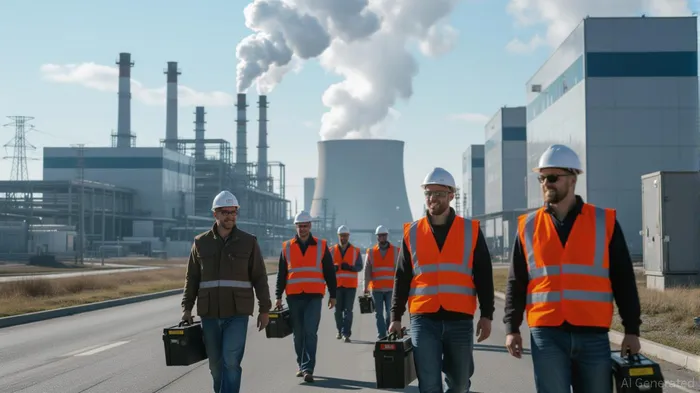
At the core of the plan is a $70 billion investment to modernize the U.S. electrical grid, with a focus on siting AI data centers near coal and nuclear power plants. This strategy addresses two critical challenges: the energy-intensive demands of AI (a single ChatGPT-like model consumes as much power annually as 1,000 homes) and the geopolitical need to reduce reliance on China's solar and wind supply chains.
The DOE has already designated 16 federal sites for public-private partnerships to power AI infrastructure by 2027, with BlackstoneBX-- and Brookfield InfrastructureBIPC-- positioned to lead in grid-related projects. Meanwhile, nuclear energy—a cornerstone of the plan—will benefit from fast-tracked approvals for small modular reactors (SMRs), a technology that aligns with defense priorities.
Utilities like NextEra EnergyNEE-- (NEE) and Dominion EnergyD-- (D) are prime beneficiaries, given their grid expertise and nuclear portfolios. However, investors should note that regulatory risks persist: while the administration has streamlined environmental permitting, lawsuits over fossilFOSL-- fuel projects could delay timelines.
Energy Mix: Coal's Comeback and Nuclear's New Role
The plan's revival of coal—a move opposed by climate advocates—serves a dual purpose: providing cheap, reliable power for data centers and countering China's dominance in renewables. Peabody EnergyBTU-- (BTU), the largest U.S. coal producer, stands to gain as coal plants are retrofitted to support AI hubs.
Nuclear energy, meanwhile, is being rebranded as “defense-critical” infrastructure. Companies like ExxonMobilXOM-- (XOM), which owns the Westinghouse nuclear division, and NextEra Energy will benefit from advanced reactor development. The DOE's push to secure Section 123 nuclear export agreements also signals ambitions to export U.S. technology globally.
Geopolitical Risks and Opportunities
The initiative is as much about competition with China as it is about domestic policy. While China's $1.5 trillion AI investment focuses on renewables, the U.S. is leveraging its fossil fuel and uranium reserves to avoid energy bottlenecks. This divergence creates a two-front battle:
- Energy Security: The U.S. aims to reduce reliance on Chinese solar panels and rare earth minerals by bolstering domestic fossil fuel production.
- AI Arms Race: Pentagon contracts with firms like OpenAI and xAI for defense-focused AI systems underscore the military angle.
However, risks abound. Goldman SachsGS-- estimates AI's energy consumption could triple by 2035, straining even upgraded grids. Low oil prices—projected to average $57/barrel in 2026—could also crimp shale oil profits, hitting companies like Pioneer Natural Resources (PXD).
Investment Playbook: ETFs and Sector Leaders
For investors seeking exposure:
1. ETFs: The ARKQ Innovation ETF, which holds AI leaders like NVIDIANVDA-- (NVDA) and cloud infrastructure firms, offers thematic exposure.
2. Utilities: NextEra Energy (NEE) and Dominion Energy (D) provide grid/nuclear plays with stable dividends.
3. Infrastructure: Blackstone's Infrastructure Fund (BX) and Brookfield Infrastructure (BAM) benefit from grid modernization.
4. Nuclear/Coal: ExxonMobil (XOM) and Peabody Energy (BTU) offer leveraged upside, though their carbon footprints pose ESG risks.
Risks to Monitor
- Regulatory Pushback: Environmental lawsuits could delay fossil fuel projects.
- Global Supply Chains: China's dominance in semiconductor manufacturing remains a vulnerability for AI hardware.
- Market Volatility: AI stocks (e.g., NVDA) are sensitive to tech cycles and geopolitical tensions.
Conclusion: A High-Stakes Gamble on Dominance
The Trump administration's $70 billion plan is a strategic bet on U.S. energy and tech resilience. While it promises to create over 2 million jobs by 2030 and position the U.S. as an AI leader, execution hinges on navigating regulatory hurdles and energy demand spikes. For investors, the sectors to watch are utilities, nuclear infrastructure, and AI hardware—balanced with caution toward fossil fuel volatility. As the grid emerges as the new battlefield, the winners will be those who align with the fusion of old energy and new intelligence.

Stay ahead of the market.
Get curated U.S. market news, insights and key dates delivered to your inbox.
AInvest
PRO
AInvest
PRO



Comments
No comments yet