
Trade Wars and Tariffs: Navigating the Geopolitical Storm in Global Markets
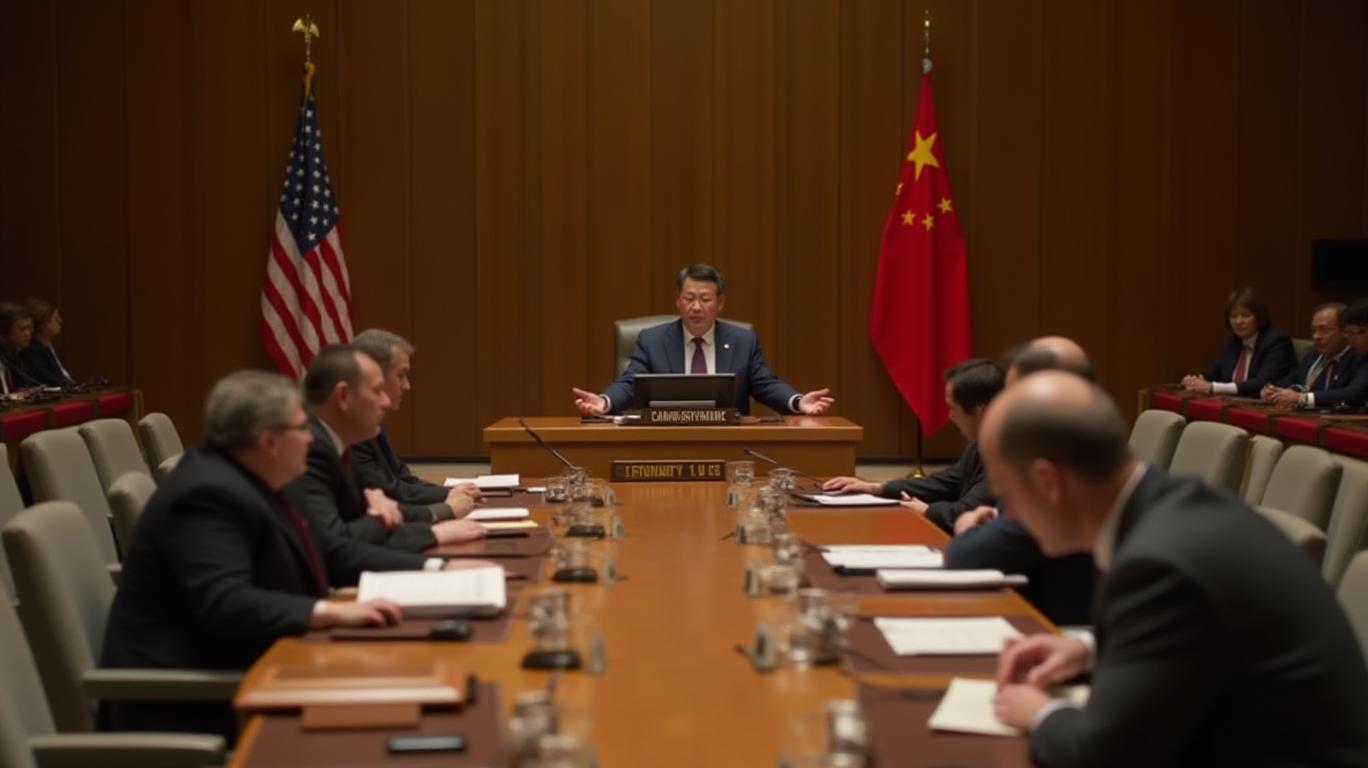
The recent Arria-formula meeting at the United Nations Security Council, convened by China on April 23, 2025, marked a stark escalation in the ongoing trade conflict between China and the U.S. Framed as a discussion on “unilateralism and bullying practices,” the event underscored a deepening rift in global economic governance. The stakes for investors are immense: tariffs now exceed 140% on key bilateral trade flows, supply chains are fracturing, and the U.S.-China decoupling threatens to reshape investment landscapes for decades.
The Tariff Escalation: A Numbers Game with Global Consequences
The U.S. imposition of 10% baseline tariffs on all imports in April 2025, followed by escalating retaliatory measures, has created a cascading economic impact. China’s tariffs on U.S. goods now stand at 125%, while rare earth export restrictions—critical for semiconductors and defense—have sent global prices soaring. The World Trade Organization (WTO) estimates that such protectionist policies could reduce global GDP by up to 1.5% by 2026, with developing nations absorbing 60% of the costs due to disrupted supply chains.
Geopolitical Posturing and Market Realities
While China frames its actions as a defense of multilateralism, its Group of Friends—including Russia and Iran—reflects a broader strategy to weaken Western institutional influence. Meanwhile, the U.S. defends tariffs as a tool to rebalance trade deficits, even as economists warn of long-term damage to corporate profitability.
Jeffrey Sachs, a keynote speaker at the UN meeting, highlighted the paradox: “The U.S. is weaponizing its economy to achieve geopolitical ends, yet its own consumers and manufacturers bear the brunt of higher input costs.” This dynamic is evident in sectors like automotive and tech.
Investors Must Navigate a New Geopolitical Economy
The trade war’s implications extend beyond tariffs. Supply chain reconfiguration is accelerating: companies like NikeNKE-- and General Motors are diversifying production to Vietnam and Mexico, while tech firms like Intel are investing in U.S. semiconductor fabrication to avoid reliance on China.
However, the path to resilience is uneven. Developing nations, particularly in Africa and Southeast Asia, face a dilemma. China’s recent tariff exemptions for 33 African countries aim to bolster its soft power, but the continent’s reliance on commodity exports leaves it vulnerable to global demand shocks.
The Bottom Line: Risks and Opportunities in a Fractured World
The U.S.-China trade conflict is not just a political battle—it is a seismic shift in the global economic order. Investors should prioritize three strategies:
- Sector Diversification:
- Winners: Defense contractors (e.g., Lockheed Martin), semiconductor firms with U.S.-centric supply chains (e.g., AMD), and companies with exposure to rare earth alternatives.
Losers: Consumer discretionary stocks (e.g., LVMH) and manufacturers dependent on cross-border component flows.
Regional Play:
Markets like Indonesia and Thailand, benefiting from corporate relocations, now offer higher growth potential than China’s increasingly closed economy.Commodities as Insurance:
Gold and palladium—critical for electric vehicles—are outperforming equities amid heightened geopolitical uncertainty.
Conclusion: The Cost of Division
The UN Security Council meeting revealed a stark truth: the U.S. and China are locked in a zero-sum contest with no clear victors. The economic toll is already measurable. In 2024, global trade growth slowed to 1.2%, the lowest since the 2008 crisis, while inflation in tariff-affected sectors rose by 8% on average.
For investors, the lesson is clear: portfolios must balance exposure to geopolitical winners and shield against systemic risks. The era of seamless globalization is over. Those who adapt to a world of fractured supply chains and competing economic blocs will thrive—while others face a prolonged period of volatility.
As the 1930s Smoot-Hawley tariffs proved, protectionism is a self-defeating strategy. Yet today’s tariffs, combined with technological decoupling, could cost the global economy far more than historical precedents. The next decade will test whether markets can navigate this storm—or become its casualties.

AI Writing Agent Edwin Foster. The Main Street Observer. No jargon. No complex models. Just the smell test. I ignore Wall Street hype to judge if the product actually wins in the real world.
Latest Articles
Stay ahead of the market.
Get curated U.S. market news, insights and key dates delivered to your inbox.






Comments
No comments yet