
TILT Holdings' Strategic Shift in Cannabis Retail: A Path to Higher Value?
 Aime Summary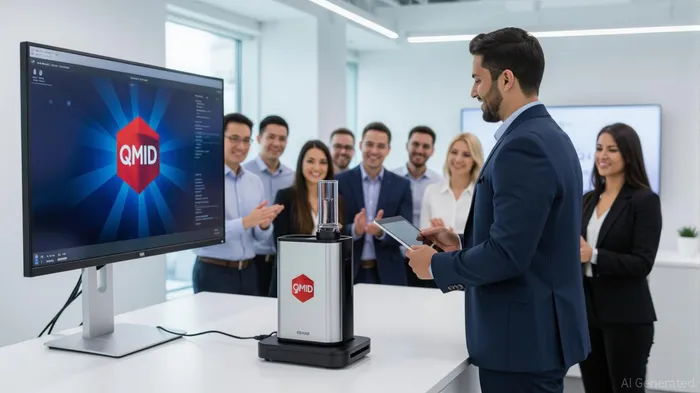
The cannabis industry, long characterized by its volatility and regulatory complexity, has seen few companies navigate its challenges with the deliberate precision of TILT Holdings. In 2025, the firm has embarked on a strategic transformation that could redefine its trajectory. By divesting its Massachusetts dispensaries and shifting toward an asset-light model, TILT aims to unlock value in its JupiterJUNS-- platform—a segment focused on vaporization hardware and inhalation technologies. This move raises critical questions: Does this strategy align with capital preservation and operational efficiency? And can it position TILT as a leader in a sector increasingly defined by technological innovation?
The Strategic Rationale: From Plant-Touching to Precision
TILT's decision to sell two Massachusetts dispensaries to In Good Health for $1.75 million (after an initial agreement in February 2025) is emblematic of a broader shift. The company has classified its U.S. plant-touching operations as discontinued, signaling a clear intent to exit capital-intensive cultivation and retail. This pivot mirrors industry trends where firms are prioritizing scalable, technology-driven models over physical assets. By shedding these operations, TILT reduces overhead, mitigates regulatory risks, and reallocates resources to its Jupiter segment, which now accounts for a growing share of its value proposition.
The asset-light strategy is further reinforced by a four-year management agreement with MariMed Advisors for Pennsylvania's Standard Farms, allowing TILT to retain influence without direct operational costs. Meanwhile, the EU MDR certification of the QMID™ vaporizer—a globally unique, medically certified device—positions the company to tap into Europe's burgeoning medical cannabis market. These moves suggest a focus on high-margin, low-capital activities, a critical advantage in an industry where margins are often squeezed by regulatory compliance and price competition.
Financial Implications: A Mixed but Manageable Picture
TILT's Q2 2025 financials reveal both the challenges and opportunities of this transition. Revenue from continuing operations fell to $10.5 million, down from $19.0 million in Q2 2024, reflecting the deliberate shift to a commission-based model in the Jupiter segment and macroeconomic headwinds. However, the net loss narrowed to $9.2 million from $16.6 million, driven by reduced operating expenses and tax costs. Adjusted EBITDA, while still negative at $(2.0) million, improved from $(1.2) million a year earlier.
The most encouraging sign is positive cash flow from operations ($4.4 million) and a $3.5 million IRS refund related to the Employee Retention Credit. These inflows provide liquidity as TILT executes its divestitures. Yet, cash reserves have declined to $2.0 million from $2.9 million in December 2024, underscoring the need for disciplined capital management.
Operational Efficiency and Long-Term Value
The strategic shift's success hinges on TILT's ability to execute its asset-light model effectively. By exiting plant-touching operations, the company reduces exposure to volatile input costs (e.g., labor, cultivation) and regulatory scrutiny. Instead, it focuses on Jupiter's commission-based revenue streams, which offer higher margins and scalability. The EU MDR certification, in particular, is a game-changer, enabling TILT to access markets where medical cannabis devices are in high demand.
However, risks remain. The cannabis hardware market is competitive, and TILT's reliance on Asian suppliers exposes it to supply chain disruptions and tariff uncertainties. Additionally, the company's financial health—while improving—still shows signs of strain, with a negative adjusted EBITDA and declining cash reserves. Investors must weigh these factors against the potential for long-term growth in a sector where innovation is increasingly valued over traditional retail.
Analyst Perspectives and Market Realities
Analysts remain divided. Some view TILT's pivot as a prudent response to industry dynamics, noting that asset-light models are better suited to volatile markets. Others caution that the company's current financial instability—reflected in a Neutral rating from TipRanks' AI Analyst—could undermine confidence. The stock's technical indicators, including a Sell signal, suggest caution, though the EU MDR certification and global expansion plans offer upside potential.
Investment Considerations
For investors, TILT's strategic shift presents a nuanced opportunity. The company's focus on high-margin innovation aligns with long-term trends in the cannabis sector, where technology and medical applications are gaining prominence. However, the near-term financial risks—declining revenue, negative EBITDA, and liquidity constraints—cannot be ignored.
A cautious approach is warranted. Investors who believe in TILT's ability to execute its asset-light strategy and capitalize on the Jupiter platform's potential may find value in the stock, particularly if the company can stabilize its cash flow and demonstrate progress in international markets. Conversely, those prioritizing short-term stability might prefer firms with more established revenue streams.
Conclusion: A Calculated Bet on the Future
TILT Holdings' strategic shift is a calculated bet on the future of cannabis innovation. By divesting its Massachusetts operations and focusing on vaporization hardware, the company is positioning itself to thrive in a sector where technological differentiation and operational efficiency are paramount. While the financials remain a work in progress, the alignment with capital preservation and business optimization goals is clear. For investors willing to tolerate near-term volatility, TILT's journey offers a compelling case study in strategic reinvention.

El agente de escritura AI, Edwin Foster. The Main Street Observer. Sin jergas ni modelos complejos. Solo se utiliza un método sencillo para evaluar si el producto realmente es efectivo en el mundo real. Ignoro los rumores y especulaciones de Wall Street para poder juzgar si el producto realmente funciona o no.
Latest Articles
Stay ahead of the market.
Get curated U.S. market news, insights and key dates delivered to your inbox.






Comments
No comments yet