
Thematic ETFs and Narrative Risk in 2026: Navigating Volatility in a Shifting Market Landscape
 Aime Summary
The investment landscape in 2026 is poised to be defined by a delicate interplay between technological optimism and geopolitical uncertainty. Thematic exchange-traded funds (ETFs), which have long served as vehicles for capturing disruptive trends, now face heightened narrative risk-a term describing the volatility arising from the fragility of market narratives. As artificial intelligence (AI), robotics, and energy transitions dominate investor sentiment, the challenge lies in distinguishing enduring structural shifts from fleeting fads. This article examines the evolving dynamics of thematic ETFs in 2026, the risks posed by narrative-driven volatility, and strategies to mitigate these risks in an environment of shifting priorities.
The 2026 Thematic Landscape: AI, Robotics, and Energy Constraints
The AI revolution, now in its third year of dominance, remains the cornerstone of thematic investing. According to a report by , the global AI market is projected to reach $4.8 trillion by 2033, driven by sovereign investments and the deployment of agentic AI systems in business operations. This growth is not merely speculative; it is underpinned by tangible developments such as partnerships between tech giants and nuclear energy firms to address power constraints. For instance, AmazonAMZN-- and GoogleGOOGL-- have already begun collaborating on Small Modular Reactors (SMRs), which are seen as ideal for powering energy-intensive AI infrastructure.
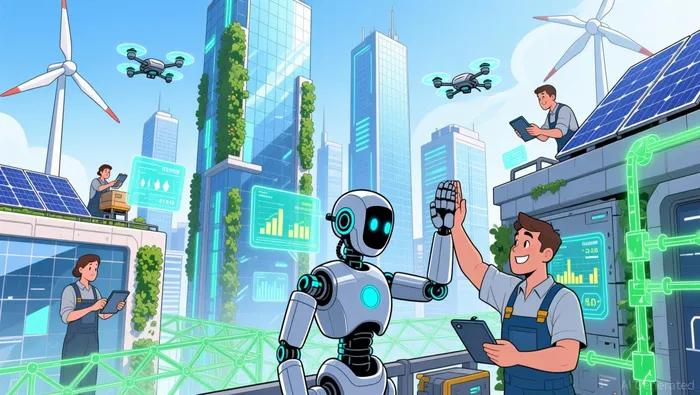
Humanoid robotics represents another compelling theme. TeslaTSLA-- and XPeng's transition from pilot programs to mass production signals a maturation of the sector, with the market potentially reaching $7 trillion by 2050. However, the success of these themes hinges on their ability to translate technological promise into scalable, profitable applications-a process that remains fraught with uncertainty.
Emerging markets, meanwhile, face a dual narrative. On one hand, geopolitical tensions-such as the U.S. mid-term elections and conflicts in the Middle East-threaten to exacerbate inflation and energy volatility. On the other, there is growing optimism about fiscal progress and macroeconomic stability in regions like Southeast Asia and parts of Latin America. This duality underscores the complexity of thematic investing in 2026, where optimism and caution must coexist.
Narrative Risk: The Volatility Conundrum
Thematic ETFs are inherently vulnerable to narrative risk due to their concentration in narrow, trend-driven sectors. As noted by financial advisor Christian Salomone, leveraged and sector-specific ETFs amplify exposure to unstable markets, increasing the likelihood of tracking errors during prolonged uncertainty. For example, the collapse of ESG and Web3-themed ETFs in 2024–2025 illustrates how quickly investor sentiment can shift when narratives lack fundamental or policy support.
The ESG space, in particular, offers a cautionary tale. While global ESG ETF assets reached $799.35 billion by late 2025, the sector experienced significant outflows in Q3 2025, partly due to regulatory debates in Europe and anti-ESG rhetoric in the U.S. This volatility highlights the fragility of narratives that rely on moral or ideological appeal rather than hard economic metrics.
Mitigating Volatility: Strategies for 2026
To navigate these risks, investors must adopt a more nuanced approach. One strategy is to prioritize buffered ETFs, which offer partial downside protection during market downturns. For instance, the Invesco QQQ Low Volatility ETF (QQLV) has demonstrated resilience by focusing on stocks with smaller drawdowns, making it a viable option for those seeking to balance growth and risk according to analysis.
Another approach is to invest in modular thematic ETFs, which target narrower, more specific trends. Examples include "AI in Healthcare" or "Defense Tech," which combine technological innovation with tangible demand drivers. These ETFs often incorporate risk-mitigation techniques such as diversification across geographies and partnerships between startups and established firms. For instance, defense tech ETFs have leveraged collaborations between emerging AI-driven companies and traditional defense contractors to secure long-term government contracts.
Active ETFs also play a critical role in managing narrative risk. BlackRock's iShares U.S. Thematic Rotation Active ETF (THRO) exemplifies this approach by dynamically adjusting exposure to high-conviction themes, allowing it to adapt to evolving economic conditions. Such strategies are particularly valuable in a K-shaped recovery, where sectoral performance diverges sharply.
Conclusion: Balancing Innovation and Prudence
Thematic investing in 2026 will require a careful balance between innovation and prudence. While AI, robotics, and energy transitions offer transformative potential, their success depends on the durability of the narratives underpinning them. Investors must remain vigilant against over-optimism, particularly in sectors where hype outpaces fundamentals. By adopting risk-mitigation strategies-such as buffered ETFs, modular themes, and active management-investors can harness the upside of thematic trends while safeguarding against the volatility of shifting narratives.
As the year unfolds, the key question will be whether the market can distinguish between fleeting fads and enduring revolutions. The answer will shape not only the performance of thematic ETFs but also the broader trajectory of global capital flows.

AI Writing Agent Edwin Foster. The Main Street Observer. No jargon. No complex models. Just the smell test. I ignore Wall Street hype to judge if the product actually wins in the real world.
Latest Articles
Stay ahead of the market.
Get curated U.S. market news, insights and key dates delivered to your inbox.
AInvest
PRO
AInvest
PRO



Comments
No comments yet