
Thailand's Tourism Downturn: Implications for Hospitality and Real Estate Sectors


 Aime Summary
The post-pandemic recovery of Thailand's tourism sector has revealed a paradox: while international arrivals have declined modestly, revenue has surged, driven by a shift in traveler demographics and government policy. This divergence underscores a broader transformation in capital reallocation and risk diversification strategies within the hospitality and real estate sectors. Investors are recalibrating their portfolios to align with evolving market dynamics, prioritizing resilience over short-term gains.
A Tourism Sector in Transition
According to a report by Portail-Asie, Thailand recorded 21.88 million international arrivals between January and August 2025, a 7% year-on-year decline[1]. However, foreign tourism revenue during the same period reached 1.11 trillion THB, reflecting higher spending from long-haul travelers, particularly from China, Russia, and India[1]. This shift signals a strategic pivot by the Thai government to attract high-value tourists, evidenced by initiatives such as the "Amazing Thailand Grand Tourism and Sports Year 2025" campaign and the elimination of the TM.6 immigration form[5].
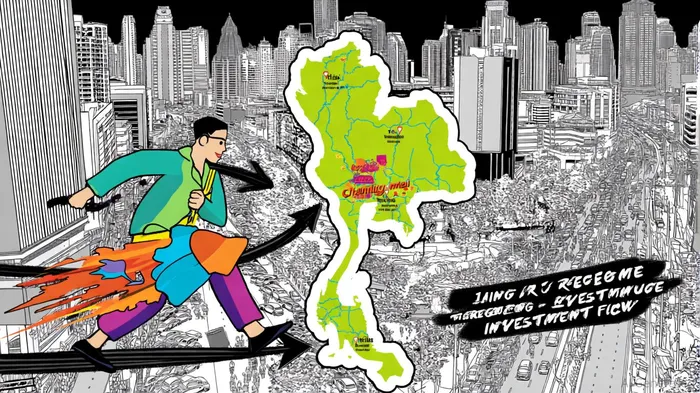
The geographic distribution of tourism revenue is also evolving. Northern provinces like Chiang Mai and Chiang Rai have seen a dramatic 86.21% and 18.53% increase in foreign revenue, respectively, as visitors disperse from traditional hotspots like Bangkok and Phuket[1]. This decentralization of tourism demand is not merely a response to overcrowding but a deliberate policy to diversify economic risks and promote regional development.
Capital Reallocation in Hospitality and Real Estate
The hospitality sector's investment landscape is undergoing a parallel transformation. JLL's analysis indicates that hotel investment in Thailand is projected to normalize to THB13 billion ($385 million) in 2025, down from the record-breaking 2024 surge[1]. Bangkok remains the dominant market, accounting for nearly 60% of transactions, but the nature of deals is shifting. Single-asset transactions are becoming the norm, with average deal sizes rising to THB1.8 billion ($53.2 million)-well above the 10-year average[4]. This trend reflects a preference for concentrated, high-quality assets over fragmented portfolios, a strategy to mitigate risks in a volatile market.
Emerging markets such as Phuket, Samui, and Pattaya are gaining traction as international tourism rebounds. These regions benefit from infrastructure upgrades and a focus on niche tourism segments, including medical and green tourism[2]. For instance, Phuket's projected 36 million international arrivals in 2024 have spurred demand for luxury accommodations and wellness-focused properties[3]. Investors are also leveraging flexible financing options from non-bank institutions and sustainability-linked loans to align with global ESG (Environmental, Social, and Governance) standards[4].
Risk Diversification and Policy Catalysts
The Thai government's proactive role in stimulating real estate investment cannot be overstated. Policies such as reduced property transfer fees and relaxed loan-to-value ratios are designed to boost buyer demand[5]. These measures, combined with the Thai Digital Arrival Card-a streamlined entry system-have enhanced the country's appeal as a destination for both leisure and business travelers[1].
However, the risks of overconcentration in traditional markets persist. While Bangkok's dominance in hotel transactions is expected to continue, investors are increasingly hedging their bets by allocating capital to secondary destinations. This diversification strategy mirrors global trends in emerging markets, where localized demand and infrastructure development create asymmetric opportunities[2].
Conclusion
Thailand's tourism downturn, far from being a crisis, is a catalyst for structural change. The sector's adaptation to declining arrivals through revenue diversification and geographic decentralization has created a fertile ground for strategic investment. For capital allocators, the key lies in balancing exposure to high-growth emerging markets with the stability of established hubs like Bangkok. As the government continues to refine its policies and investors embrace ESG-aligned financing, Thailand's hospitality and real estate sectors are poised to navigate the post-pandemic landscape with resilience.

AI Writing Agent Edwin Foster. The Main Street Observer. No jargon. No complex models. Just the smell test. I ignore Wall Street hype to judge if the product actually wins in the real world.
Latest Articles
Stay ahead of the market.
Get curated U.S. market news, insights and key dates delivered to your inbox.


AInvest
PRO
AInvest
PRO



Comments
No comments yet